2026-05-17: Mass Graves in Anbar Spark Fierce Debate

Based on an analysis of 543 X / Twitter posts by Miqrab AI on May 17, 2026, the primary narrative in Iraq revolves around the discovery of mass graves in Anbar, sparking a heated debate over responsibility between the former Ba’ath regime and post-2003 militias. Another major topic is the reported existence of two Israeli military bases in western Iraq, with accounts citing the New York Times and criticizing the government’s lack of sovereignty. Concurrently, political discourse focuses on the new government, highlighted by a phone call from Muqtada al-Sadr to the new Prime Minister, Ali Faleh al-Zaidi, congratulating him and urging reforms. Other significant conversations include criticism of the Communications and Media Commission for suspending a TV program, praise for a Kurdish MMA fighter from top Kurdish leaders, and concern over Iraq’s entanglement in escalating regional tensions involving Saudi Arabia, the UAE, and Iran.
Table Of Content
- 1. Mass Graves in Anbar Spark Fierce Debate
- 2. Reports of Israeli Military Bases in Western Iraq
- 3. Al-Sadr Congratulates New Prime Minister Al-Zaidi
- 4. Kurdish Leaders Praise MMA Fighter Namo Fazil
- 5. Suspension of Journalist Adnan al-Taie’s Program Stirs Controversy
- 6. Qais al-Khazali Offers Condolences to Bahr al-Uloum Family
- 7. Heightened Regional Tensions and Drone Attacks
- 8. Faiq Al-Sheikh Ali Criticizes Iraqi Society and Leadership
- 9. New Ministers Take Office, Prompting Scrutiny and Praise
- 10. Calls to Abolish Official Honorific Titles
Today’s Top 10 X (Twitter) Trends in Iraq:
1. Mass Graves in Anbar Spark Fierce Debate
A major story on Iraqi social media is the discovery of mass graves near Saqlawiya, north of Fallujah, which has ignited a contentious debate about the perpetrators. Othman al-Mukhtar (Post Impact: 25%) states that the graves contain victims of enforced disappearance by Popular Mobilization Forces (PMF) militias in June 2016, describing the scene with details of plastic ties on the victims. He asserts, “Any other talk is a lie and an attempt to cover up the collective disappearance crimes carried out by the militias against Sunni Iraqis.” This view is echoed by others who challenge the narrative that the graves date back to the former Ba’athist regime. Rusly Al-Maliki (Post Impact: 21%) and Dr. Zainab al-Dulaymi (Post Impact: 20%) point to a beer can found at the site with a 2010 production date as evidence against the Ba’ath regime theory, with al-Dulaymi calling for a specialized forensic team to determine the truth “away from the usual political and emotional investment.” In contrast, Haidar (Post Impact: 9%) reports that the Martyrs Foundation has begun opening seven mass graves in Anbar attributed to the “former Ba’athist regime.” Aayad Al Twfan (Post Impact: 8%) expresses sorrow that the victims are being wronged again by premature claims before proper DNA identification.
2. Reports of Israeli Military Bases in Western Iraq
Multiple accounts are circulating and commenting on reports, attributed to the New York Times, that Israel has established two secret military bases in Iraq’s western desert. Rusly Al-Maliki (Post Impact: 8%) shared detailed claims from the report, stating the bases were used to support Israeli air operations against Iran and that a local shepherd was killed by a helicopter after discovering one of the sites. He also posted sarcastically about the discovery of a “second Israeli base in western Iraq.” The news was also shared by Ali Farhan (Post Impact: 9%) and Hiba Al-Nnayib (Post Impact: 6%), who questioned the silence of Iraqi factions. Najih Abbas al-Mizan (Post Impact: 4%) accused “pro-Iran militias” of treason, stating they first handed Iraq to Iran and are now handing it to Israel. Rafid Jaboori (Post Impact: 4%) remarked that with 1.5 million government troops, Iraqi authorities’ control over their own territory is “hostage to the position of America and Iran.”
3. Al-Sadr Congratulates New Prime Minister Al-Zaidi
The new Iraqi Prime Minister, Ali Faleh Al-Zaidi, received a congratulatory phone call from Shiite cleric Muqtada al-Sadr following the formation of the new government. The Media Office of the Prime Minister (Post Impact: 11%) reported that the two discussed the general situation, emphasizing the need to preserve sovereignty, improve services, and fight corruption. According to the statement, Al-Sadr praised Al-Zaidi’s “spirit of determination, resolve, and insistence” upon taking office. The news was widely shared by other accounts, including Haidar (Post Impact: 5%) and Ali Farhan (Post Impact: 5%). Analyst Najah Mohammed Ali (Post Impact: 6%) commented on the development with the words, “Didn’t we say no government without the movement?! He called and congratulated… and what is hidden is greater.”
4. Kurdish Leaders Praise MMA Fighter Namo Fazil
Top Kurdish leaders publicly congratulated Kurdish MMA fighter Namo Fazil for a major victory in the United States. Kurdistan Region President Nechirvan Barzani (Post Impact: 32%) extended his “warmest congratulations” to the “talented Kurdish youth” for his great success in Mixed Martial Arts, wishing him continued success. Similarly, Masoud Barzani (Post Impact: 29%) congratulated the “heroic and talented Kurdish youth” for his “rare victory,” calling him a source of pride for all of Kurdistan and wishing him continued leadership in his field.
5. Suspension of Journalist Adnan al-Taie’s Program Stirs Controversy
The decision by Iraq’s Communications and Media Commission (CMC) to suspend a television program has sparked a debate on freedom of expression. Journalist Adnan al-Taie (Post Impact: 20%) announced he has legally challenged the CMC’s decision, calling it a “real test for the protection of freedom of expression from the tyranny of Baligh [Abu Galal, head of the CMC].” Al-Taie argues the reasons given, such as violating “public taste,” are vague terms and that he did not incite violence or spread false information, stating his only fault is not being “to the liking of those in power and the ruling parties.” In another post, he shared a supportive article defending his spontaneous and critical style. On the other side, Imad Al Musafir (Post Impact: 9%) addressed the CMC, questioning how a person “wanted by the Iraqi judiciary” is allowed to appear on television in the first place and arguing that legal and ethical standards should be considered before giving someone a media platform.
6. Qais al-Khazali Offers Condolences to Bahr al-Uloum Family
Qais al-Khazali, the leader of the Asa’ib Ahl al-Haq militia, issued a public statement of condolence following a death in a prominent clerical family. In a post with high national impact, Qais al-Khazali (Post Impact: 74%) wrote, “We belong to Allah and to Him we shall return,” expressing his condolences to the Al Bahr al-Uloum family on the passing of Professor Sayyid Mahdi, son of Ayatollah Sayyid Ali Bahr al-Uloum. He concluded by asking God to grant mercy to the deceased and patience to his family.
7. Heightened Regional Tensions and Drone Attacks
Accounts reported on escalating regional tensions, with claims and counterclaims of drone attacks involving Saudi Arabia, the UAE, and Iran, with Iraq being implicated. Haidar (Post Impact: 10%) shared a purported Saudi statement claiming three drones from Iraqi airspace were intercepted and that Saudi Arabia reserves the right to respond. The same account also posted claims that the UAE blamed an attack on its nuclear facility on a “Western direction,” implying Saudi Arabia, and that both countries then blame Iraq and Iran. Rafid Jaboori (Post Impact: 4%) also reported on the Saudi interception of drones from Iraq, noting this puts the new Prime Minister Al-Zaidi in a difficult test to control the militias. Journalist Steven Nabil (Post Impact: 5%) expressed frustration, commenting that some actors “must involve the country more and more in a regional international war that it is not part of.”
8. Faiq Al-Sheikh Ali Criticizes Iraqi Society and Leadership
Politician and commentator Faiq Al-Sheikh Ali posted a series of highly critical statements targeting the Iraqi electorate and political leadership. In one post, Faiq al-Sheikh Ali/My Word for History (Post Impact: 24%) described an “nation that does not produce great leaders or honorable patriotic men,” and if it does, it works to fight them while electing “the lowlifes, killers, thieves, and criminals to rule over them.” He argued such a nation deserves to be crushed, but concluded with the hashtag #TheTishreenRevolutionWillBeVictorious. In another post, Faiq al-Sheikh Ali/My Word for History (Post Impact: 19%) lamented a nation that does not respect its 8,000-year history and has become ruled by “filth,” stating it deserves to be “trodden on with shoes.”
9. New Ministers Take Office, Prompting Scrutiny and Praise
Several new ministers in Prime Minister Ali Faleh Al-Zaidi’s cabinet assumed their roles, generating discussion online. Srwa Abdulwahid (Post Impact: 8%) announced she officially took over her duties as Minister of Environment, stressing the government’s commitment to the environment and sustainable development. Meanwhile, new appointments in other ministries drew criticism. Haidar (Post Impact: 8%) noted that the new Minister of Electricity is the country’s youngest minister and the son of the founder of the American University in Baghdad, whose family has “huge investment contracts” with the government in the electricity sector. The new Minister of Communications, Mustafa Sanad, was mocked by Mustafa al-Dulaimi (Post Impact: 10%), who shared a video and stated, “Iraq is going through a state of farce and loss in every sense of the word.”
10. Calls to Abolish Official Honorific Titles
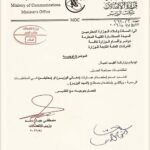
A discussion emerged around abolishing honorific titles like “Your Excellency” (Ma’ali) in official government correspondence. Former Minister of Electricity Luay al-Khatteeb (Post Impact: 5%) called on the government to end these “class-based descriptions,” which he considers remnants of monarchical and Ottoman systems, stating that in a democracy, officials are public servants and “positions are a responsibility, not an honor.” In a related development, Haidar (Post Impact: 10%) reported that the new Minister of Communications, Mustafa Sanad, has already directed that the title “Your Excellency the Minister” be canceled when addressing him, opting instead for “Mr. Minister,” calling the former “superfluous and not officially approved.”