2026-07-27: Drone Attacks on Saudi Arabia Launched from Iraq

Based on 478 X / Twitter posts analyzed on July 27, 2026, by Miqrab AI, the primary narrative dominating social media in Iraq concerns the significant regional tensions sparked by drone attacks on Saudi Arabia allegedly launched from Iraqi territory. This event triggered a flurry of reactions, including a strong condemnation from former Prime Minister Mustafa Al-Kadhimi against “non-state actors” and an official promise of investigation from the current government, highlighting the persistent challenge of uncontrolled militias undermining state authority. Alongside this major security incident, conversations also revolved around strained Iraqi-Iranian relations, particularly concerning energy and financial disputes. Other prominent themes included a bizarre claim by Iraq’s National Security Advisor about Ukrainian intelligence cells operating in the country, widespread discontent over public sector corruption, and ongoing domestic issues such as delayed salary payments and the chronic electricity crisis.
Table Of Content
- 1. Drone Attacks on Saudi Arabia Launched from Iraq
- 2. National Security Advisor Alleges Ukrainian “Cells” in Iraq
- 3. Perceptions of Iranian Arrogance and Racism
- 4. Widespread Allegations of Official Corruption
- 5. Iran Rejects Iraqi Oil Transit via Strait of Hormuz
- 6. Syrian President’s Stance on Lebanon and Hezbollah
- 7. Public Frustration Over Delayed Government Salaries
- 8. PM Al-Zaydi’s Initiative to Confine Weapons to the State
- 9. Continuing Electricity Crisis and Reliance on Iran
- 10. Report of a US Airstrike on an Iranian Site
Today’s Top 10 X (Twitter) Trends in Iraq:
1. Drone Attacks on Saudi Arabia Launched from Iraq
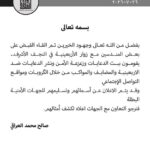
A major topic of discussion was the claim by Saudi Arabia that it had intercepted drones launched from Iraqi territory targeting its oil facilities. The news prompted a strong response from former Prime Minister Mustafa Al-Kadhimi (Post Impact: 94%), who stated, “It is no longer possible to tolerate the actions of non-state actors,” arguing that these attacks harm Iraq’s interests and push it toward regional isolation. The current Prime Minister’s office, via its spokesperson’s account IraqiPMO (Post Impact: 28%), announced that Prime Minister Ali Faleh Al-Zaydi has ordered an investigation into the Saudi claims and reiterated Iraq’s commitment to not allowing its territory to be used for attacks on neighboring countries. Commentators like Rusly Al-Maliki (Post Impact: 47%) and Dr. Ihssan Al-Shmary (Post Impact: 46%) framed the attacks as an attempt by militias to sabotage Al-Zaydi’s upcoming visit to Riyadh. A counter-narrative was pushed by accounts like Haider (Post Impact: 38%), which claimed that Ansar Allah in Yemen took responsibility and that Saudi Arabia was blaming Iraq out of fear of a Yemeni response.
2. National Security Advisor Alleges Ukrainian “Cells” in Iraq
A surprising and widely discussed claim emerged from Iraq’s National Security Advisor, who alleged the discovery of Ukrainian intelligence cells conducting attacks in Iraq. Zainab Rabee (Post Impact: 20%) highlighted the advisor’s statement that these cells carry out attacks and attribute them to Iraqi factions, calling it a secret “Iraqis had not heard before.” Other accounts, including Haider (Post Impact: 22%), also reported on the alleged arrest of groups linked to Ukraine. The claim was met with skepticism and ridicule by some users. Shaho Al-Qaradaghi (Post Impact: 19%) sarcastically questioned, “and the bombing of the Kurdistan region is also carried out by Ukrainian cells?!” Similarly, Dr. Yahya Al-Kubaisi (Post Impact: 9%) expressed disbelief at the statement, questioning the credibility of the claim.
3. Perceptions of Iranian Arrogance and Racism
A sentiment of frustration with perceived Iranian arrogance towards Iraqis and Arabs circulated through several high-engagement posts. Shaho Al-Qaradaghi (Post Impact: 49%) shared a quote from Iranian journalist Mohammad Gharavi stating, “We are not Arabs nor Venezuelans and we are not Iraq that America can occupy in two hours.” This quote was widely interpreted as condescending. In a similar vein, Rusly Al-Maliki (Post Impact: 59%) posted a video criticizing what he described as “Racism in its most splendid manifestations” from an artist, implying a mindset of Aryan superiority. These posts suggest a narrative among some Iraqis of being looked down upon by their neighbor.
4. Widespread Allegations of Official Corruption
Corruption among Iraqi officials and political parties remains a major grievance on Iraqi social media. Several accounts highlighted different instances of alleged graft. Rusly Al-Maliki (Post Impact: 36%) posted what he called “dangerous information,” alleging that militias and parties have stolen 1.5 million barrels of oil per day since 2011, amounting to $35 billion annually. Dr. Ghalib Al-Da’amy (Post Impact: 26%) pointed to a specific case from 2012-2014 where the governor of Baghdad allegedly purchased a car worth two million dollars for personal family use under the pretext of transporting investors. Meanwhile, Tamara Alkhazraji (Post Impact: 25%) listed a series of corruption scandals involving various political figures, contrasting these serious allegations with a perceived lack of focus from the integrity commission.
5. Iran Rejects Iraqi Oil Transit via Strait of Hormuz
A highly impactful post from Rusly Al-Maliki (Post Impact: 100%) ignited discussion about Iraq’s difficult relationship with Iran. The post alleges that Iran has rejected an Iraqi request to facilitate the passage of Iraqi oil shipments through the Strait of Hormuz. Furthermore, it claims that Iran is demanding Baghdad pay $11 billion. Al-Maliki described the situation as “malicious,” expressing frustration at what he perceives as subservience to Iran despite such actions. The post highlights Iraq’s economic vulnerability and its dependence on neighboring countries for crucial export routes.
6. Syrian President’s Stance on Lebanon and Hezbollah
Regional geopolitics, specifically concerning Syria and Lebanon, was the subject of analysis by Liqaa Maki (Post Impact: 56%). He commented on an interview with Syrian President Al-Shara on Al Jazeera, noting that Al-Shara reaffirmed his lack of intention for military intervention in Lebanon, thereby refuting any suggestion of influence from former U.S. President Trump. However, Maki points out that Al-Shara also placed responsibility on the Lebanese government to restrain Hezbollah from threatening Syria. The analysis suggests that while the language was calm, it contained an implicit warning that continued threats from Lebanon could leave Damascus with no option but military action, which would be a purely Syrian decision.
7. Public Frustration Over Delayed Government Salaries
The delay in paying public sector salaries was another prominent source of public discontent. Haider (Post Impact: 22%) reported on “rising popular anger” over the delays, noting that government and parliamentary justifications about a lack of liquidity are unconvincing, especially after large sums of money were found with a single corrupt official. In a similar post, Abu Maryam (Post Impact: 17%) shared information from sources at the Ministry of Finance promising that salaries would be disbursed within 48 to 72 hours, while questioning whether the delay was due to a real liquidity crisis or routine organizational procedures.
8. PM Al-Zaydi’s Initiative to Confine Weapons to the State
Discussions surrounding Prime Minister Al-Zaydi’s efforts to establish state control over all weapons were present, with some accounts suggesting he had secured Iranian support for the initiative. Haider (Post Impact: 13%) reported that during his visit to Tehran, Al-Zaydi received “clear Iranian commitments” to support the project and that Iranian officials had urged faction leaders to cooperate with the Iraqi government. Similarly, Dr. Haider Al-Barzanji (Post Impact: 13%) described confining weapons to the state as a “fixed government priority” that enjoys internal and external support, singling out Iran’s backing as a key factor in enhancing Iraq’s sovereignty and stability.
9. Continuing Electricity Crisis and Reliance on Iran
Iraq’s chronic electricity shortage was a topic of concern. Abu Maryam (Post Impact: 21%) shared figures from the Minister of Electricity’s appearance before parliament, highlighting the scale of the problem: Iraq needs 60,000 megawatts but only produces 22,000, at an annual cost of 49 trillion dinars. This high cost includes fuel, energy imports, and maintenance. As a proposed solution, Haider (Post Impact: 17%) reported that the electricity minister plans to resolve the crisis within 15 days by reaching an agreement with Iran to pump more gas, underlining Iraq’s continued energy dependence on its neighbor.
10. Report of a US Airstrike on an Iranian Site
A dramatic event was reported by Aayad Al Twfan (Post Impact: 75%), who shared a video of what was described as a “huge and frightening explosion” that shook the ground. The post claims the explosion was the result of a US fighter jet striking a house in a desert area in Iran. According to the post, US intelligence alleged the location was a secret site for storing and launching Iranian missiles that had been identified via satellite imagery. This singular but high-impact post points to the ongoing military tensions between the US and Iran in the region.