2026-08-12: Militia Leader Akram al-Kaabi Awarded PhD in Law

Based on Miqrab AI’s analysis of 412 X / Twitter posts trending in Iraq on August 12, 2026, the online discourse was dominated by escalating political and security tensions. The primary narratives revolved around the Iraqi government’s plan to disarm militias by a September 30 deadline, the controversial status of Jurf al-Sakhr, and a high-stakes visit to Baghdad by Esmail Qaani, the commander of Iran’s Quds Force. These discussions were frequently intertwined with sectarian accusations, particularly targeting Prime Minister Ali al-Zaydi and other political figures. Another significant, albeit satirical, topic was the news of militia leader Akram al-Kaabi receiving a PhD in law, which sparked widespread mockery and criticism regarding the state of rule of law in the country.
Table Of Content
- 1. Militia Leader Akram al-Kaabi Awarded PhD in Law
- 2. Esmail Qaani’s Visit to Baghdad Amid Disarmament Pressure
- 3. Government Plans for Jurf al-Sakhr Spark Tensions
- 4. Sectarian Accusations Against PM and Babil Governor
- 5. Officials Vow to Disarm Militias and End Foreign Presence
- 6. Backlash and Support for Sheikh Adnan al-Janabi
- 7. Politician Aras Habib Retracts Statements on Saudi Arabia
- 8. Commemorating the Death of Prophet Muhammad
- 9. Judge Faiq Zidan’s Planned Visit to Syria
- 10. Concerns Over Iraq’s Economy and Electricity Grid
Today’s Top 10 X (Twitter) Trends in Iraq:
1. Militia Leader Akram al-Kaabi Awarded PhD in Law
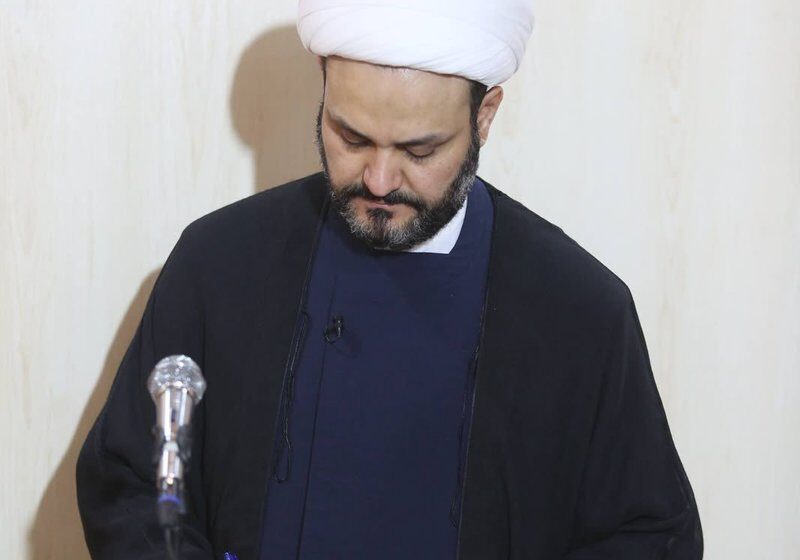
The announcement that Akram al-Kaabi, leader of the Harakat Hezbollah al-Nujaba militia, received a doctorate in law from Al-Mustafa International University in Iran was met with widespread sarcasm and condemnation. Rusly Al-Maliki (Post Impact: 100%) sarcastically congratulated him, adding, “Maybe he will learn that the law rejects militias.” Shaho Al-Qaradaghi (Post Impact: 17%) highlighted the irony of the achievement given al-Kaabi’s “great involvement in fieldwork.” Hiba Al-Nnayib (Post Impact: 13%) described the event as the “legalization of terrorism,” questioning the contradiction of a militia leader, who she claims puts ideology above the nation, becoming a man of law. Meanwhile, the official account of Al-Shaykh Akram al-Kaabi (Post Impact: 88%) simply posted images from the degree ceremony without comment.
2. Esmail Qaani’s Visit to Baghdad Amid Disarmament Pressure
The visit of Esmail Qaani, commander of Iran’s Quds Force, to Baghdad generated significant discussion about Iranian influence and the government’s plan to disarm militias. Omar Abdul Sattar Mahmoud (Post Impact: 70%) questioned the reason for the visit. Rusly Al-Maliki (Post Impact: 51%), citing sources from Al-Hadath channel, reported that Prime Minister Ali al-Zaydi is insisting on his plan to disarm factions and that Qaani’s visit was focused on preventing a clash between militias and Iraqi security forces. Najeh Abbas Al-Mizan (Post Impact: 46%) offered a critical take, stating Qaani was in Iraq to inspect his “forces and soldiers” in what he mockingly called the “Iranian province of Iraq,” including missile factories in Jurf al-Sakhr. Abu Maryam (Post Impact: 20%), citing Al-Hurra, added that Qaani’s visit was prompted by intelligence suggesting al-Zaydi was planning to send forces into Jurf al-Sakhr and that Qaani urged political forces to avoid “breaking the factions.”
3. Government Plans for Jurf al-Sakhr Spark Tensions
The strategic area of Jurf al-Sakhr was a focal point of debate, with reports of government plans to reassert state control. Rusly Al-Maliki (Post Impact: 48%), quoting the Al-Sharq Al-Awsat newspaper, detailed a government plan to encircle militia positions in the area and confiscate heavy weapons to compel them to evacuate. This news prompted strong reactions, with accounts like Mulla Aboud al-Karkhi (Post Impact: 39%) questioning why the area is “forbidden” to security forces and is “outside of government sovereignty,” asking if it has become part of Iranian sovereignty. Omar al-Janabi (Post Impact: 39%) labeled the situation in Jurf al-Sakhr a “sectarian act” and called it a “spoil of war for the ruling Shiite coalition.” Aayad Al Twfan (Post Impact: 43%) discussed the issue on Al-Hadath, mentioning negotiations between Mohammed al-Halbousi and Esmail Qaani over conditions for the return of its displaced residents.
4. Sectarian Accusations Against PM and Babil Governor
Accusations of sectarianism were leveled against government officials. Ahmed Al-Alwani (Post Impact: 50%) launched a sharp attack on Prime Minister Ali al-Zaydi, calling him “purely sectarian, more than al-Maliki,” and alleging that his moderate positions are only due to American pressure. Al-Alwani highlighted a video of Babil’s governor, Ali Turki al-Jamali, accusing an entire tribe of terrorism, and questioned why al-Zaydi and Judge Faiq Zidan have not taken action, contrasting it with the swift arrest of blogger Yazid al-Hassoun. In response to such criticisms, Wasan Al-Shaikhli (Post Impact: 23%) shared a clip of the Babil governor defending the security situation in Jurf al-Sakhr, stating it was previously “occupied by Chechen and Afghan gangs.”
5. Officials Vow to Disarm Militias and End Foreign Presence
Amid rising tensions, various officials and political figures reiterated their positions on militia disarmament and state sovereignty. Yasser Eljuboori (Post Impact: 17%) and The Prime Minister’s Media Office (Post Impact: 12%) shared Prime Minister Ali al-Zaydi’s statement after his meeting with the CENTCOM commander, in which he affirmed that October 1st will mark a new era with Iraq being free of foreign military presence and “uncontrolled weapons.” In a widely circulated clip posted by Hisham Ali (Post Impact: 30%) and Abu Maryam (Post Impact: 14%), Kurdistan Region President Nechirvan Barzani warned that Iraq would face “international isolation” if the issue of armed factions is not resolved.
6. Backlash and Support for Sheikh Adnan al-Janabi
Comments by Sheikh Adnan al-Janabi, reportedly describing the liberation of Jurf al-Sakhr as an “occupation,” sparked a polarized debate. Wasan Al-Shaikhli (Post Impact: 30%) fiercely criticized him, pointing out his and his family’s past roles in Saddam Hussein’s government. Issam Hussein (Post Impact: 20%) suggested al-Janabi was “implicated” by a “real estate developer, the grandson of the companions,” who turns every issue he touches into a sectarian one. In contrast, Abu Maryam (Post Impact: 25%) posted a statement from the Janabiin tribes expressing their unwavering support for Sheikh Adnan al-Janabi and also renewing their support for Prime Minister Ali al-Zaydi.
7. Politician Aras Habib Retracts Statements on Saudi Arabia
Politician Aras Habib was featured in several posts for retracting previous anti-Saudi Arabia statements. Shaho Al-Qaradaghi (Post Impact: 32%) shared a video in which Habib now claims that Iraq had previously bombed neighboring countries, including Kuwait, Saudi Arabia, and Jordan. Yasser Eljuboori (Post Impact: 20%) also posted the clip, commenting that people like Habib cannot be taken seriously because their “words change daily.” Raad Hashim (Post Impact: 10%) shared the same video, highlighting Habib’s admission that he received information indicating Iraq was the aggressor.
8. Commemorating the Death of Prophet Muhammad
Several accounts commemorated the anniversary of the death of the Prophet Muhammad, while others debated the terminology used. The official account of the Iraqi Counter-Terrorism Service (Post Impact: 40%) posted a message of condolence to the Islamic nation and the Iraqi people. Former Prime Minister Mohammed Shia’ Al Sudani (Post Impact: 27%) also posted a tribute, calling for the occasion to be a moment to inspire unity and brotherhood among Iraqis. Separately, the discourse took a theological turn as Mahdi Majeed (Post Impact: 26%) questioned the increasingly common use of the phrase “martyrdom of Prophet Muhammad,” noting that historical accounts state he died in the care of his wife Aisha, not in battle, which sparked a debate on the definition of martyrdom.
9. Judge Faiq Zidan’s Planned Visit to Syria
The announced visit of Iraq’s top judge, Faiq Zidan, to Syria prompted calls for accountability. Omar Abdul Sattar Mahmoud (Post Impact: 35%) reported that Zidan is scheduled to meet Ahmed al-Sharaa in Damascus. Mulla Aboud al-Karkhi (Post Impact: 17%) used the occasion to demand that the Syrian government request the extradition of Iraqi militia members who “wreaked havoc on Syria’s security,” specifically naming Babil’s governor, Ali Turki, whom he accused of being an “element of Asa’ib” and a “slaughterer of Syria’s children.”
10. Concerns Over Iraq’s Economy and Electricity Grid
Amid the political turmoil, users expressed frustration over Iraq’s failing economy and infrastructure. Haidar (Post Impact: 29%) criticized the severe electricity shortages in southern provinces despite them generating a surplus, arguing that the power is unfairly diverted to sustain luxury residential compounds and malls in Baghdad. He called for decentralizing the electricity grid to local governments. Separately, Muhammad Jabbar (Post Impact: 15%) expressed despair over a Parliamentary Finance Committee report stating Iraq’s financial reserves can only cover 10 months of salaries, questioning how a country with such a rich history could reach this point.