2026-09-13: Houthi Attacks on Saudi Arabia

Based on a Miqrab AI analysis of 413 X / Twitter posts trending in Iraq on September 13, 2026, the dominant narrative centers on regional military escalation, specifically Ansar Allah’s (Houthi) missile attacks on Saudi Arabia and the alleged involvement of Iran-backed factions operating from Iraqi territory. This has fueled discussions about Iraq’s sovereignty, potential US sanctions, and the failure of regional diplomacy, highlighted by the cancellation of a key meeting in Oman. Domestically, conversations focused on Prime Minister Ali Faleh Al-Zaydi’s European tour, internal political maneuvering among Shia leaders, ongoing protests in Syria against HTS, and public discontent over economic hardships and contradictory government policies like the alcohol ban.
Table Of Content
- 1. Houthi Attacks on Saudi Arabia
- 2. Iraq’s Alleged Role in Attacks on Saudi Arabia
- 3. Regional Tensions and the Strait of Hormuz
- 4. Protests Against HTS in Syria
- 5. Prime Minister Al-Zaydi’s European Tour
- 6. Threat of US Sanctions on Iraq
- 7. Domestic Political Meetings in Iraq
- 8. Controversy Over Iraq’s Alcohol Ban
- 9. Online Feud Over “Wasan Al-Shaikhli” Account
- 10. Economic Hardship and Public Dissatisfaction
Today’s Top 10 X (Twitter) Trends in Iraq:
1. Houthi Attacks on Saudi Arabia
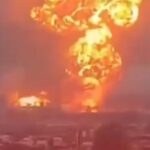
Pro-resistance accounts celebrated missile strikes against Saudi Arabia. Wasan Al-Shaikhli (Post Impact: 100%) announced that Ansar Allah (the Houthis) had targeted Khamis Mushait and Abha with hypersonic missiles, declaring “the Saudi regime is collapsing.” In another post, the same account reported the bombing of the Khalid Air Base in Asir, Saudi Arabia. Accounts like Abu Mustafa Al-Khafaji (Post Impact: 39%) praised the bravery of the Yemeni people, stating, “It is as if courage was created only for the people of Yemen.” Haydar (Post Impact: 13%) also reported explosions in southern Saudi Arabia following a Yemeni missile and drone attack.
2. Iraq’s Alleged Role in Attacks on Saudi Arabia
A significant conversation focused on Iraq’s alleged role as a launchpad for attacks against Saudi Arabia and the presence of Houthi leaders on its soil. Othman Al-Mukhtar (Post Impact: 32%) identified top Houthi leaders—Abu Idris Al-Sharfi, Abu Taha Al-Washli, and Abu Ali Al-Azzi—in a video allegedly from Maysan province, Iraq, claiming they are protected by Kata’ib Hezbollah. He argued that any action by the Al-Zaydi government that doesn’t involve expelling this “terrorist militia” is an acceptance of its activities against Saudi Arabia. David Yassin (Post Impact: 34%) noted that Saudi Arabia’s defense agreements did not provide direct military support and that international rules prevent Saudi forces from operating inside Iraq without Washington’s permission. Aayad Al-Twfan (Post Impact: 15%) attributed the attack on the Saudi “East-West” pipeline to a group led by an Iranian figure known as “Hajji Hamed,” which coordinates between pro-Iran militias and the IRGC.
3. Regional Tensions and the Strait of Hormuz
The escalation of conflict was linked to broader regional tensions, particularly Iran’s control over the Strait of Hormuz and the failure of diplomatic efforts. Liqaa Maki (Post Impact: 35%) analyzed the now-cancelled Salalah meeting, suggesting any new agreement on the strait would only serve Iran’s interests, as Tehran has stated the strait will remain closed as long as the war continues. He questioned the benefit of a new agreement if it wouldn’t lead to an immediate reopening. Rafid Jaboori (Post Impact: 14%) also reported on the cancellation of the Iran-Gulf states meeting in Oman, linking it to the recent escalation. Mohammed Jabbar (Post Impact: 17%) criticized the silence of pro-Iran factions regarding Iran’s closure of the strait, which affects Iraqi oil tankers, contrasting it with their outrage when Iraq briefly closes its own borders.
4. Protests Against HTS in Syria
Several accounts reported on widespread protests in Syrian territories controlled by Hay’at Tahrir al-Sham (HTS), also known as Jabhat al-Nusra. Haydar (Post Impact: 33%) described a “major revolution” in various parts of occupied Syria after the HTS regime raised fuel prices beyond the citizens’ means. Similarly, Issam Hussein (Post Impact: 15%) framed the events as a “revolution of the hungry” against “Wahhabi unification” in Syria. Wasan Al-Shaikhli (Post Impact: 6%) also posted about the continuation of demonstrations against the “terrorist al-Jolani gangs.”
5. Prime Minister Al-Zaydi’s European Tour
The upcoming official visit of Iraqi Prime Minister Ali Faleh Al-Zaydi to France and Germany was a key topic. The Prime Minister’s Media Office (Post Impact: 23%) announced the trip, stating it aims to enhance partnerships in energy, security, and transport. The office later added that the PM would meet with French President Emmanuel Macron and German Chancellor Friedrich Merz. However, some commentators were skeptical. Dr. Yahya Al-Kubaisi (Post Impact: 12%) questioned what would be different about this visit, listing previous Iraqi Prime Ministers who made similar trips without significant results, cautioning against “exaggerated analyses” that Al-Zaydi’s visit would be a “new breakthrough for Paris and Berlin.”
6. Threat of US Sanctions on Iraq
The possibility of the United States imposing harsh sanctions on Iraq was a recurring concern. Abu Maryam (Post Impact: 29%) claimed to have information that the US will cut off dollar shipments to Iraq and later declare it a state sponsor of terrorism because the government cannot control Iran-backed factions. The post warned that the time before a deadline set by Trump is running out. Raad Hashim (Post Impact: 11%) echoed this, stating that diplomatic sources confirmed Western warning messages were sent to Baghdad after repeated attacks on neighboring countries, raising the possibility of Iraq being listed as a state sponsor of terrorism.
7. Domestic Political Meetings in Iraq
High-level political meetings within the Shia political bloc were reported. Ammar Al-Hakim (Post Impact: 15%) announced his meeting with President Nizar Amidi, where they discussed the need for Iraq to not be a launchpad for threatening its neighbors. In a separate post, Al-Hakim (Post Impact: 13%) detailed his meeting with Nouri al-Maliki, where they reiterated support for confining weapons to the state through dialogue and praised the factions’ role in fighting terrorism. They also stressed the unity of the Coordination Framework and the importance of completing the government cabinet with competent individuals.
8. Controversy Over Iraq’s Alcohol Ban
A debate emerged regarding the contradictory enforcement of Iraq’s alcohol prohibition law. Rusly Al-Maliki (Post Impact: 15%) questioned why the government is auctioning confiscated alcoholic beverages after passing a law to ban them, sarcastically asking, “Did the state go so broke that it started looking for scraps?!” Similarly, Yasser Eljuboori (Post Impact: 15%) expressed confusion about the law, asking, “Is alcohol banned or not?!… If it is banned, how are customs selling alcohol inside #Iraq and what will they do to someone who buys it and gets caught?!”
9. Online Feud Over “Wasan Al-Shaikhli” Account
A heated online dispute centered on the identity of the user behind the high-engagement account “Wasan Al-Shaikhli.” The account Haydar (Post Impact: 17%) alleged that “Wasan Al-Shaikhli” and another account named “Samuel” are run by the same “deceitful, lying, dirty person,” a man who uses the accounts to trick women. This user claims the person running the accounts creates fake stories to gain attention. The account Wasan Al-Shaikhli (Post Impact: 15%) responded with insults, accusing “Haydar” of being a Ba’athist and an enemy of Abu Mahdi al-Muhandis. The feud provides a glimpse into the information warfare and personal attacks prevalent on the platform.
10. Economic Hardship and Public Dissatisfaction
Users expressed frustration over Iraq’s poor living conditions and economic struggles. Rusly Al-Maliki (Post Impact: 57%) highlighted a Columbia University report that ranked Iraq as the second dirtiest Arab country and 166th globally. Salim Al-Jomaili (Post Impact: 12%) reported that Anbar province decided to ration vehicle movement due to fuel shortages in a country that produces 4 million barrels of oil per day. Dr. Majid Shingali (Post Impact: 8%) pointed to the rising price of the dollar (1570 dinars), high fuel prices, and a 25-30% increase in consumer goods prices, criticizing the government’s inadequate support for citizens and the private sector.