2026-09-14: Widespread Protests in Syria Labeled “Revolution of the Hungry”

Based on an analysis of 439 X / Twitter posts trending on September 14, 2026, Miqrab AI found that the primary narratives circulating in Iraq centered on regional and domestic turmoil. The most prominent theme was the extensive coverage of anti-government protests in Syria, dubbed the “Revolution of the Hungry,” with many Iraqi commentators criticizing Arab media for ignoring the movement. Domestically, a bizarre claim by an Iraqi Member of Parliament alleging a Somali intelligence presence and an Israeli attack on Saudi Arabia from Iraqi soil sparked widespread ridicule and debate about the country’s security sovereignty. Other key topics included ongoing discussions about Iranian economic influence over Iraq, Prime Minister Ali Faleh Al-Zaidi’s diplomatic visit to France, and the escalating military tensions between Iran and Saudi Arabia.
Table Of Content
- 1. Widespread Protests in Syria Labeled “Revolution of the Hungry”
- 2. MP’s Claims of Somali and Israeli Intelligence Spark Ridicule
- 3. Iranians Allegedly Receiving Salaries from Iraqi Bank
- 4. Prime Minister Al-Zaidi Visits France, Signs Agreements
- 5. Regional Tensions Over Iran’s Military and Saudi Attacks
- 6. Seizure of Alcohol in Baghdad Prompts Cynical Reactions
- 7. Trump’s Statement on Iran Wanting a Deal Sparks Discussion
- 8. Calls to Disarm and Dismantle Iraqi Militias
- 9. Concerns Voiced Over Iraq’s Governance and Economic Frailty
- 10. Debate Over Proposal to Rename “Schools for the Gifted”
Today’s Top 10 X (Twitter) Trends in Iraq:
1. Widespread Protests in Syria Labeled “Revolution of the Hungry”
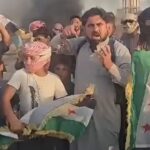
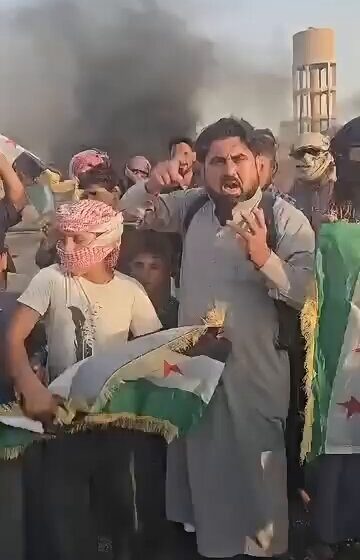
Iraqi social media pages extensively covered what they termed the “Revolution of the Hungry” in Syria, focusing on widespread protests against the government and the leadership of Ahmed al-Sharaa (Al-Jolani). Accounts like Emad Al Musafir (Post Impact: 100%) and Essam Hussein (Post Impact: 50%) criticized media outlets, such as Al-Khanjar’s channels and Al-Arabiya, for what they described as a deliberate lack of coverage, questioning their professionalism and suggesting a sectarian bias. The posts highlight the dire economic conditions driving the protests, with people demanding food and a dignified life. Haider (Post Impact: 33%) shared videos of protesters blocking border crossings and surrounding oil fields, while Dr. Hussein Al-Safi (Post Impact: 31%) framed the popular uprising as a movement against Al-Jolani’s authorities. Another post by Haider (Post Impact: 40%) noted popular calls for the return of the former president to restore Syria to its “golden era before 2011” due to the deteriorating economy and lack of security.
2. MP’s Claims of Somali and Israeli Intelligence Spark Ridicule
A statement by Iraqi MP Ali Al-Saray (also cited as Ali Nahir) claiming that Somalia operates an intelligence cell within Iraq and that Israel may have attacked Saudi Arabia from Iraqi territory triggered a wave of disbelief and sarcasm online. Dr. Ghalib Al-Da’ami (Post Impact: 57%) sarcastically called on all of Iraq’s intelligence and security agencies to confirm the MP’s claims, adding, “And if Al-Saray’s words are true, we suggest you dismiss your employees and close the doors of your institutions.” This sentiment was echoed by Shaho Al-Qaradaghi (Post Impact: 24%), who remarked, “We’re back to the third party!”, a reference to the anonymous entity often blamed for attacks in Iraq. Salem Al-Jomaili (Post Impact: 21%) criticized the statement as a new low in defending Iran, suggesting that if true, it would be a massive security failure and imply cooperation between Iraqi factions and Israel.
3. Iranians Allegedly Receiving Salaries from Iraqi Bank
A video circulating on X fueled discussions about Iranian financial influence in Iraq, with claims that Iranian citizens are receiving compensation payments from an Iraqi state-owned bank. Rusly Al-Maliki (Post Impact: 59%) shared a video of a man claiming to be an eyewitness to Iranians receiving salaries of 1.25 million dinars from Al-Rafidain Bank as compensation for the Iran-Iraq War. In a separate post, Rusly Al-Maliki (Post Impact: 25%) highlighted a statement from an Iranian official about the economic problems caused by the temporary closure of two border crossings with Iraq, commenting, “The real siege is not America’s siege, it’s Iraq’s siege, but there are no real men.” Adding to the theme of economic ties, Shaho Al-Qaradaghi (Post Impact: 17%) sarcastically rephrased a slogan from the Iranian embassy in Baghdad from “Iran and Iraq cannot be separated” to “Iran and Iraqi money cannot be separated.”
4. Prime Minister Al-Zaidi Visits France, Signs Agreements
Prime Minister Ali Faleh Al-Zaidi’s official visit to Paris received significant coverage, with official and user-generated posts detailing his diplomatic engagements. The Prime Minister’s Media Office (Post Impact: 8%) reported on the official reception ceremony at the Invalides military museum and later announced the signing of six memoranda of understanding with France in areas including air defense, military equipment, and energy, with a gas deal signed with TotalEnergies. Haider (Post Impact: 11%) shared photos of PM Al-Zaidi’s reception by French President Emmanuel Macron at the Élysée Palace. During the visit, Ali Farhan (Post Impact: 16%) quoted Al-Zaidi’s statements affirming that Iraq would not be a base for threats against its neighbors and that “state control over weapons is an essential condition for building a unified state.”
5. Regional Tensions Over Iran’s Military and Saudi Attacks
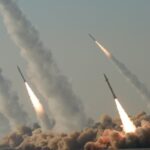
Discussions about regional tensions focused on Iran’s military capabilities and the recent attacks on Saudi Arabia. Najah Muhammad Ali (Post Impact: 30%) celebrated Iran’s military industry, highlighting a new missile that can allegedly track moving warships without satellite guidance. Meanwhile, Mujtahid Al-Iraq (Post Impact: 22%) provided a technical analysis claiming that Saudi Arabia’s oil production and exports have effectively ended for the near future due to the attacks, suggesting the kingdom’s only solution is to place its military under U.S. command and make peace with Israel. Ali Farhan (Post Impact: 22%) linked the attacks directly to Iran by quoting a past statement from Mohsen Rezaei, Secretary of Iran’s Supreme National Security Council, who threatened, “If the neighborhood participates in the economic war, we will target other oil export routes from the Gulf!”
6. Seizure of Alcohol in Baghdad Prompts Cynical Reactions
Reports of a major seizure of alcoholic beverages in Baghdad were met with cynicism, as commentators predicted the government would simply profit from the confiscated goods. Haider (Post Impact: 15%) reported that security forces seized Baghdad’s largest alcohol warehouse, containing 27,000 cartons, which was supplying central and southern provinces, before dryly adding, “The state confiscates it and then sells it at auction.” A similar sentiment was expressed by Rusly Al-Maliki (Post Impact: 34%), who posted a video related to the news with the caption, “Bring a stomach and laugh.. the farce of selling prohibited liquor at public auction!!”
7. Trump’s Statement on Iran Wanting a Deal Sparks Discussion
A statement by former U.S. President Donald Trump regarding Iran fueled online discussion about the state of U.S.-Iran relations. Steven Nabil (Post Impact: 20%) and Rafid Jaboori (Post Impact: 10%) both quoted Trump’s message, in which he claimed that a “failing Iran wants to make a deal, quickly and badly,” and that he would decide whether the U.S. would engage. This prompted Yasser Eljuboori (Post Impact: 11%) to humorously outline the “life cycle of the Middle East,” describing a daily pattern of conflicting statements from the U.S. and Iran, mediation efforts from Oman, and military escalations like drone attacks or ship seizures.
8. Calls to Disarm and Dismantle Iraqi Militias
The issue of disarming non-state militias in Iraq was a key topic, with posts highlighting both internal government discussions and U.S. pressure. Hussam Alhaj (Post Impact: 10%) shared a clip of Alla Talabani, an advisor to the Prime Minister, stating that the Americans have demanded the dismantling of six armed factions, not just three, and that most are linked to influential political parties. Reinforcing this external pressure, Dr. Zaid Abdulwahab Al-Adhami (Post Impact: 13%) quoted the acting U.S. Ambassador in Baghdad, who stated, “We support building an Iraq free from militias and uncontrolled weapons.”
9. Concerns Voiced Over Iraq’s Governance and Economic Frailty
Several accounts expressed deep pessimism about the state of governance and the economy in Iraq. Rusly Al-Maliki (Post Impact: 26%) stated that for 23 years, the Iraqi system has been on the edge of collapse in every sector, from security and electricity to food security and finances, claiming the only thing preventing its fall into the abyss is America. Similarly, Ayad Al-Anbar (Post Impact: 23%) lamented that Iraq is the country whose governments have signed the most memoranda of understanding with major world powers, yet with no positive impact on its economy, military capabilities, or infrastructure.
10. Debate Over Proposal to Rename “Schools for the Gifted”
A recommendation by the Iraqi Parliament’s Education Committee to remove the “Gifted” (Al-Mutafawiqin) designation from specialized schools sparked a debate online. Abu Maryam (Post Impact: 8%) reported the committee’s recommendation to reclassify these institutions as general schools starting in the 2026-2027 academic year. In response, Muna Sami (Post Impact: 11%) strongly criticized the proposal, arguing that “the successful should not be fought in my country.” She described the schools for the gifted, distinguished, and talented as the best government schools and urged the parliamentary committee to focus on improving the entire education system rather than resorting to “populist demands” that degrade it.