2026-09-18: Iran’s “Feda’iyan-e Iran” Military Parade

Based on an analysis of 308 X / Twitter posts by Miqrab AI on September 18, 2026, the primary narratives circulating in Iraq revolve around escalating regional conflicts and domestic political and economic issues. Tensions between Iran and Saudi Arabia are a dominant theme, with extensive discussion on Yemeni Houthi attacks against Saudi cities and a military parade in Tehran that is being interpreted as a show of force. Domestically, there is significant conversation about Iraq’s economy, including a reported drop in oil production due to threats from armed factions and positive news about the full reopening of Iraqi airspace to civilian flights. Other key topics include an appeal by Grand Ayatollah Ali al-Sistani for clemency for a citizen, debates over the ideological shifts of Syrian militant leaders, and proposed energy projects linking Iraq to Europe.
Table Of Content
- 1. Iran’s “Feda’iyan-e Iran” Military Parade
- 2. Yemeni Armed Forces Launch Major Attacks on Saudi Arabia
- 3. Ayatollah Sistani Appeals for Pardon of Detained Youth
- 4. Iraq Reopens Western Airspace to Civil Aviation
- 5. Pakistan’s Dilemma in Saudi-Iran Tensions
- 6. Iraqi Oil Production Drops, Factions Blamed
- 7. Al-Jolani’s Ideological Shift Discussed
- 8. France Announces Plan for Iraq-Europe Pipeline
- 9. Controversy Over Canceled “Spacetoon” Concert in Basra
- 10. Disruptions Reported in Electronic Payment Systems
Today’s Top 10 X (Twitter) Trends in Iraq:
1. Iran’s “Feda’iyan-e Iran” Military Parade
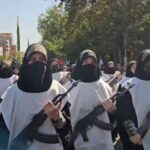
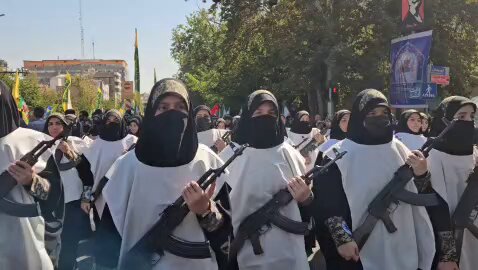
Iranian authorities organized a large-scale military parade in Tehran called “Feda’iyan-e Iran” (Devotees of Iran), which drew significant attention and mixed reactions from Iraqi social media users. The account Haydar (Post Impact: 59%) shared a video of the event, noting the participants were dressed in white shrouds and remarked, “Our memories of this subject are not good.” Other accounts, such as Abu Maryam (Post Impact: 15%) and Raad Hashim (Post Impact: 9%), also posted videos, comparing the parade to the popular armies of the former Iraqi regime. In contrast, Shaho Al-Qaradaghi (Post Impact: 29%) juxtaposed the parade with a video of a marathon in Tehran where hundreds of women participated without hijabs, questioning if religious figures like Al-Qubanchi were aware of these contrasting events. Meanwhile, Wissam Aziz (Post Impact: 8%) reported an official statement from Brigadier Zadeh claiming that around 33 million Iranian citizens had registered for the “My Soul is a Sacrifice” initiative to defend Islam.
2. Yemeni Armed Forces Launch Major Attacks on Saudi Arabia
Multiple accounts reported a significant escalation in the Yemen-Saudi conflict, with the Yemeni Armed Forces launching what was described as their largest attack to date. The account Haydar (Post Impact: 35%) stated that cities including Jeddah, Yanbu, Taif, Al-Ula, Jazan, Khamis Mushait, and Abha were targeted in retaliation for an alleged terrorist plot in Sana’a. The same account also posted a statement attributed to Brigadier General Yahya Saree, claiming the foiling of a “criminal attempt in the capital, Sana’a, carried out by the Saudi enemy with a Daesh-like character” that “will not pass without a response” (Haydar Post Impact: 27%). A related post showed a massive demonstration in Sana’a condemning accusations by the “Al Saud regime” that the Yemeni people were targeting Islamic holy sites in Mecca (Haydar Post Impact: 32%). In a broader context, Najah Mohammed Ali (Post Impact: 10%) reported, citing Reuters, that Saudi Arabia has requested China’s mediation to contain the Yemeni escalation in the Red Sea and Bab al-Mandab strait.
3. Ayatollah Sistani Appeals for Pardon of Detained Youth
News circulated widely that the office of Grand Ayatollah Ali al-Sistani has intervened on behalf of a young man, Mustafa Sami Musa, who was arrested for burning a picture of the religious leader. The account Haydar (Post Impact: 38%) reported that Ayatollah Sistani’s office appealed to the Iraqi judiciary to release the young man. This was corroborated by Abu Maryam (Post Impact: 7%), who also shared the news that Sistani’s office had addressed a court in Baghdad for the purpose of securing his release. The posts highlighted the cleric’s call for tolerance and forgiveness, a move that generated considerable discussion online.
4. Iraq Reopens Western Airspace to Civil Aviation
A significant development for Iraqi aviation was announced, as the country declared the end of restricted air zones in its western regions after a decade. The account Haydar (Post Impact: 37%) reported that the airspace, previously designated for military use since 2014, is now fully open to international civil aviation. This was officially confirmed by the Security Media Cell (Post Impact: 8%), which issued a statement from the Office of the Commander-in-Chief of the Armed Forces. The statement celebrated the move as a strategic achievement resulting from the Prime Minister’s directives, emphasizing that it represents an important step toward restoring Iraq’s regional and international position in air navigation and will contribute to increasing national revenues from transit fees.
5. Pakistan’s Dilemma in Saudi-Iran Tensions
A widely discussed analysis focused on Pakistan’s challenging position amidst repeated attacks on Saudi Arabia by Iranian-backed groups. The analyst Liqaa Makki (Post Impact: 100%) argued that Pakistan, as a historic ally of Saudi Arabia, is under immense pressure to act beyond mere rhetoric. The relationship, which has seen extended and active Saudi support for Pakistan, including for its nuclear program, now demands that Pakistan exert serious pressure on Iran, the primary source of the attacks. The author suggests that Pakistan’s role is not to provide troops or weapons but to leverage its position as a neighbor and mediator with Iran to de-escalate the situation. The post concluded by stating that Pakistan’s actions are of great importance as it can be a source of benefit or harm and, as a nuclear state, has the potential to play a decisive role.
6. Iraqi Oil Production Drops, Factions Blamed
A post with high engagement highlighted a severe decline in Iraq’s oil production, attributing the cause to threats from armed factions against foreign companies. Rusly Al-Maliki (Post Impact: 61%) reported that Iraqi oil output has plummeted from 3.5 million barrels to just one million barrels per day. The post directly blames the withdrawal of foreign oil companies on “threats from the factions.” The author then sarcastically addresses individuals associated with the “resistance,” questioning their actions and implying their involvement in illicit activities such as oil smuggling.
7. Al-Jolani’s Ideological Shift Discussed
The reported ideological transformation of Abu Mohammad al-Jolani, leader of Hay’at Tahrir al-Sham in Syria, has become a topic of discussion. Zeinab Al-Ghanem (Post Impact: 37%) commented that al-Jolani has abandoned “Wahhabi Takfirism, slaughter, captivity, and rape” and returned to the “Ahl al-Sunnah wal-Jama’ah” doctrine. Similarly, Issam Hussein (Post Impact: 19%) interpreted a statement from the Mufti of Syria as an “explicit admission that the Saudi Wahhabi doctrine is takfiri” and unsuitable as a comprehensive Islamic school of thought. He concluded that “Saudi Wahhabism is an absolute evil, according to the testimony of the Mufti of Syria.”
8. France Announces Plan for Iraq-Europe Pipeline
Multiple accounts reported on a statement by French President Emmanuel Macron regarding a new energy project involving Iraq. Haydar (Post Impact: 17%) and Abu Maryam (Post Impact: 14%) both shared the news that France is working to establish a pipeline to transport gas and oil from Iraq to the European market. According to the reports, Macron stated this project would be developed in coordination with both Iraq and Jordan. Yasser Eljuboori (Post Impact: 13%) also amplified the French President’s announcement, highlighting its potential significance for Iraq’s role in global energy markets.
9. Controversy Over Canceled “Spacetoon” Concert in Basra
The cancellation of a “Spacetoon” themed concert in Basra was praised by religious figures and discussed by social media users. The account Haydar (Post Impact: 17%) reported that Sadr al-Din al-Qubanchi, a prominent cleric, thanked the people of Basra for the cancellation, describing the planned event as a “lewd concert that was intended to be held in the faithful, good, and chaste Basra.” Abu Maryam (Post Impact: 7%) also shared the news. On the other hand, Shaho Al-Qaradaghi (Post Impact: 11%) critically questioned Al-Qubanchi’s stance, asking if he was aware of the festivals and celebrations that take place in Tehran and other Iranian cities and wondering why he does not object to them.
10. Disruptions Reported in Electronic Payment Systems
Several users reported issues with electronic payment systems in Iraq, specifically mentioning the suspension of services for Qi Card. The user Abu Maryam (Post Impact: 15%) stated that foreign payments on Qi Card prepaid cards have been completely stopped, noting that the exchange rate on these cards had recently been increased to 1,506 dinars per dollar. This was echoed by sh.j.Al-adhami (Post Impact: 13%), who lamented that the Central Bank, Al-Rafidain Bank, and the Qi Card company had collectively halted the online market by stopping the sale of dollars for promotion, effectively “killing an entire commercial sector in moments.” A further post from Abu Maryam (Post Impact: 11%) cited general complaints about failures in electronic payments at various locations.