2026-09-21: Kurdistan Region Unifies Peshmerga Forces

Based on a Miqrab AI analysis of 393 X / Twitter posts trending on September 21, 2026, the primary online conversations in Iraq revolve around significant domestic and international developments. A landmark achievement in the Kurdistan Region, the unification of Peshmerga forces, garnered widespread praise from Iraqi and Kurdish leaders as a crucial step towards national sovereignty. This internal progress contrasts sharply with escalating regional tensions, dominated by the announcement of severe U.S. sanctions set to ground all Iranian airlines, a move that accounts report Iraq will comply with. Discussions also focused on Prime Minister Ali Faleh Al-Zaydi’s visit to New York to negotiate an extension for disarming Iraqi factions, alongside his public criticism of both Iran for obstructing oil tankers in the Strait of Hormuz and the Iraqi Oil Minister’s controversial statements blaming Saudi Arabia for rising transport costs.
Table Of Content
- 1. Kurdistan Region Unifies Peshmerga Forces
- 2. US Sanctions to Ground All Iranian Airlines
- 3. Oil Minister Blames Saudi Arabia for High Transport Costs
- 4. PM Discusses Extending Deadline for Disarming Factions
- 5. Condolences for Sheikh Ahmed bin Rashid Al Maktoum
- 6. Ansar Allah Claims Drone Strike on Saudi Soldiers
- 7. Central Bank Restricts Dollar Access for Travelers
- 8. PM Al-Zaydi Accuses Iran of Blocking Strait of Hormuz
- 9. Controversy and Blame over Iraq’s Fuel Crisis
- 10. Debate on the Historical Nature of the Ba’ath Party
Today’s Top 10 X (Twitter) Trends in Iraq:
1. Kurdistan Region Unifies Peshmerga Forces
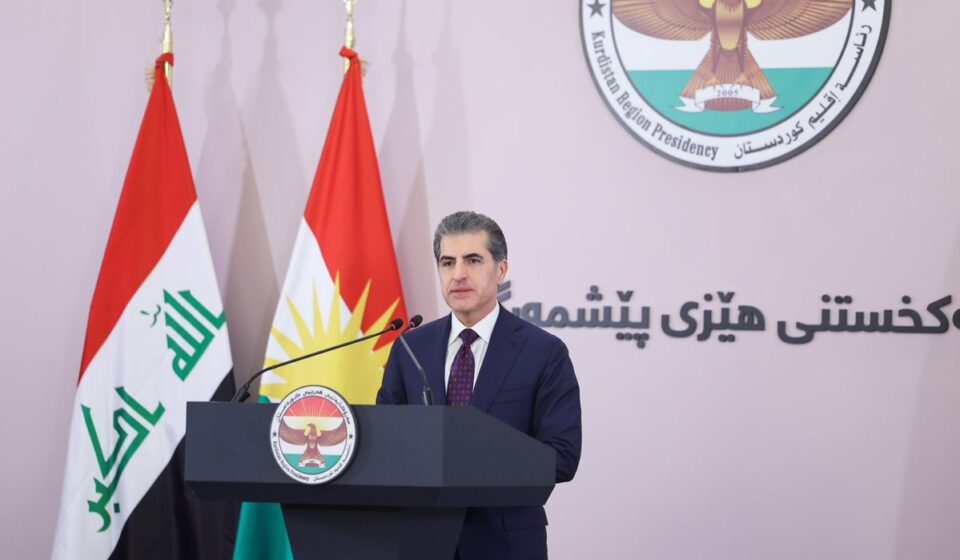
Kurdish and Iraqi leaders announced the historic unification and reorganization of the Peshmerga forces, officially bringing all units, including the 70th and 80th forces, under the command of the Ministry of Peshmerga Affairs. High-profile accounts celebrated the move as a major step toward creating a professional, institutionalized national military force free from partisan influence. Masrour Barzani (Post Impact: 34%) called it a “historic day for Kurdistan and the Peshmerga,” emphasizing that the next phase must focus on strengthening military capabilities. Similarly, Qubad Talabani (Post Impact: 29%) described it as a “historic milestone.” Nechirvan Barzani (Post Impact: 26%) stated that the Peshmerga must remain above party rivalries, as it is the force of Kurdistan, not any single party. Former Prime Minister Mustafa Al-Kadhimi (Post Impact: 15%) praised the achievement and hoped it would serve as an encouraging message for armed groups outside state control elsewhere in Iraq.
2. US Sanctions to Ground All Iranian Airlines
A major topic of discussion was the announcement by U.S. Treasury Secretary Scott Beisent that all Iranian airlines would be forced to halt operations worldwide within 48 hours, beginning September 23. Accounts like Rusly Al-Maliki (Post Impact: 42%) and Ali Farhan ali farhan (Post Impact: 24%) explained the implications, noting that foreign airports and service companies would likely refuse to deal with Iranian carriers to avoid U.S. penalties. Citing Agence France-Presse, Hiba Alnnayib HIBA Alnnayib (Post Impact: 19%) reported that Iraq would comply with U.S. pressure and ban Iranian airlines from its territory. Analyst Liqaa Maki (Post Impact: 52%) commented on the move, stating that while a flight ban is less economically damaging than a naval blockade, its psychological impact on Iranians is “much more dangerous.”
3. Oil Minister Blames Saudi Arabia for High Transport Costs
Iraq’s Oil Minister sparked controversy by accusing Saudi Arabia of causing a rise in Iraqi oil transport costs, from $26 to $37 per barrel, by purchasing 25 giant oil tankers. The statement was met with sharp criticism by several commentators. Ziad Al-Hashimi (Post Impact: 57%) described the minister’s remarks as demonstrating a “low level of knowledge and a clear weakness in experience,” arguing that the real causes for the price hike are increased insurance costs and dangers in the strait from Iranian attacks. He added that the minister should have admitted that “(Iraqi oil is besieged).” Similarly, Tamara Alkhazraji (Post Impact: 24%) questioned the minister’s logic, asking, “You have been in power for 23 years, why didn’t you become like Saudi Arabia and buy tankers?”
4. PM Discusses Extending Deadline for Disarming Factions
Prime Minister Ali Faleh Al-Zaydi’s visit to New York to attend the UN General Assembly was a key topic, with a focus on his efforts to renegotiate the deadline for disarming armed factions. Multiple accounts reported on his interview with the New York Times, where he proposed extending the deadline to June 30, 2027. Ali Farhan ali farhan (Post Impact: 11%) quoted Al-Zaydi as saying, “We will consider the armed groups outlaws if they continue their work after the deadline expires.” However, there was skepticism about the plan’s reception in Washington. Abu Maryam (Post Impact: 17%) claimed that the U.S. has “categorically rejected” the proposed extension and that the meeting with President Trump will be brief and protocol-based.
5. Condolences for Sheikh Ahmed bin Rashid Al Maktoum
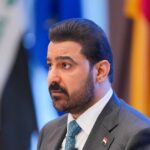
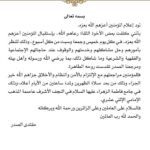
Iraqi political figures and other prominent personalities shared messages of condolence following the death of Sheikh Ahmed bin Rashid Al Maktoum, the brother of Dubai’s ruler, Sheikh Mohammed bin Rashid Al Maktoum. The Prime Minister’s Media Office (Post Impact: 19%) issued a formal statement on behalf of Prime Minister Ali Faleh Al-Zaydi, expressing sincere condolences to the UAE’s leadership and people. Similar messages were posted by Raghad Saddam Hussein (Post Impact: 15%) and Kurdistan Region Prime Minister Masrour Barzani (Post Impact: 8%), both offering their sympathies to the Al Maktoum family and the people of the UAE.
6. Ansar Allah Claims Drone Strike on Saudi Soldiers
A narrative circulated widely among pro-resistance accounts claiming that Ansar Allah (the Houthis) conducted a successful drone strike on Saudi ground forces in Najran, resulting in multiple casualties. The account Haidar (Post Impact: 24%) posted a list with the names of six individuals it claimed were Saudi soldiers killed in the attack. This was part of a broader online conversation about Houthi military activities, with another account, Ali Farhan ali farhan (Post Impact: 9%), sharing a video of a Houthi mufti in Taiz, Yemen, threatening to target the Two Holy Mosques in Saudi Arabia.
7. Central Bank Restricts Dollar Access for Travelers
The Central Bank of Iraq’s decision to limit the sale of US dollars to travelers to only twice a year, down from once a month, drew criticism and sparked debate about its economic consequences. Haidar (Post Impact: 17%) noted the decision would negatively impact travel, particularly to nearby destinations, stating, “Tourism in Beirut is officially hit.” Ameer aldaami (Post Impact: 9%) offered a more severe critique, arguing the move was a sign of mismanagement that “will ignite the parallel market” and further damage Iraq’s already fragile economy.
8. PM Al-Zaydi Accuses Iran of Blocking Strait of Hormuz
In addition to discussing the disarmament of factions, Prime Minister Ali Faleh Al-Zaydi’s interview with the New York Times included strong accusations against Iran. Accounts such as Haidar (Post Impact: 13%) and Ali Farhan ali farhan (Post Impact: 11%) highlighted Al-Zaydi’s statement that “Iran did not allow our tankers to pass through Hormuz because its goal is to raise global oil prices.” He reportedly added that Iraq had lost 60% of its monthly oil revenue due to the war. This claim was amplified by an earlier post from Shaho Al-Qaradaghi (Post Impact: 14%), who cited the director of Iraq’s State Organization for Marketing of Oil (SOMO) as saying that an Iraqi tanker had been shelled before it could leave the strait days before.
9. Controversy and Blame over Iraq’s Fuel Crisis
Amid long queues at gas stations, Iraqi social media users discussed an ongoing fuel crisis, with some officials and commentators alleging it was deliberately manufactured. During a parliamentary session with the Minister of Oil, MP Mahdi Taqi Amerli, as reported by Haidar (Post Impact: 9%), claimed the crisis was “fabricated by the director of SOMO in order to benefit Saudi and Emirati companies and to push citizens to demonstrate in October.” Other accounts criticized the government’s handling of the issue. Ameer aldaami (Post Impact: 6%) expressed frustration with the Oil Minister’s answers regarding the crisis and smuggling, interpreting them as a sign of incompetence.
10. Debate on the Historical Nature of the Ba’ath Party
A historical and political debate resurfaced regarding the nature of the Ba’ath Party’s rule in Iraq. Sheikh Thair Al-Bayati (Post Impact: 13%) argued against the narrative that the former regime was a “Sunni project,” asserting that Saddam Hussein was an Iraqi nationalist and that 65% of Ba’athists and state security members were Shia. He criticized the current system as a “state of quotas and the influence of armed factions,” contrasting it with the former “state of institutions led by the Ba’ath Party.” Separately, Rusly Al-Maliki (Post Impact: 18%) shared a picture of a fourth-grade textbook and commented on its content, suggesting a different perspective on the Ba’athist era’s activities beyond its conflict with religious figures.