2026-09-28: Iraqi Football Fan Banned from Gulf States

Based on an analysis of 466 X / Twitter posts trending in Iraq on September 28, 2026, Miqrab AI identified several dominant narratives reflecting a state of heightened political, sectarian, and economic anxiety. The most prominent discussion revolved around the banning of a well-known Iraqi football fan from Gulf countries, which sparked a significant debate laden with sectarian undertones. Another major theme was Iran’s pervasive influence, particularly in the context of US aviation sanctions, threats by Iranian-backed militias against the Iraqi government, and a leaked report implicating Iran in an attack on Saudi Arabia launched from Iraqi territory. Widespread pessimism about Iraq’s future was a recurring sentiment, fueled by the imminent withdrawal of Coalition forces, fears of an ISIS resurgence, and concerns over systematic demographic change targeting the Sunni community. These conversations paint a picture of a country grappling with issues of sovereignty, internal division, and external pressures.
Table Of Content
- 1. Iraqi Football Fan Banned from Gulf States
- 2. Leaked Report Implicates Iran in Saudi Attack
- 3. Widespread Pessimism and Fear for Iraq’s Future
- 4. Iran Imposes 100% Tax; Iraq Sells Oil at Discount
- 5. Alleged Demographic Change Targeting Sunnis
- 6. Fears of ISIS Resurgence After Coalition Withdrawal
- 7. Debate Over US Sanctions on Iranian Aviation
- 8. Kataib Hezbollah Threatens Iraqi Government
- 9. Iraq to Host Gulf Cup 28 Amidst Controversy
- 10. Arrest of Mosul Professor Over Land Dispute
Today’s Top 10 X (Twitter) Trends in Iraq:
1. Iraqi Football Fan Banned from Gulf States
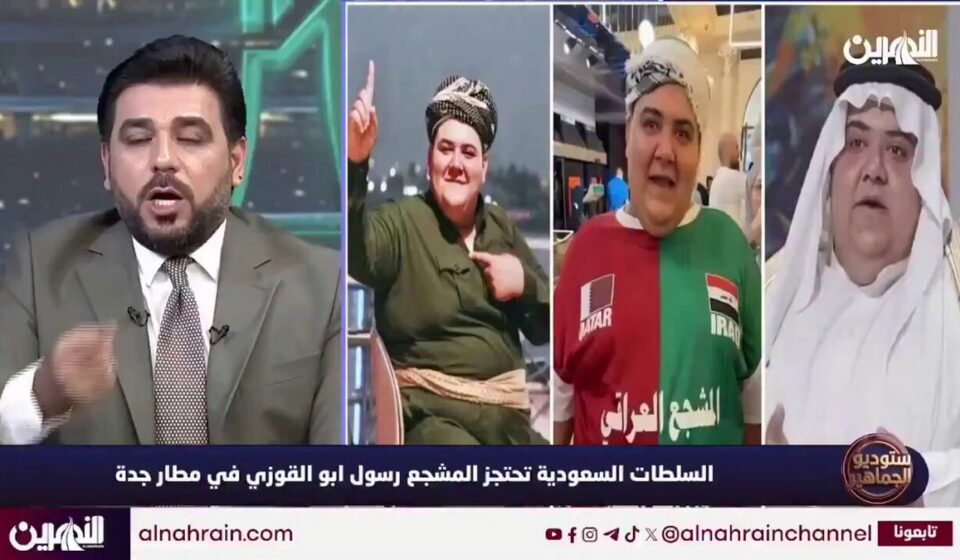
The most engaging story on Iraqi social media concerned an Iraqi football fan, referred to as Rasul Abu Al-Qouzi, who was reportedly banned from entering Gulf Arab countries. Faiq Al-Sheikh Ali/Kalimati Lil-Tarikh (Post Impact: 100%) framed the incident as a “joke,” claiming the fan was banned for sectarian chants and sarcastically noted that Saudi Arabia would “send Yazid” to confront him. In contrast, Bahaa khaleel Bahaa khaleel (Post Impact: 87%) thanked the Saudi government for the ban, describing the fan as “a puppet figure paid to stir up sectarian problems” by parties affiliated with Iran and asserting he does not represent Iraqi citizens. Othman Al-Mukhtar (Post Impact: 25%) echoed this sentiment, condemning the presence of “sectarian rhetoric and hatred” even in popular sporting events and stating it is Saudi Arabia’s right to deny entry to such individuals.
2. Leaked Report Implicates Iran in Saudi Attack
A report allegedly detailing an investigation into an attack on a Saudi oil pipeline created significant discussion. Liqaa Maki (Post Impact: 52%) analyzed the leak, stating it accuses Iran and the Houthis of carrying out the attack from Iraqi territory with logistical support from Iraqi individuals. He views the leak as an intentional move by the Iraqi government to confront Iran’s allies within Iraq and asserts it is a clear accusation that Iran violated Iraqi sovereignty to attack Saudi Arabia. Similarly, Shaho Al-Qaradaghi (Post Impact: 7%) cited Al-Araby Al-Jadeed, noting that the investigation points to a group linked to the Iranian Revolutionary Guard and the Houthis, questioning how Iraq can speak of sovereignty with such groups present. Rafid Jaboori (Post Impact: 8%) suggested the final report would blame the Houthis and “infiltrating” Iranians rather than an Iraqi militia directly, anticipating that Iraq would merely ask Iran for de-escalation.
3. Widespread Pessimism and Fear for Iraq’s Future
A strong sense of pessimism and anxiety about Iraq’s trajectory was evident across multiple high-engagement posts. Rusly Al-Maliki (Post Impact: 54%) posted a somber image with the text, “And now… May God help the Iraqis for what the days are hiding.” In another post, he expressed an unprecedented level of pessimism, stating, “In Iraq’s darkest circumstances… I was not as pessimistic as I am now. God save us” (Rusly Al-Maliki (Post Impact: 36%)). This mood was linked to concrete fears by other users. Tamara Alkhazraji (Post Impact: 23%) listed a litany of crises—militias, lack of water and electricity, fuel shortages, the US withdrawal and impending ISIS threat, and lack of salaries—to criticize those distracted by other issues.
4. Iran Imposes 100% Tax; Iraq Sells Oil at Discount
Economic pressures from Iran and unfavorable international deals were a key topic of concern. A widely shared post by Rusly Al-Maliki (Post Impact: 49%) highlighted three critical economic developments. The first was that Iran has imposed a 100% tax on all goods and crops exiting or transiting its territory towards neighboring countries, a significant increase from the previous 30%. The second point, attributed to Reuters, was that the Indian Oil Corporation purchased two million barrels of oil from Iraq at a steep discount of $28. The final point was a warning from Washington to Baghdad that violating the ban on Iranian aviation could lead to sanctions on Iraqi airports. These points were presented together to illustrate the dire economic and political situation facing Iraq.
5. Alleged Demographic Change Targeting Sunnis
Accusations of a systematic campaign of demographic change against Sunni Arabs, particularly in the areas surrounding Baghdad, were raised by prominent accounts. Othman Al-Mukhtar (Post Impact: 35%) claimed that what is happening in the Baghdad belt is “systematic demographic change targeting Iraqi Sunnis,” alleging that land is being seized from original inhabitants under the pretext of investment and housing, with terrorism charges fabricated against them. This sentiment was echoed by Mashaan Al-Jabouri (Post Impact: 28%), who warned that something new is forming in the “consciousness of Sunni Arabs” due to the injustice they face. He argued that protecting Iraq requires a new national contract based on justice and citizenship, not “humiliation and sectarian discourse.”
6. Fears of ISIS Resurgence After Coalition Withdrawal
The scheduled withdrawal of the US-led international coalition on September 30 fueled widespread speculation about a potential resurgence of ISIS. Ali Farhan (Post Impact: 33%) predicted that after the withdrawal, ISIS will re-emerge “by the power of a قادر [all-powerful being],” which will then be used as a pretext by armed factions to argue that “the factions’ weapons cannot be handed over as long as there is a danger to Iraq.” This perspective suggests the return of ISIS would serve as a convenient justification for militias to retain their arms outside of state control. Hayder (Post Impact: 20%) noted the irony that after years of being told ISIS was a myth to justify keeping weapons, the group is now suddenly reappearing as US forces withdraw.
7. Debate Over US Sanctions on Iranian Aviation
The Iraqi government’s compliance with US sanctions banning Iranian flights was a deeply divisive topic. Pro-Iranian factions organized protests, with Shaho Al-Qaradaghi (Post Impact: 19%) sharing a video of a demonstration in Nasiriyah and questioning why there were no similar protests when Iran closed the Strait of Hormuz to Iraqi oil. Meanwhile, news emerged that the US was considering an exemption. Rusly Al-Maliki (Post Impact: 27%), citing Reuters, reported that the US was studying an exemption for flights between Iran and Najaf for one month for religious visits on Iraqi Airways. Ali Farhan (Post Impact: 16%) interpreted this to mean the ban on Iranian airlines remains, with only Iraqi Airways being granted an exception.
8. Kataib Hezbollah Threatens Iraqi Government
In response to the ban on Iranian flights, Kataib Hezbollah issued a direct threat against the Iraqi government. The group’s security official, identified as Abu Mujahid Al-Asaf, warned Prime Minister Al-Zaydi that “the government that does not work for the benefit of the people will be worked to be overthrown by various means,” according to posts from Ali Farhan (Post Impact: 15%) and Raad Hashim (Post Impact: 10%). The statement also threatened to close border crossings with countries participating in the “siege” and declared that the “Islamic Resistance” would begin monitoring Iraqi airspace. Rusly Al-Maliki (Post Impact: 15%) described the threat as an example of what factions will do to the country if Iran wants to “burn it,” calling them and Iran “absolute evil.”
9. Iraq to Host Gulf Cup 28 Amidst Controversy
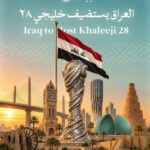
The Gulf Cup Federation’s approval for Iraq to host the 28th Gulf Cup football tournament was met with both celebration and controversy. Accounts like Hayder (Post Impact: 8%) and Ali Al-Khalidi (Post Impact: 10%) shared the news positively, welcoming Arab brothers to Iraq. However, the decision drew criticism from some religious figures. Shaho Al-Qaradaghi (Post Impact: 9%) shared a video of cleric Mustafa Al-Ansari questioning whether Shiites in Iraq were not ashamed to applaud “the Khaleejis after all they have done to the Shiites.” Abu Maryam (Post Impact: 11%) also noted that a cleric in Basra had voiced his objection to Iraq hosting the tournament.
10. Arrest of Mosul Professor Over Land Dispute
The arrest of an archaeology professor from the University of Mosul sparked outrage and discussion about free speech and corruption. Rusly Al-Maliki (Post Impact: 20%) reported that Dr. Amer Abdullah Al-Jumaili was arrested following a Facebook comment regarding the seizure of lands classified as “archaeological taboos.” He described the professor as one of the best experts in his field, implying he was targeted by those who benefit from the land seizure. Salim Al-Jumaili (Post Impact: 7%) also reported the “kidnapping” of the professor after he objected to a report authorizing the exploitation of an archaeological site.