2026-10-04: Saddam-Era Documents Surface in US Auctions

Based on an analysis of 438 X / Twitter posts by Miqrab AI on October 4, 2026, the primary narrative in Iraq centers on the complex interplay between national sovereignty, militia power, and historical memory. The top-trending topic involved the auction of sensitive documents from the Saddam Hussein era, sparking discussions about Iraq’s past. This was closely followed by a significant domestic controversy where the government’s investigation into the desecration of the US flag was met with open defiance from a prominent militia leader, highlighting the persistent challenge of state authority. Other key conversations included praise for Houthi military advances in Yemen, analyses of internal Shia political rivalries, and growing concerns over regional security dynamics following the US withdrawal from Iraq.
Table Of Content
- 1. Saddam-Era Documents Surface in US Auctions
- 2. US Flag Desecration Sparks State vs. Militia Standoff
- 3. Accounts Praise Houthi Military Advances in Yemen
- 4. Reasons Behind Intra-Shia Tensions Over Asa’ib Ahl al-Haq
- 5. Rising Regional Military Tensions Post-US Withdrawal
- 6. Kuwait Revokes Citizenship of Al-Babtain Family Relatives
- 7. Pushback Against Iranian Influence in Iraq
- 8. Iranian Economic Woes and Oil Minister’s Resignation
- 9. Legal Action and Asset Seizure Against “Beit Mjeisar”
- 10. Iraqi Government Announces Economic Stimulus Package
Today’s Top 10 X (Twitter) Trends in Iraq:
1. Saddam-Era Documents Surface in US Auctions
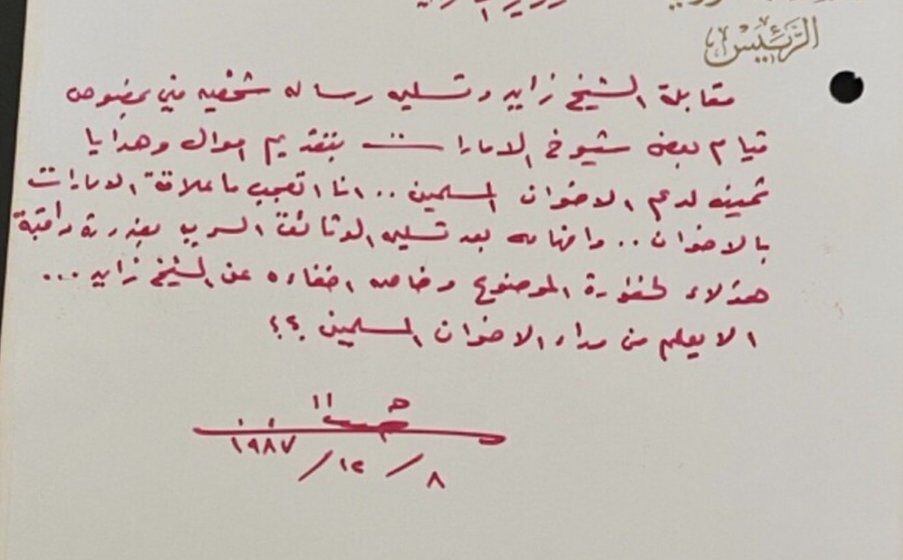
A top-trending topic revolved around the sale of sensitive documents from Saddam Hussein’s regime in American auctions. Steven Nabil (Post Impact: 100%) reported that the documents include direct orders to ministers and reflect Saddam’s positions on events involving Iran, Saudi Arabia, Syria, and other regional countries, suggesting they could be valuable for researchers. Similarly, Haider (Post Impact: 13%) noted that the US seized over two million Iraqi documents in 2003 and that some are now being sold for hundreds or thousands of dollars. The discussion was amplified by Raghad Saddam Hussein (Post Impact: 75%), who shared a handwritten letter from her father from his detention in 2004, in which he wrote about the Iraq he longed to see again.
2. US Flag Desecration Sparks State vs. Militia Standoff
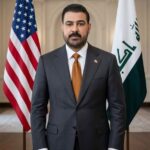
A major controversy erupted after the desecration of the US flag during “Sovereignty Day” events. The Prime Minister’s Media Office (Post Impact: 53%) announced that Commander-in-Chief Ali Faleh Al-Zaydi ordered an investigation and the arrest of those involved. In a direct challenge, Sheikh Akram Al-Kaabi (Post Impact: 89%) posted a video of himself stepping on the American flag with the caption “#Your_crimes_are_under_our_feet”. This prompted accounts like Shaho Al-Qaradaghi (Post Impact: 49%) and Sheikh Thaer Al-Bayati (Post Impact: 18%) to question whether the state would apply the law to a powerful militia leader, framing the incident as a test of state authority versus militia power. The Prime Minister’s Office later confirmed arrests had been made, as reported by Ali Farhan (Post Impact: 13%).
3. Accounts Praise Houthi Military Advances in Yemen
Several accounts celebrated the military successes of Ansar Allah (the Houthis) in Yemen. Dr. Hussein Al-Safi (Post Impact: 47%) praised the group’s conduct, contrasting their announcement of a general amnesty with the actions of other factions in Syria, and lauded what he called the bravery of the followers of Imam Ali. Commentator Najah Mohammed Ali (Post Impact: 20%) described the men of Yemen as symbols of strength and courage who have proven that “nations are not measured by what they own, but by the will they possess.” News of their progress, particularly in the Taiz governorate and the city of Al-Turbah, was shared by Haider (Post Impact: 13%), who reported “unprecedented collapses” among Saudi-backed forces.
4. Reasons Behind Intra-Shia Tensions Over Asa’ib Ahl al-Haq
Sheikh Falah Al-Quraishi (Post Impact: 70%) offered a detailed analysis of why some Shia factions and political currents speak negatively about the Asa’ib Ahl al-Haq movement. He outlined several potential reasons, including jealousy over the group’s successes, their independent political stances that may conflict with others, their differing positions on issues like weapons regulation, and the rising prominence of their leader, Sheikh Qais Khazali. Al-Quraishi emphasized that while political disagreement is one thing, religious law forbids slander and backbiting. He concluded by stressing that such actions tear at the unity of the Shia community and that “the sanctity of the believer and the unity of the ranks must remain above political rivalries and competitions.”
5. Rising Regional Military Tensions Post-US Withdrawal
Commentators expressed concern about a volatile new security phase in the region following the US withdrawal from Iraq. Rusly Al-Maliki (Post Impact: 22%) connected reports that the US would strike factions from Jordan with an Israeli newspaper story suggesting Israel now has a free hand to operate in Iraq. He warned that an “air operations theater may soon be activated” and that “recklessness is dangerous.” This analysis was coupled with reports from Dr. Haitham Almayahi (Post Impact: 9%) that Israel is “opening a military file on Iraq.” The perceived escalation was further highlighted by Abu Maryam (Post Impact: 10%), who shared news that the US aircraft carrier Theodore Roosevelt was heading toward the Middle East.
6. Kuwait Revokes Citizenship of Al-Babtain Family Relatives
News circulated regarding the Kuwaiti government’s decision to revoke the citizenship of several individuals. Haider (Post Impact: 24%) reported that Kuwait withdrew the citizenship of the cousins of Abdulaziz Saud Al-Babtain, a prominent figure who had hosted the former Emir of Kuwait, Jaber Al-Ahmad, for 75 days in his home following the withdrawal of Iraqi forces in 1991 because the ruling palace was destroyed. In a follow-up post, Haider (Post Impact: 8%) also reported that Kuwait decided to stop government support for individuals with special needs whose citizenship has been revoked.
7. Pushback Against Iranian Influence in Iraq
A nationalist sentiment pushing back against perceived Iranian influence was evident in multiple posts. Alawiya Um Zainab (Post Impact: 16%) shared a video from an Iraqi stadium where chants of “To hell with Iran, to hell with America” erupted after someone raised an Iranian flag, calling it a clear message that only the Iraqi flag unites the people. In a similar vein, Raad Hashim (Post Impact: 12%) and Hiba Al-Nnayib (Post Impact: 7%) celebrated the removal of photos of Iranian leaders from Baghdad’s Tahrir Square. Othman Al-Mukhtar (Post Impact: 13%) criticized “Sovereignty Day” as a sham, arguing that true sovereignty is absent while Iran-backed militias control large territories and Iranian symbols are widespread in the capital.
8. Iranian Economic Woes and Oil Minister’s Resignation
Discussions focused on Iran’s economic difficulties under US sanctions, highlighted by a key ministerial resignation. Aayad Al Twfan (Post Impact: 18%) shared a statement attributed to the Iranian President admitting that “all our funds in China have been frozen” in compliance with US sanctions, which the account interpreted as proof that Iran lacks full economic sovereignty. This news coincided with the resignation of Iranian Oil Minister Mohsen Paknejad, as reported by Rafid Jaboori (Post Impact: 8%) and Abu Maryam (Post Impact: 6%). Jaboori linked the resignation to the severe impact of the blockade and sanctions, which he claimed have effectively halted Iranian oil exports.
9. Legal Action and Asset Seizure Against “Beit Mjeisar”
A judicial order to seize the assets of a group identified as “Beit Mjeisar” was a notable topic of discussion. Yasser Eljuboori (Post Impact: 13%) broke the news, sharing a document ordering the seizure of movable and immovable assets belonging to the group, headed by Faras Mjeisar. Abu Maryam (Post Impact: 8%) also reported on the decision, speculating that the case could be related to outstanding loans from the Trade Bank of Iraq (TBI) and ongoing investigations into money laundering.
10. Iraqi Government Announces Economic Stimulus Package
The Iraqi government’s efforts to stimulate the economy were detailed in an official announcement. The Prime Minister’s Media Office (Post Impact: 11%) reported that PM Ali Faleh Al-Zaydi chaired a meeting which resulted in a package of financial measures. These include directing one trillion dinars toward the housing and real estate sector, another trillion to the Iraqi Bank for Trade and the Industrial Bank for project financing, and releasing funds to pay dues owed to contractors and farmers. Haider (Post Impact: 6%) highlighted one part of the package, the decision to add 500 billion dinars to the “Generations Fund,” praising it as an “important strategic decision” to invest in the country’s future.