2026-10-20: Fears of Imminent War Between Iran, Israel, and the West

Based on an analysis of 446 X / Twitter posts by Miqrab AI on October 20, 2026, the primary narratives circulating in Iraq revolve around escalating geopolitical tensions, particularly the prospect of a direct conflict involving Iran, Israel, and Western powers. Discussions reflect a deep sense of anxiety and anticipation of war, with various accounts alleging proxy actions and covert operations across Europe and the Middle East. Concurrently, a significant theme is the perceived shift in US foreign policy, as statements from American envoys suggest a withdrawal from direct intervention, urging regional autonomy. Domestically, conversations are dominated by criticism of the Iraqi government, focusing on internal power struggles that undermine the prime minister, persistent corruption, nepotism, and new economic policies. Security incidents, local political developments, and commemorations of the Tishreen protest movement also feature prominently.
Table Of Content
- 1. Fears of Imminent War Between Iran, Israel, and the West
- 2. US Envoy Barrack Signals a Shift in Middle East Policy
- 3. Iraqi Government Dysfunction and Internal Power Struggles
- 4. Conflicting Reports on Iraq-Iran Border Closures
- 5. New Defense Minister’s Anti-Corruption Vow Draws Mixed Reactions
- 6. Faig Al-Sheikh Ali Book Launch and Tishreen Anniversary
- 7. Students Protest Corruption and Neglect at Basra University
- 8. Creation of New “Holy Kufa” Governorate Sparks Debate
- 9. Iraqi Forces Thwart Captagon Smuggling Attempt from Syria
- 10. Government Announces Economic Relief Measures on Imports
Today’s Top 10 X (Twitter) Trends in Iraq:
1. Fears of Imminent War Between Iran, Israel, and the West
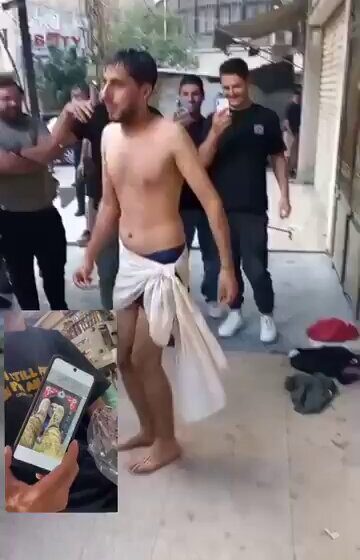
A dominant theme across high-engagement posts is the growing fear of an impending large-scale conflict involving Iran and Israel, with potential spillover into Europe. Rusly Al-Maliki (Post Impact: 100%) claims that Israel is orchestrating chaos and protests in European countries to compel them to participate in a war against Iran, stating, “Either you participate in the war against Tehran, or you will find the war in your capitals.” Echoing this confrontational tone, Dr. Hussein Al-Safi (Post Impact: 71%) issued a threat, writing, “Europe is on fire, the Gulf is on fire… Everyone will pay the price twice over… Do you contribute to killing our leaders and want to live in peace? Impossible.” Meanwhile, Sufian Al-Samarrai (Post Impact: 95%) shared a video allegedly showing Hezbollah members humiliating a Syrian worker, only to flee upon hearing Israeli drones. Al-Samarrai used the incident to portray Hezbollah as cowards who are only brave against the unarmed, stating they are “like rats and mice in front of Israel.”
2. US Envoy Barrack Signals a Shift in Middle East Policy
Statements from US envoy Tom Barrack generated significant discussion about America’s changing role in the region. Haidar (Post Impact: 62%) summarized Barrack’s message to regional countries as: “Rely on yourselves and do not count on America to solve your problems,” adding that Barrack admitted that changing 23 regimes had been a “failed result.” This was interpreted as a signal of American withdrawal from its role as a regional problem-solver. Adding another layer, Raad Hashim (Post Impact: 29%) highlighted Barrack’s description of the Iranian regime as “not an evil regime but a religious regime whose beliefs and practices we respect.” This comment was viewed with suspicion by some, with Shahou Al-Qaradaghi (Post Impact: 19%) questioning whether past US interventions were truly for the region’s benefit or just to serve American interests.
3. Iraqi Government Dysfunction and Internal Power Struggles
Criticism of the Iraqi government’s internal dynamics and perceived weakness was a major topic. Citing the *Al-Mada* newspaper, Rusly Al-Maliki (Post Impact: 35%) reported that Prime Minister Ali Al-Zaidi is seen as the “weakest link” and that a deputy prime minister confronted him in a cabinet meeting, saying, “You don’t lead the government alone… we are a presidency board.” This notion of a weakened premiership was echoed by Ezzat Al-Shabandar (Post Impact: 26%), who described the situation as a “gradual robbery” of the prime minister’s constitutional powers. Adding to the narrative of political decay, Rusly Al-Maliki (Post Impact: 40%) announced that Nouri al-Maliki’s son-in-law had been appointed to parliament, a move Shahou Al-Qaradaghi (Post Impact: 17%) decried as hypocrisy from politicians who once attacked family rule.
4. Conflicting Reports on Iraq-Iran Border Closures
There was significant and somewhat contradictory chatter regarding the status of Iraq’s border crossings with Iran. Rusly Al-Maliki (Post Impact: 63%), citing a source from *Al-Forat* news, reported that Iraq had rejected a formal American request to close its borders with Iran. However, other accounts presented a different picture. Haidar (Post Impact: 27%) and Abu Maryam (Post Impact: 19%) both reported that the Iraqi Prime Minister had ordered the closure of the Shalamcheh border crossing for goods and individuals until further notice. Furthermore, Dr. Zaid Abdul-Wahab Al-Azami (Post Impact: 18%) stated that, according to media sources, Iraq was heading towards closing all but two of its border crossings with Iran.
5. New Defense Minister’s Anti-Corruption Vow Draws Mixed Reactions
A video of Iraq’s new Minister of Defense making a bold anti-corruption pledge was widely circulated, eliciting both praise and skepticism. Raad Hashim (Post Impact: 53%) and Shahou Al-Qaradaghi (Post Impact: 20%) shared the clip, in which the minister declared, “Anyone I catch who is corrupt, I will refer them to the court, I will attend their trial myself, and I will bring their dismissal with my own hands.” Al-Qaradaghi commented that this was a “beautiful start.” However, the statement was met with cynicism by others. Ghaith Al-Tamimi (Post Impact: 19%) reacted to the video by asserting that anyone who starts with such rhetoric is nothing more than a “corrupt Iranian tail.”
6. Faig Al-Sheikh Ali Book Launch and Tishreen Anniversary
Discussions around the upcoming seventh anniversary of the Tishreen (October) protest movement were amplified by a major announcement from a prominent political figure. Former MP Faig Al-Sheikh Ali (Post Impact: 90%) revealed that his new book would be published soon, explicitly linking it to the movement with the hashtag #TheOctoberRevolutionWillTriumph. In parallel, protest organizers are defining their objectives for the anniversary. The Tishreen Central Council (Post Impact: 17%), along with supporters like Al-Sahafi Samer Al-Saadi (Post Impact: 15%), issued a formal statement outlining their demands. The statement aims to prevent the movement’s goals from being distorted, stressing that the anniversary’s theme is “reclaiming the homeland” and warning against opportunists who might try to co-opt the protests.
7. Students Protest Corruption and Neglect at Basra University
Student protests at Basra University gained traction on social media, with a detailed post from Haidar (Post Impact: 55%) outlining a long list of grievances against the university’s administration. The primary causes for the demonstrations reportedly include the mass failure of over 1,500 students due to errors in attendance tracking, blatant favoritism shown in accepting the appeals of children of powerful officials while rejecting nearly a thousand others, the mistreatment of student representatives, and the neglect of academic facilities. Students also protested the introduction of “partisan manifestations” on campus, which they say has transformed the university environment into one resembling a “military barracks” rather than an educational institution.
8. Creation of New “Holy Kufa” Governorate Sparks Debate
A decision by the Najaf Provincial Council to establish a new governorate has triggered a debate about political motives and administrative expansion. Posts by Rusly Al-Maliki (Post Impact: 44%) and Ali Farhan (Post Impact: 24%) reported that the council voted unanimously to create the “Holy Kufa” governorate, which would become Iraq’s 20th. However, the move was criticized as a politically motivated tactic to create more government jobs and privileges. Commentator Adam (Post Impact: 9%) argued that the political class is treating the creation of governorates like the creation of private colleges—as a means to distribute patronage and benefits among themselves.
9. Iraqi Forces Thwart Captagon Smuggling Attempt from Syria
A security incident on the Iraq-Syria border was highlighted, focusing on the ongoing issue of drug trafficking in the region. Haidar (Post Impact: 44%) reported that Iraqi Border Guard forces successfully intercepted a drug smuggling operation. The attempt involved using a balloon to transport a large quantity of narcotics, specifically over 196,000 Captagon pills, from Syrian territory into Iraq. The post alluded to the Syrian regime’s alleged role in the illicit drug trade with the sarcastic comment, “Oh yes, Bashar al-Assad used to produce the drugs.”
10. Government Announces Economic Relief Measures on Imports
The Iraqi government is taking steps to address rising prices and promote alternative energy by cutting customs duties on key imports. Ali Farhan (Post Impact: 23%) reported that the Council of Ministers approved a proposal to zero-rate the customs fees on imported solar panel systems, a move intended to support the private sector and encourage citizens to adopt renewable energy. In a similar vein, Haidar (Post Impact: 14%) and Yasser Eljuboori (Post Impact: 8%) noted that the Prime Minister had also ordered the removal of customs duties on essential goods such as medicines, eggs, and meat to help stabilize market prices and alleviate financial burdens on the public.