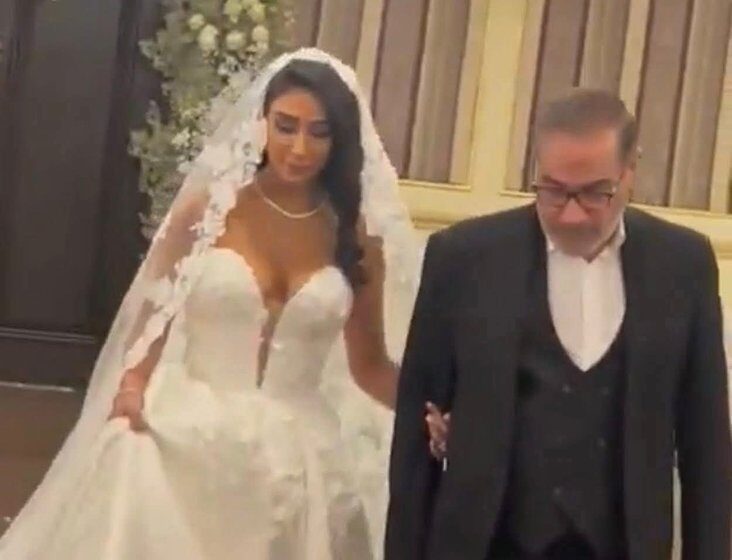
2025-10-19: Outrage and Debate Over Leaked Wedding Video of Iranian Official’s Daughter

An analysis of 495 X / Twitter posts trending on October 19, 2025 by Miqrab AI reveals that the dominant conversation in Iraq revolves around a leaked video from the wedding of the daughter of high-profile Iranian official Ali Shamkhani. This single event sparked a multifaceted debate, with users expressing outrage over perceived hypocrisy within the Iranian regime, while others condemned the leak as a violation of privacy and an unethical act. This primary narrative was interwoven with sectarian arguments, as some commentators framed the discussion as a conflict between Sunni and Shia media outlets, and others accused pro-Iran accounts of holding a double standard compared to their treatment of Iraqi women. Beyond this controversy, other significant topics included the political implications of the US appointing an Iraqi-American as a special envoy to Iraq, discussions on domestic issues like infrastructure projects in Kurdistan, and historical reflections on Iraq’s past relationship with its neighbors.
Table Of Content
- 1. Outrage and Debate Over Leaked Wedding Video of Iranian Official’s Daughter
- 2. US Appoints Iraqi-American Mark Savaya as Special Envoy to Iraq
- 3. Inauguration of New Strategic Road Project in Kurdistan Region
- 4. Viral Clip Recalls Iraq’s Past Generosity Towards Saudi Arabia
- 5. Leaked Audio of Media Commission Head Threatening Employees Circulates
- 6. Debate Intensifies Over Boycotting Upcoming Elections
- 7. Users Allege Double Standards in Reactions to Leaked Shamkhani Video
- 8. Discussion on Assassination of Baghdad Council Member Safaa Al-Mashhadani
- 9. Expressions of Anti-Iranian Influence in Iraqi Politics
- 10. Concerns Voiced Over Iraq’s Economic Management and National Debt
Today’s Top 10 X (Twitter) Trends in Iraq:
1. Outrage and Debate Over Leaked Wedding Video of Iranian Official’s Daughter
The most dominant story on Iraqi social media is the circulation of a leaked video from the wedding of the daughter of Ali Shamkhani, a senior Iranian political and military figure. The video, showing the bride without a hijab in a luxurious setting, sparked widespread debate and accusations of hypocrisy. Accounts like Rusly Al-Maliki (Post Impact: 100%) and Ghaith Altamimi (Post Impact: 43%) contrasted the scene with the strict religious rules imposed on the public, labeling Iran a “Republic of hypocrisy and duplicity.” Conversely, other users defended the family’s privacy. Najah Mohammed Ali (Post Impact: 49%) urged people to fear God, stating the event was a private, women-only family affair and that sharing the video is an act that “conflicts with religious and ethical values.” Faiq Al-Sheikh Ali (Post Impact: 60%) dismissed the uproar, calling it a “wonderful celebration” similar to those held by Iraqis. The conversation also took a political and sectarian turn, with accounts like Issam Hussein (Post Impact: 41%) blaming the “malice of Sunni media” for amplifying the story to portray Iran as open while suggesting Iraq is religiously restrictive. Meanwhile, Abbas Al-Ardawi (Post Impact: 41%) condemned the leak as an unethical privacy violation and declared solidarity with Shamkhani’s family against what he called a “dirty war” by America and Zionism.
2. US Appoints Iraqi-American Mark Savaya as Special Envoy to Iraq
Significant attention was given to the news of former US President Donald Trump appointing Mark Savaya, an Iraqi-American businessman, as a special envoy to Iraq. Posts on the topic highlighted Savaya’s background and potential influence on US-Iraq relations. Liqaa Maki (Post Impact: 19%) noted that Savaya is an Iraqi of Chaldean Christian origin who emigrated in the 90s and was a prominent activist in Trump’s campaign, suggesting his appointment places Iraq firmly on the current US agenda. Raad Hashim (Post Impact: 10%) shared a statement from Trump confirming the appointment and praising Savaya’s “deep understanding of the relations between Iraq and the United States.” Other accounts like Rafid Jaboori (Post Impact: 16%) and Hisham Ali (Post Impact: 14%) also reported the breaking news, signaling its importance within Iraqi political circles.
3. Inauguration of New Strategic Road Project in Kurdistan Region
The opening of a major infrastructure project in the Kurdistan Region garnered positive attention. Masrour Barzani (Post Impact: 20%), Prime Minister of the Kurdistan Regional Government, announced the opening of the new Gomaspan–Smaquli road, describing it as a “$160m project connecting Erbil, Slemani, and the Raparin Independent Administration.” He emphasized that despite economic pressures, his government has built over 5,000 km of strategic highways. Similarly, analyst Shaho Al-Qaradaghi (Post Impact: 20%) reported on the opening, noting the road’s length is 22 km and that its cost was 210 billion Iraqi dinars. Both posts highlighted the project’s significance in improving connectivity between major Kurdish governorates.
4. Viral Clip Recalls Iraq’s Past Generosity Towards Saudi Arabia
A video featuring an elderly Saudi man, Abdullah Al-Shabraimi, gained significant traction for its historical account of Iraqi aid to Saudi Arabia. In the post shared by Hayder (Post Impact: 79%), the man recounts a past era of hardship, stating, “We were living on God and then Iraq… They used to send us rice in the time of hunger!” The post resonated widely, evoking a sense of national pride and nostalgia among Iraqi users for a time when their country was a regional benefactor. The clip served as a point of contrast to the current economic and political situation in Iraq, with many users reflecting on the nation’s changed fortunes.
5. Leaked Audio of Media Commission Head Threatening Employees Circulates
A leaked audio recording allegedly featuring Nofal Abu Ragheef, the head of Iraq’s Media and Communications Commission, caused a stir online. Rusly Al-Maliki (Post Impact: 21%) shared the recording, noting the irony that Abu Ragheef was threatening employees against leaking secrets of the commission’s decisions, only for the threat itself to be leaked. The sentiment was echoed by Suhair Al_jumaili (Post Impact: 6%), who claimed Abu Ragheef has closed opposition media platforms and continues to threaten employees under the direction of Prime Minister Al-Sudani, framing the incident as part of a broader crackdown on dissent.
6. Debate Intensifies Over Boycotting Upcoming Elections
The upcoming elections are a topic of debate, with a clear divide between those calling for a boycott and those encouraging participation. The hashtag #مقاطعون (Boycotters) was promoted by accounts like Safaa Al-Asadi (Post Impact: 13%), signaling a movement to reject the electoral process. In direct opposition, Sajjad Al-Jubouri (Post Impact: 9%) argued against boycotting, stating that while non-participation won’t affect the election’s legitimacy, higher turnout is crucial because “the more it rises, the lower the chances of the corrupt reaching parliament.” Mazin Al-Eshaiker (Post Impact: 9%) contributed to the debate by arguing against the participation of political wings of armed militias, citing it as a constitutional violation.
7. Users Allege Double Standards in Reactions to Leaked Shamkhani Video
A sub-narrative emerging from the Ali Shamkhani wedding video controversy is the accusation of double standards among certain social media users, particularly pro-militia or “Walai” accounts. Commentators like Bahaa khaleel (Post Impact: 22%) pointed out the perceived hypocrisy, asking why the wedding was defended as a private matter when the same groups allegedly published private photos of an Iraqi woman, Zainab Jawad. This sentiment was strongly echoed by Hiba Al-Nnayib (Post Impact: 10%), who accused these accounts of slandering Iraqi women while fiercely defending Iranian women, concluding they are “thugs without principle.” The discussion highlights a deep-seated mistrust and resentment regarding the selective application of moral outrage based on political and national loyalties.
8. Discussion on Assassination of Baghdad Council Member Safaa Al-Mashhadani
The assassination of Safaa Al-Mashhadani, a member of the Baghdad Provincial Council, was discussed by several accounts, linking his death to political conflicts and militia influence. A report by Wikileaks Iraq (Post Impact: 10%) detailed that Al-Mashhadani was killed by an IED in Tarmiyah and that his death came after he received a threat from a party linked to Kata’ib Hezbollah. The report also connects the assassination to a legal dispute Al-Mashhadani had with MP Mustafa Jabbar Sanad. Ahmad Abdulsada (Post Impact: 10%) also commented on the case, attributing the killing to ISIS motivated by Sunni political rivals and criticizing what he described as pro-Zionist Iraqi commentators for exploiting the tragedy.
9. Expressions of Anti-Iranian Influence in Iraqi Politics
Strong sentiments against Iranian influence in Iraq were articulated in several highly engaged posts. Faiq Al-Sheikh Ali (Post Impact: 34%), a prominent politician, issued a scathing denunciation, stating, “Shit on you and on every Shiite loyal to Iran and Khamenei. Shit on you and on the Shiism run by Iran and Khamenei who adopt the Wilayat al-Faqih. Shit on you and on all the pro-Iran Shiite parties.” This direct and harsh criticism reflects a deep-seated opposition to Iranian political and religious authority within Iraq. Similarly, Aayad Al-Twfan (Post Impact: 11%) shared a clip with commentary stating, “Iran is the one that occupies Iraq and manages it as it pleases,” arguing that Iran has been forming Iraqi governments since 2004.
10. Concerns Voiced Over Iraq’s Economic Management and National Debt
Concerns over the state of Iraq’s economy and potential mismanagement of state resources were raised by commentators. Mohammed Jabbar (Post Impact: 18%) posted a video critical of the government’s economic performance, lamenting the shift “from a surplus of 88 billion to a debt exceeding 90 trillion… no reactors, no smart cities, no Burj Khalifa… just bridges built on debt.” In a related theme of questionable economic deals, Dr. Qusay Shafiq (Post Impact: 14%) criticized the Rixos Hotel project in Baghdad’s secure zone, highlighting that the land and services were allegedly given to a Qatari investor for free. He questioned whether the Iraqi prime minister could receive such a deal in Doha, implying a one-sided and disadvantageous arrangement for Iraq.