2025-10-30: Outrage Over Child Abuse Video Leads to Father’s Arrest

Based on Miqrab AI’s analysis of 477 X / Twitter posts trending in Iraq on October 30, 2025, the primary narrative centered on public outrage and calls for justice following the circulation of a video showing a man violently abusing his young daughter, culminating in his arrest by security forces. Significant discussion also revolved around domestic and regional politics, including harsh criticism of religious figures engaging in politics, escalating tensions with Syrian factions over a kidnapping incident, and contentious debates over the future of the Popular Mobilization Forces amid alleged American threats. Other key themes included commentary on the conflict in Sudan, the commemoration of the Tishreen Uprising, a high-profile visit by the Sultan of the Bohra community to Karbala, and controversies surrounding the upcoming elections, such as alleged foreign interference and the exclusion of specific candidates.
Table Of Content
- 1. Outrage Over Child Abuse Video Leads to Father’s Arrest
- 2. Criticism of Politicized Religion and Clerics
- 3. Tensions with Syrian Factions over Kidnapping and Detainees
- 4. Debate Over the Future of the Popular Mobilization Forces (PMF)
- 5. Commentary on the Conflict in Sudan
- 6. Visit of the Bohra Community’s Sultan to Karbala
- 7. Alleged US Influence on Upcoming Iraqi Elections
- 8. Commemoration of the Tishreen Uprising Anniversary
- 9. Controversy Over Cleric’s “Elect the Bad” Statement
- 10. Candidate Zainab Jawad Blames Militias for Her Exclusion from Elections
Today’s Top 10 X (Twitter) Trends in Iraq:
1. Outrage Over Child Abuse Video Leads to Father’s Arrest
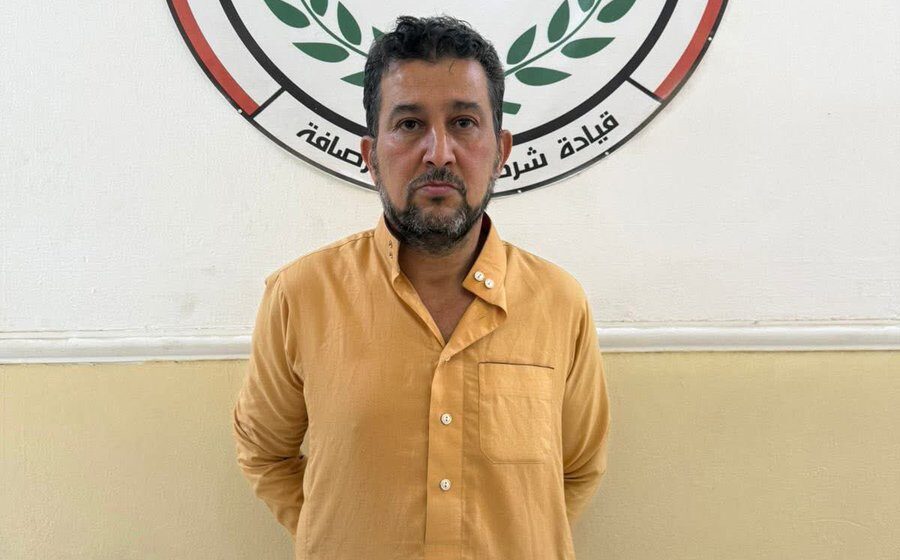
Widespread condemnation erupted on Iraqi social media following the circulation of a video showing a man brutally abusing his young daughter. Accounts like Ali Almadany (Post Impact: 100%) shared news of the father’s arrest by security forces, expressing hope for a stringent legal process rather than his potential release. Similarly, Bahaa khaleel Bahaa khaleel (Post Impact: 49%) condemned the man, calling him a “monster who must be executed.” The Iraqi National Security Service (Post Impact: 8%) officially announced the arrest in Baghdad, confirming their specialized units had identified and apprehended the individual responsible for the “savage” abuse seen in the video.
2. Criticism of Politicized Religion and Clerics
A prominent theme involved sharp criticism of religious figures engaging in politics and issuing controversial statements. Faig Alsheakh/My Word for History (Post Impact: 16%) posted a satirical dialogue mocking a cleric for his perceived blind loyalty to Iran. Dr. Hussein Al-Safi (Post Impact: 15%) questioned the double standards applied when a cleric defends a political list, suggesting a Shiite cleric would be labeled an infidel for doing the same. Meanwhile, Sufian Al-Samarrai (Post Impact: 13%) ridiculed a religious sermon about the correct posture for feet during prayer, sarcastically noting how cosmic matters are apparently affected by it. Dr. Ghalib Al-Da’ami (Post Impact: 10%) accused such figures of creating “a new religion… to support the ruler and maintain positions and benefits,” stating this approach is not found in the teachings of the Prophet or his family.
3. Tensions with Syrian Factions over Kidnapping and Detainees
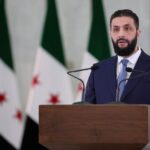
Several posts highlighted rising tensions between Iraqis and Syrian factions, particularly “Al-Jolani’s gangs.” Haidar (Post Impact: 10%) reported that Al-Jolani’s groups had kidnapped an Iraqi citizen in Syria, allegedly in exchange for a detainee in Iraq, and warned, “Do not play this game with us lest the innocent pay the price.” The same account later posted about the Iraqi citizen’s release (Post Impact: 6%). In a related context, Najeh Abbas Al-Mizan (Post Impact: 14%) commented on the release of a Syrian named Mohamed Al-Anga in Iraq, attributing it to fear and external pressure. Responding to what he described as incitement from “Al-Jolani’s media dogs,” Issam Hussein (Post Impact: 12%) wrote a lengthy post defending Iraq’s treatment of Syrians and contrasting the “chivalrous nature” of Iraqi Shiites with the actions of Syrian factions.
4. Debate Over the Future of the Popular Mobilization Forces (PMF)
The status and future of the Popular Mobilization Forces (PMF) were subjects of intense debate, particularly in relation to American influence. Shahou Al-Qaradaghi (Post Impact: 6%) shared a statement from Kata’ib Hezbollah MP Saud Al-Saadi, who claimed, “America threatened to assassinate 300 political and security figures if the Popular Mobilization Law was passed.” In another post, the same account quoted politician Ezzat Al-Shabandar predicting that “the Americans will demand the dissolution of the PMF and its conversion into traffic police, customs, or firefighters” (Shahou Al-Qaradaghi (Post Impact: 6%)). This sentiment was echoed by others like Hiba Al-Nnaayib (Post Impact: 6%), who stated, “The terrorist Hashd law will not pass.” Sheikh Thair Al-Bayati (Post Impact: 6%) also weighed in, declaring, “No factions, no Hashd.”
5. Commentary on the Conflict in Sudan
Iraqi social media users commented on the ongoing conflict in Sudan, attributing blame to various regional powers. Sufian Al-Samarrai (Post Impact: 11%) posted a call to “Save Sudan from the gangs of Qatar, Turkey, and Iran.” Similarly, Othman Al-Mukhtar (Post Impact: 6%) questioned the UAE’s motives for supporting the Rapid Support Forces led by Hemeti, asking what its interest is in backing such “criminality and terror.” In a more detailed analysis, Issam Hussein (Post Impact: 7%) argued that Saudi Arabia’s recent media campaign on Sudan’s humanitarian crisis is driven not by altruism but by fear of the UAE’s growing economic power through its control of gold mines via its proxy, Hemeti, framing it as part of a “hidden Gulf economic war.”
6. Visit of the Bohra Community’s Sultan to Karbala
The visit of Mufaddal Saifuddin, the Sultan of the Dawoodi Bohra community, to Iraq garnered attention. Haidar (Post Impact: 10%) reported on the visit, noting that the Imam Hussein Shrine was filled with his followers. The post described the Bohra as one of the wealthiest religious communities in the Islamic world, with extensive global business networks in jewelry, real estate, and trade. Ammar Al-Hakim (Post Impact: 5%) also posted about his meeting with Sultan Mufaddal Saifuddin in Karbala, alongside candidates from his political coalition and local tribal leaders.
7. Alleged US Influence on Upcoming Iraqi Elections
Posts emerged discussing alleged American intentions to influence the outcome of Iraq’s upcoming elections. David Yassin (Post Impact: 9%) wrote that the elections have “descended onto a path that serves Tehran,” a path he claims is rejected in decision-making rooms. He asserted that the next prime minister will not be determined by ballot boxes but by internal arrangements and that political alternatives have been activated to prevent the consolidation of Iranian influence. Reinforcing this narrative, Raad Hashim (Post Impact: 4%) shared what he termed a “leaked American message to Baghdad,” which reportedly stated, “We will not recognize the election results if they are controlled by factions backed by Iran.”
8. Commemoration of the Tishreen Uprising Anniversary
Several users commemorated the anniversary of the Tishreen (October) Uprising of 2019. Faig Alsheakh/My Word for History (Post Impact: 8%) posted a series of tweets under the hashtag #ستنتصر_ثورة_تشرين (The Tishreen Revolution will be victorious), recalling the contributions of ordinary Iraqis who donated food, water, and medicine to sustain the protests. In another post, he highlighted the “honorable pivotal role” of tuk-tuk drivers in transporting supplies and evacuating the wounded and martyrs (Faig Alsheakh/My Word for History (Post Impact: 8%)). Ahmed Saadawi – أحمد سعداوي (Post Impact: 3%) also marked the occasion, sharing a photo and stating, “On this day 6 years ago (October 30, 2019) I was in Tahrir Square.”
9. Controversy Over Cleric’s “Elect the Bad” Statement
A statement by cleric Sheikh Ahmed Salman sparked online debate. Shahou Al-Qaradaghi (Post Impact: 8%) shared a video clip of the sheikh advising voters, “Elect the bad so that the worse does not come to you, sometimes preserving the bad is a gain.” In response, Najah Mohammed Ali (Post Impact: 4%) defended Sheikh Salman, arguing that his clear and frank words were taken out of context and manipulated by those seeking to tarnish his image for political purposes. The post praised the sheikh’s position as “honorable” and reflective of a “sincere national message.”
10. Candidate Zainab Jawad Blames Militias for Her Exclusion from Elections
The exclusion of candidate Zainab Jawad from the upcoming elections became a topic of discussion, with several accounts sharing her accusations. Haidar (Post Impact: 5%) quoted her as saying, “The commission did not exclude me… the one who excluded me was Sajjad Salem upon the recommendation of the militias and with the approval of the Istiqlal Party.” Zaidon Samir (Post Impact: 4%) commented on her statement, noting he had known this information but withheld it, and challenged civil activists who support her to take a stand. Similarly, Salam Al-Husseini (Post Impact: 3%) referenced Jawad’s exclusion as evidence of a corrupt political game controlled by the “deep state.”