2025-11-01: Muqtada al-Sadr Announces Boycott of Upcoming Elections

An analysis of 516 X / Twitter posts by Miqrab AI on November 1, 2025, reveals that the dominant narrative in Iraq revolves around the upcoming parliamentary elections, highlighted by influential cleric Muqtada al-Sadr’s high-impact call for a boycott. This is amplified by a separate boycott campaign led by former MP Faig al-Sheikh Ali. Alongside the election discourse, there is significant public frustration over the ongoing water crisis with Turkey, with many users blaming the Iraqi government’s inaction. Other key themes include intense election campaigning by various political factions, speculation about internal rifts within the ruling Shia Coordination Framework, escalating regional security tensions involving the US and Iranian-backed militias, and controversial sectarian commentary regarding Iraq’s demographic makeup.
Table Of Content
- 1. Muqtada al-Sadr Announces Boycott of Upcoming Elections
- 2. Faig al-Sheikh Ali Leads an Independent Election Boycott Campaign
- 3. Public Outcry Over Worsening Water Crisis with Turkey
- 4. Speculation Mounts Over Internal Rifts in the Shia Coordination Framework
- 5. Controversial Commentary on Sectarian Demographics in Iraq and Syria
- 6. Political Blocs Intensify Election Campaigning
- 7. Politician Mustafa Sanad Criticized for “Threatening” Campaign Promise
- 8. Rising Regional Tensions Amid US Warnings and Israeli Preparedness
- 9. Arrest of Syrians in Diwaniyah on Spying Charges Stirs Controversy
- 10. Halloween in Tehran Becomes a Tool for Social Commentary in Iraq
Today’s Top 10 X (Twitter) Trends in Iraq:
1. Muqtada al-Sadr Announces Boycott of Upcoming Elections
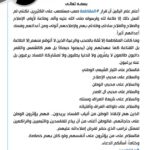
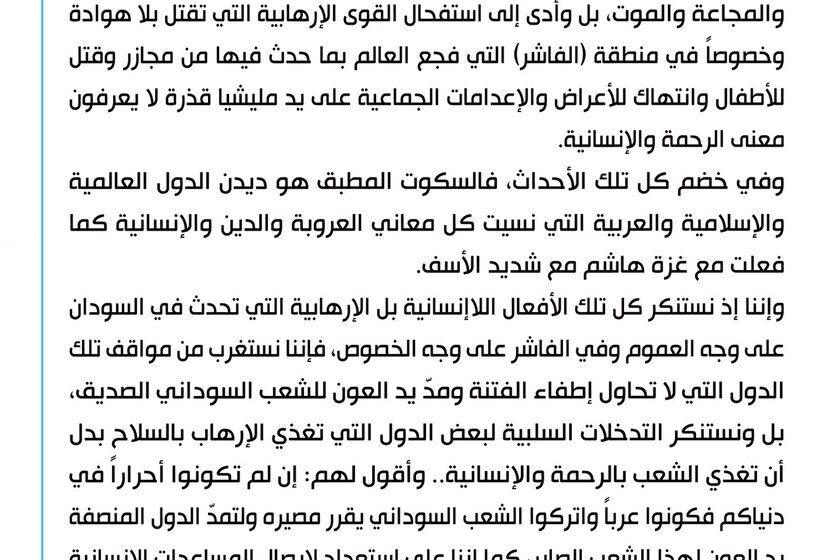
The most impactful story of the day is the announcement by influential Shia cleric Muqtada al-Sadr, shared by his official account Muqtada al-Sayyid Muhammad al-Sadr (Post Impact: 100%), declaring his decision to boycott the upcoming parliamentary elections. The post, an image of a handwritten statement, asserts that this “final decision” to boycott is irreversible. The account Najah Mohammed Ali (Post Impact: 8%) also covered the story, critically highlighting al-Sadr’s justification for the boycott, which he partly based on a dream. Ali’s post questions the rationale, asking, “What are you, a prophet, infallible, an imam, a messenger, you saw in a dream, what does that mean…?!” and sarcastically wonders if Iraqi politics are now “being run from the world of dreams.”
2. Faig al-Sheikh Ali Leads an Independent Election Boycott Campaign
Former Member of Parliament Faig al-Sheikh Ali is spearheading a separate, organized campaign urging Iraqis to boycott the upcoming elections under the hashtag #قاطعوا_الانتخابات (#Boycott_the_elections). In a series of posts, his account Faig al-Sheikh Ali/My word for history (Post Impact: 17%) called for the continuous use of the hashtag, stating, “We call for this campaign not to calm down or weaken throughout the remaining days until the elections are held.” In other posts, he (Post Impact: 8%) promises to use his experience as a former MP to debunk claims by those in power that voters can bring about change by electing “honorable people.” Another post (Post Impact: 9%) focuses on the dominance of pro-Iran Shia parties in parliament over the past five sessions as a reason for the boycott.
3. Public Outcry Over Worsening Water Crisis with Turkey
Widespread anger and frustration are evident across multiple accounts regarding Turkey’s water policies and the drying up of the Tigris River in Iraq. The account Wasan al-Shaykhli (Post Impact: 19%) shared a video of the Tigris in 1999, sarcastically recalling a popular myth about Saddam Hussein threatening to bomb Turkish dams to force them to release water. Others call for direct action, with Dr. Hussein al-Safi (Post Impact: 7%) stating that if he were Prime Minister, his second decision would be to “cut commercial relations and close the borders with Turkey,” noting the over $22 billion in trade volume. Similarly, Abu Drandash al-Askari (Post Impact: 7%) criticized Iraqis for boosting Turkey’s economy through tourism and trade while Turkey cuts off their water. The account Haidar (Post Impact: 6%) noted that the hashtag #Boycott_Turkish_Products is trending in response to the water issue and the government’s perceived inaction.
4. Speculation Mounts Over Internal Rifts in the Shia Coordination Framework
Several accounts are discussing growing tensions within the ruling Shia Coordination Framework, particularly between Prime Minister Mohammed Shia’ Al Sudani and Asa’ib Ahl al-Haq leader Qais Khazali. Sheikh Thaer al-Bayati (Post Impact: 9%) posted a video suggesting Khazali is complaining about Al Sudani to Iranian IRGC commander Esmail Qaani, and questions if Al Sudani has decided to implement US conditions such as dissolving the PMF and ending support from Iran. The post speculates, “Has the coup within the Framework begun?” and warns that for the US, there is “no gray area… Either full implementation or a resounding fall.” Similarly, Hussam Alhaj (Post Impact: 10%) commented cryptically on an unnamed figure whose “loud voice” signals that he is “dying” and that “the end has come,” which followers interpreted as a reference to Khazali.
5. Controversial Commentary on Sectarian Demographics in Iraq and Syria
A highly engaged post by Issam Hussein (Post Impact: 15%) sparked sectarian debate by proposing a population exchange between Iraq and Syria. The post claims that Syria’s Sunni majority does not tolerate its minorities, while Iraq’s Sunni minority does not tolerate the Shia majority. Hussein suggests a “solution” where Syrian minorities would move to Iraq and Iraqi minorities would move to Syria, so that “the Syrian minority can live safely in Iraq and the Shia majority can rule without problems,” while the Sunni minority could achieve its dream of living under a “dictatorial regime.” Adding to the discourse, Ahmad Abdulsada (Post Impact: 4%) warned that allowing Syrian Sunnis into Shia cities in Iraq, combined with a general amnesty for Iraqi Sunni “terrorists,” would create an environment for a resurgence of ISIS.
6. Political Blocs Intensify Election Campaigning
With elections approaching, various political figures and parties are actively campaigning. The account Emad Bajalan (Post Impact: 12%) promoted candidate Rafaa Hamouka al-Shabaki under the slogan “For everyone without exception,” presenting him as a candidate for national unity. Another post from the same account (Post Impact: 11%) emphasized the candidate’s journey “from the field to the parliament.” Meanwhile, Minister of Higher Education Naim al-Aboudi (Post Impact: 10%) shared details of an electoral gathering, stating that his coalition’s recent success will be the “roadmap” for achieving the aspirations of Iraqis after the election on November 11, 2025.
7. Politician Mustafa Sanad Criticized for “Threatening” Campaign Promise
A video clip of politician Mustafa Sanad has been widely circulated and criticized for what many interpret as a verbal gaffe or a threat. In the clip, shared by accounts like Shaho Al-Qaradaghi (Post Impact: 9%) and Ali Farhan (Post Impact: 3%), Sanad promises, “We will provide a model that will make Iraqis long for the days that have passed.” Al-Qaradaghi questioned whether this was an “election promise, a threat, or a slip of the tongue?” Yasser Eljuboori (Post Impact: 3%) and Bahaa khaleel (Post Impact: 3%) echoed this sentiment, explaining that “longing for” past days implies the future will be worse.
8. Rising Regional Tensions Amid US Warnings and Israeli Preparedness
Discussions about regional security have intensified following reports of US warnings to Iranian-backed factions in Iraq. The account Raad Hashim (Post Impact: 5%) shared a clip where Iraqi Minister of Defense Thabet al-Abbasi revealed that his US counterpart warned him that militias would face retaliation if they interfered with US operations in the region. This is coupled with news from Rafid Jaboori (Post Impact: 5%) and Mazin Al-Eshaiker (Post Impact: 3%), citing Israeli media, that Israel is on high alert for a potential attack by Iraqi armed groups. Al-Eshaiker’s detailed post mentions that both the IDF and Mossad are preparing for a threat from groups like Kata’ib Hezbollah.
9. Arrest of Syrians in Diwaniyah on Spying Charges Stirs Controversy
A security story from Diwaniyah has drawn different reactions. The account Haidar (Post Impact: 8%) reported that four Syrians—identified as Druze from Suwayda—were arrested on charges of spying on security headquarters for Israel. In contrast, Zina Al Saab (Post Impact: 3%) framed the event as part of a campaign of “incitement and organized arrests” against Syrians by the “terrorist PMF,” urging Syrians to return to their country rather than face potential harm from pro-Iran militias in Iraq.
10. Halloween in Tehran Becomes a Tool for Social Commentary in Iraq
Several Iraqi accounts shared videos of Halloween celebrations in Tehran, using the footage to criticize the perceived hypocrisy of religious authorities in Iraq. Tamara Alkhazraji (Post Impact: 5%) posted a video of Iranians celebrating, contrasting it with an incident where clerics protested a concert by Mohamed Ramadan in Iraq out of concern for the “sanctity of the country.” Similarly, Ghaith al-Tamimi (Post Impact: 3%) shared a video of the festivities, writing, “Halloween in the Tehran we love and wish for more stability, freedom, and dignity.” Other accounts like Ali Farhan (Post Impact: 2%) and Shaho Al-Qaradaghi (Post Impact: 2%) also highlighted the event, noting it occurred despite being banned by Iranian authorities.