2025-11-02: Muqtada al-Sadr Calls for Election Boycott, Denounces Foreign Influence

Based on Miqrab AI’s analysis of 540 trending X / Twitter posts in Iraq on November 2, 2025, the digital landscape was dominated by political maneuvering ahead of upcoming elections and critical national issues. The most engaging topic was a statement from cleric Muqtada al-Sadr calling for an election boycott and denouncing foreign influence, which was met with both fervent support from his followers and opposition from those urging political participation. A major point of contention was a new water management agreement with Turkey, which many users criticized as a surrender of Iraqi sovereignty. This discussion was compounded by separate accusations that Iran is intentionally diverting rivers, worsening Iraq’s water scarcity. Security concerns were also prominent, with multiple reports on the arrest of Syrian nationals on terrorism-related charges. The pre-electoral environment was further characterized by intense infighting among Sunni political factions and assertive declarations from armed groups like Kata’ib Hezbollah regarding the country’s future leadership.
Table Of Content
- 1. Muqtada al-Sadr Calls for Election Boycott, Denounces Foreign Influence
- 2. Controversy Surrounds New Iraq-Turkey Water Management Agreement
- 3. Iran Accused of Worsening Iraq’s Water Crisis by Diverting Rivers
- 4. Syrian Nationals Arrested in Baghdad and Erbil on Terrorism Charges
- 5. Spirited Debate Emerges Over Participating In or Boycotting Elections
- 6. Kata’ib Hezbollah’s Abu Ali al-Askari Issues Statement on Elections and Political Leadership
- 7. Intense Infighting and Insults Mar Sunni Political Arena
- 8. Analysts Detail Foreign Military Support in Sudan’s Civil War
- 9. Basra Governor Accused of Massive Corruption Scandal
- 10. Candidate Hussein Arab Reinstated into Electoral Race by Judiciary
Today’s Top 10 X (Twitter) Trends in Iraq:
1. Muqtada al-Sadr Calls for Election Boycott, Denounces Foreign Influence
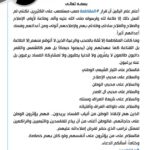
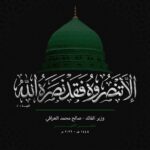
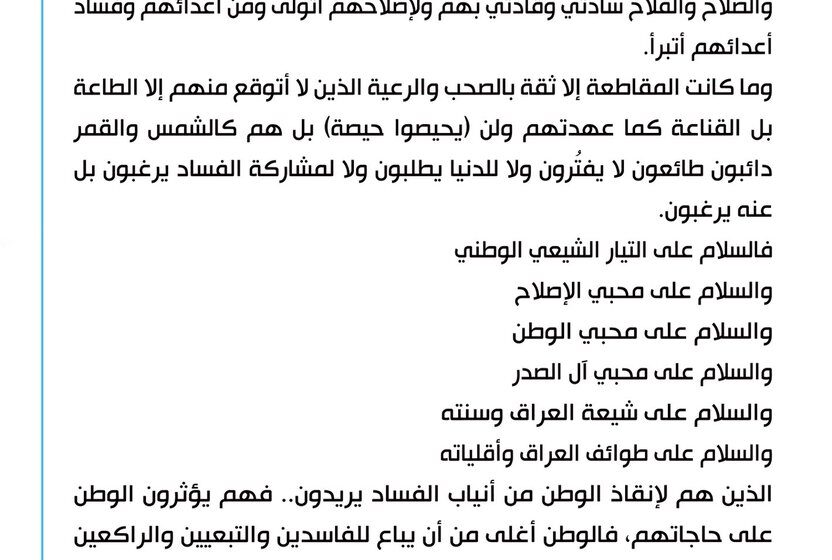
The most impactful story of the day revolved around a statement from influential cleric Muqtada al-Sadr, which was shared by his official account, Muqtada al-Sadr (Post Impact: 100%). The statement declared that “The homeland is too precious to be sold to the corrupt, the dependent, and those who bow to Trump’s representative.” This was widely interpreted as a firm call to boycott the upcoming elections. Analyst Mohammed Jabbar (Post Impact: 2%) viewed the move as an attempt by al-Sadr to position himself as the “national conscience” standing outside the influence of both Washington and Tehran. The call resonated strongly with his supporters, with accounts like Safaa Al-Asadi (Post Impact: 3%) and Sabah Al-Saadi (Post Impact: 2%) echoing the #Boycott hashtag and pledging to follow his lead. Dr. Ali Mohsen Al-Tamimi (Post Impact: 3%) described the boycott not as a recent decision but as a “strategic project” planned by al-Sadr for years to reform the political system through peaceful means.
2. Controversy Surrounds New Iraq-Turkey Water Management Agreement
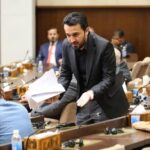
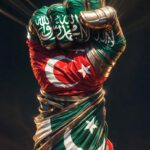
A landmark water agreement between Iraq and Turkey sparked intense debate and criticism. According to Rusly Al-Maliki (Post Impact: 10%), the deal hands over the complete management of Iraq’s water resources and infrastructure to Turkey for five years in exchange for Iraqi oil sales. He strongly condemned the agreement, calling the Iraqi Minister of Water Resources, Aoun Diab, a failure and questioning the purpose of the ministry. Other accounts, such as Haidar (Post Impact: 4%), detailed the terms, which reportedly include Turkey managing all water releases and dam construction in exchange for Iraq dropping its debts to Turkey and increasing bilateral trade to $30 billion. While Turkish Foreign Minister Hakan Fidan, quoted by Raad Hashim (Post Impact: 2%), hailed the agreement as “the first of its kind,” commentator Salam Al-Husseini (Post Impact: 2%) labeled it one of the most “humiliating and dependent” deals. In a counter-narrative, another post by Haidar (Post Impact: 2%) noted that the Iraqi government later denied the reports about waiving debts as part of the deal.
3. Iran Accused of Worsening Iraq’s Water Crisis by Diverting Rivers
Alongside the focus on Turkey, Iran was also accused of contributing significantly to Iraq’s water shortages. Raad Hashim (Post Impact: 13%) reported that over the last few years, Iran has diverted the paths of several rivers that previously flowed into Iraq, including the Alwand, Karun, and Karkheh. The post claims these waters are now redirected for agricultural and industrial projects within Iran, which has “caused the drying up of large areas in southern Iraq and changed the water system in the region.” This sentiment was echoed by Cliff Captain (Post Impact: 4%), who pointed to Iran’s actions concerning the Sirwan and Karkheh rivers and argued that Iraq should take the same measures against Iran as it considers for Turkey, including halting imports and taking the case to international courts.
4. Syrian Nationals Arrested in Baghdad and Erbil on Terrorism Charges
Security forces in Iraq reportedly arrested several Syrian nationals on terrorism-related charges, sparking concern on social media. Haidar (Post Impact: 7%) and Wasan Al-Shaikhli (Post Impact: 2%) both reported on the arrest of a group of Syrians in the Hayy al-Jami’a area of Baghdad for allegedly promoting terrorist groups. The account Abu Azrael (Post Impact: 7%) confirmed the Baghdad arrests and added that authorities in Erbil also apprehended three Syrians for supporting terrorism. He issued a stern warning, stating, “Stop promoting terrorism, Syrians.” Further details on the Erbil arrests were provided by Haidar (Post Impact: 4%), who identified the three individuals arrested in the Kurdistan region as originating from the Damascus countryside.
5. Spirited Debate Emerges Over Participating In or Boycotting Elections
While supporters of Muqtada al-Sadr promoted a boycott, other voices strongly argued for participation in the upcoming elections, creating a clear online debate. Using the hashtag #Participate_do_not_boycott, Sajad Al-Jubouri (Post Impact: 5%) contended that boycotting directly benefits traditional parties because “parliamentary seats will not remain empty.” He warned that those who boycott will lose the chance for change and allow others to decide their fate. In contrast, former MP Faiq Al-Sheikh Ali (Post Impact: 5%) championed the boycott, arguing that aspiring new leaders are failing to make an impact as they find themselves “headbutting solid rocks.” Another perspective from Wesam Aziz (Post Impact: 3%) framed the calls for a boycott among Shiites as a conspiracy, calling it the fourth plot “to destroy the Shiites in Iraq” after Al-Qaeda, ISIS, and the Tishreen protests.
6. Kata’ib Hezbollah’s Abu Ali al-Askari Issues Statement on Elections and Political Leadership
A statement from Abu Ali al-Askari, the security official for the armed faction Kata’ib Hezbollah, outlined the group’s stance on the elections and future leadership. The full text, shared by Ahmad Abdulsada (Post Impact: 2%), described the upcoming election as a “great challenge” that will determine Iraq’s fate for two decades and urged participation, specifically endorsing the Huqooq Movement. The statement also included a direct warning about the country’s top positions, declaring, “The presidency of the republic will not go to the conman or the clown, and the speakership of parliament will be for a new face.” This part of the statement was also highlighted by accounts like Abu Muzia’l (Post Impact: 2%). Analyst Mohammed Jabbar (Post Impact: 3%) interpreted the message as a “structural shift” in the rhetoric of armed factions, reflecting an acknowledgment that the “era of weapons outside the state is nearing its end.”
7. Intense Infighting and Insults Mar Sunni Political Arena
The political climate within the Sunni community was depicted as deeply fractured and contentious. A detailed post by Haidar (Post Impact: 3%) described a “war of words” tearing apart the “Sunni house.” This included clashes between Abu Mazen, who reportedly called his rival Muthanna al-Samarrai a “bull,” and fierce attacks by Mishan al-Juburi against Mohammed al-Halbousi, whom he called a “thug” and “thief.” The post also noted the ongoing conflict between al-Halbousi and Khamis al-Khanjar. This acrimonious atmosphere was also observed by Emad Al-Musafir (Post Impact: 3%), who expressed disgust at the “hysteria and exchange of insults between some Sunni leaders.” In a direct jab, Mishan Al-Juburi (Post Impact: 2%) mocked a rival for using the term “bull,” linking it to an old story of him allegedly stealing a cow.
8. Analysts Detail Foreign Military Support in Sudan’s Civil War
The ongoing civil war in Sudan was a topic of detailed analysis, with commentators mapping out the complex web of international involvement. Zaid Benjamin (Post Impact: 6%) provided a comprehensive breakdown of foreign arms suppliers to both the Sudanese Armed Forces (SAF) and the Rapid Support Forces (RSF). The report identified the UAE and Russia’s Wagner Group as key backers of the RSF, while Iran, Egypt, and Turkey were named as primary suppliers of drones and weapons to the SAF. A different analysis by Ahmad Abdulsada (Post Impact: 2%) framed the conflict as a proxy war between Qatar and Saudi Arabia, who support SAF leader Abdel Fattah al-Burhan, and the UAE, which backs RSF commander Hemedti. Meanwhile, Amir Al-Mousawi (Post Impact: 2%) presented a conspiracy theory, alleging that the US and Israel are orchestrating the violence in Darfur to create a new homeland for Palestinians.
9. Basra Governor Accused of Massive Corruption Scandal
Serious allegations of corruption were leveled against the governor of Basra, Asaad Al-Eidani. Both Najah Mohammed Ali (Post Impact: 3%) and Ahmad Abdulsada (Post Impact: 3%) reported on revelations made by MP Saud Al-Saadi, the head of the Huqooq parliamentary bloc. According to Al-Saadi, Governor Al-Eidani is implicated in the theft of 4.5 trillion Iraqi dinars. The posts emphasized that this sum is even larger than the amount stolen in the infamous “theft of the century.” The accusations were described as a “scandal that shakes the Iraqi political scene” and reveals the extent of corruption in high-ranking positions.
10. Candidate Hussein Arab Reinstated into Electoral Race by Judiciary
A specific development in the electoral process saw candidate Hussein Arab being readmitted to the race after a legal challenge. Hussam Alhaj (Post Impact: 2%) reported that the judicial body of the election commission overturned the decision by the Board of Commissioners to exclude him. The candidate himself, Hussein Arab (Post Impact: 4%), confirmed the news on his own account, announcing his return to the electoral race and thanking the “Iraqi judiciary,” “free Iraqi media,” and everyone who supported him. His return marks a notable turn in the lead-up to the elections.