2025-11-03: Widespread Anger Over Iraq’s Water Crisis Blaming Turkey

Based on an analysis of 487 X / Twitter posts on November 3, 2025, Miqrab AI identified several key narratives dominating Iraqi social media. The most prominent and highest-engagement conversations revolved around a severe water crisis, with users directing intense criticism at Turkey for cutting off water flow and at the Iraqi government for a perceived weak response and an unfavorable “oil for water” agreement. A second major theme was the anniversary of politician Ahmad Chalabi’s death, which sparked a deeply polarized debate between those who view him as a national hero who liberated Iraq from Saddam Hussein and those who condemn him as a traitor who facilitated the US invasion. Alongside these issues, a strong and organized campaign emerged calling for a boycott of the upcoming elections, fueled by widespread frustration with political corruption and the perceived incompetence of candidates.
Table Of Content
- 1. Widespread Anger Over Iraq’s Water Crisis Blaming Turkey
- 2. Calls for Election Boycott Driven by Criticism of Political Candidates
- 3. Divided Opinions on the Anniversary of Politician Ahmad Chalabi’s Death
- 4. Details and Criticism of the Iraq-Turkey “Oil for Water” Agreement
- 5. Militia Leader Shibl al-Zaidi Accused of Threatening Politician Mashaan al-Jabouri
- 6. Iran Accused of Deliberately Worsening Iraq’s Water Shortage
- 7. Lack of Dam Construction and Infrastructure Development Criticized
- 8. Analysis of Turkey’s Rising Geopolitical Influence at Iran’s Expense
- 9. Harassment and Arrests of Syrian Nationals in Baghdad Reported
- 10. Conflict and Accusations Erupt Between Rival Sunni Politicians
Today’s Top 10 X (Twitter) Trends in Iraq:
1. Widespread Anger Over Iraq’s Water Crisis Blaming Turkey
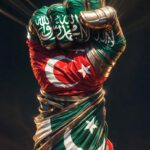
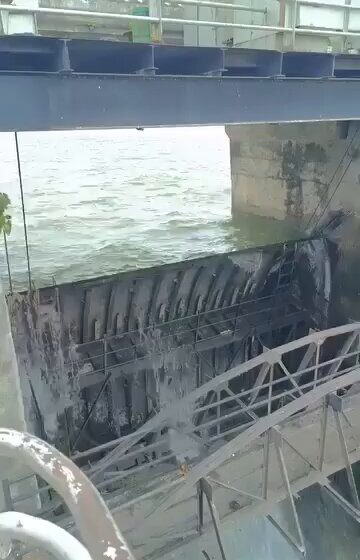
The most dominant story on Iraqi X / Twitter centered on the country’s severe water shortage, with blame overwhelmingly directed at Turkey. The highest-impact post on the platform, from Dr. Hussein Al-Safi (Post Impact: 100%), shared a video of a full Turkish dam, stating, “Turkey is cutting off water to Iraq out of injustice and aggression.” This sentiment was widely echoed, with users expressing frustration over Iraq’s vulnerability. Rusly Al-Maliki (Post Impact: 25%) lamented Iraq’s loss of sovereignty, noting that its water is controlled by Turkey, its electricity by Iran, and its currency by America. Haidar (Post Impact: 42%) pointed out that Syria is also suffering its worst drought in 36 years due to Turkey’s actions, highlighting the regional impact. In response, activists launched an online campaign with the hashtag #Internationalize_Tigris_and_Euphrates to pressure the Iraqi government to seek international arbitration, as reported by Haidar (Post Impact: 21%).
2. Calls for Election Boycott Driven by Criticism of Political Candidates
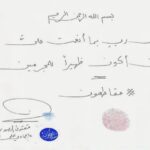
A significant movement calling for an election boycott gained momentum, largely driven by posts from Faiq Al-Sheikh Ali/My Word for History (Post Impact: 98%). He shared a video of a female political figure incorrectly citing a non-existent Quranic verse during a speech, sarcastically commenting, “Folks.. review your speeches before you ascend the pulpits. #Boycott_the_elections.” This incident was used as an example of the candidates’ lack of qualification and was also mocked by Rusly Al-Maliki (Post Impact: 52%), who asked, “Where did these people study!? What is this mental underdevelopment!?” Al-Sheikh Ali further fueled the boycott campaign by accusing pro-Iranian “mercenaries” of promoting their own “client candidates,” as noted in another post by Faiq Al-Sheikh Ali/My Word for History (Post Impact: 39%). The sentiment was supported by accounts like Haider Jalil Al-Jabri (Post Impact: 23%) and Alaa Alabadi (Post Impact: 13%), who posted images and messages with the hashtag #Boycotters, framing the act as a rejection of systemic corruption.
3. Divided Opinions on the Anniversary of Politician Ahmad Chalabi’s Death
The tenth anniversary of politician Ahmad Chalabi’s death sparked a deeply polarized debate online, with users expressing starkly contrasting views on his legacy. On one side, critics vehemently condemned him. Rusly Al-Maliki (Post Impact: 68%) described Chalabi as a traitor who “conspired against his country, brought invaders to it,” and ended up disgraced. Similarly, Othman Al-Mukhtar (Post Impact: 29%) labeled him one of the “godfathers of the American occupation.” On the other side, supporters hailed him as a national hero. Ghaith Al-Tamimi (Post Impact: 59%) posted a photo of him with the caption, “Glory and eternity to you, Abu Hadi, you have overthrown Saddam and his gang for good.” This view was shared by Ahmed Abdul Sada (Post Impact: 29%), who praised Chalabi as an “exceptional politician” and a “Shia hero par excellence” for creating a lobby that served Iraqi and specifically Shia interests.
4. Details and Criticism of the Iraq-Turkey “Oil for Water” Agreement
The newly signed water management agreement between Iraq and Turkey was a major topic of discussion, with many users criticizing its terms as humiliating for Iraq. Details of the deal, shared by Haidar (Post Impact: 12%) citing the official Iraqi news agency, reveal that Turkey will manage Iraq’s water file for five years, with projects funded by Iraqi oil sales and implemented by Turkish companies. Yasser Eljuboori (Post Impact: 24%) labeled it the “agreement of humiliation,” summarizing its points as Turkish control over the Tigris and Euphrates and Iraqi oil being exchanged for Iraqi water. In contrast, Ibrahim Al-Sumaidaie (Post Impact: 17%) defended the agreement as a “brave solution”, arguing that with water reserves at less than 7%, a deal with Turkey was unavoidable to prevent widespread drought. The U.S. envoy also welcomed the agreement, as reported by Shaho Al-Qaradaghi (Post Impact: 13%).
5. Militia Leader Shibl al-Zaidi Accused of Threatening Politician Mashaan al-Jabouri
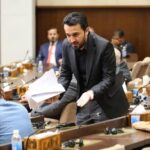
A tense exchange unfolded between militia leader Shibl al-Zaidi and politician Mashaan al-Jabouri, culminating in accusations of a death threat. The controversy began after a post from the account of Al-Hajj Shibl Al-Zaidi (Post Impact: 39%). In response, Mashaan Al-Jabouri (Post Impact: 37%) interpreted the post as a direct threat on his life, publicly appealing to state institutions, the UN mission, and the US president’s representative. Al-Jabouri stated, “I place before the state agencies, public opinion, the United Nations Mission, and President Trump’s representative an explicit threat published by the militiaman Shibl Al-Zaidi calling for my liquidation through the tools of power in their grip.” He framed the incident as an example of the reality faced by Sunni Arabs in Iraq and questioned whether the judiciary would hold al-Zaidi accountable.
6. Iran Accused of Deliberately Worsening Iraq’s Water Shortage
While Turkey was the primary target of public anger over the water crisis, Iran was also accused of deliberately cutting off crucial river tributaries that flow into Iraq. Aayad Al-Twfan (Post Impact: 29%) provided a detailed list of eleven rivers and water sources, including the Karun, Karkheh, and Alwand rivers, which he claims Iran has diverted to remain within its own territory, causing desertification in Iraqi cities and marshlands. This accusation was echoed by PMF commander Abu Azrael, whose comments were reported by Steven Nabil (Post Impact: 32%). Abu Azrael stated, “Iran changed the course of the tributaries and dried up the nation… if Iran is truly our brother, let them return the tributaries to their course.” These posts suggest a narrative that both of Iraq’s powerful neighbors are weaponizing water against it.
7. Lack of Dam Construction and Infrastructure Development Criticized
Amid the ongoing water crisis, attention was drawn to the Iraqi government’s failure to develop its own water infrastructure since 2003. A high-impact post by Rusly Al-Maliki (Post Impact: 56%) listed nine major dams built in Iraq between 1981 and 2002, including during the Iran-Iraq War and the period of international sanctions. He then starkly pointed out that the number of dams completed after 2003 is zero, concluding with the hashtag #You_Will_Not_Become_A_State. This criticism implies that successive governments have neglected national strategic interests, leaving the country dependent on its neighbors for its water security. The failure to build new infrastructure is presented as a key factor compounding the current crisis caused by Turkish and Iranian water policies.
8. Analysis of Turkey’s Rising Geopolitical Influence at Iran’s Expense
A geopolitical analysis gaining traction argues that Turkey is steadily supplanting Iran’s influence across the Middle East. Liqaa Maki (Post Impact: 47%) outlined this shift as one of the most prominent features of geopolitical change in the region, stating that Turkey’s control is expanding over areas previously under Iranian influence in Syria, Palestine, and now Iraq. He notes that the United States appears to support this trend, particularly regarding Gaza, which clashes with Israeli interests. According to this perspective, Turkey’s strengthening relationships with Gulf states, Egypt, and its growing influence in Europe and with Washington will give it decisive future roles in the region as Iran’s power wanes.
9. Harassment and Arrests of Syrian Nationals in Baghdad Reported
Several accounts reported a trend of hostility and arrests targeting Syrian nationals in Iraq, linking it to political scapegoating and sectarian rhetoric. Othman Al-Mukhtar (Post Impact: 15%) claimed that since Iraqi militias fled their positions in Damascus after the fall of Assad, they have engaged in sectarian discourse against Syrians, which culminated in the arrest of several young men in Baghdad under various pretexts. Rusly Al-Maliki (Post Impact: 32%) posted a sarcastic comment that seemingly references this trend: “The rivers have dried up? Alright guys, let’s go arrest some Syrians.” The narrative suggests that Syrians are being used as scapegoats for domestic problems or are being targeted by pro-Iran militias for sectarian reasons.
10. Conflict and Accusations Erupt Between Rival Sunni Politicians
Tensions within Sunni political circles flared up with allegations of corruption and threats. A post by Mashaan Al-Jabouri (Post Impact: 37%) claimed a threat on his life from militia leader Shibl Al-Zaidi, which he framed as indicative of the dangerous environment for Sunni Arabs. In a separate but related context of political infighting, media personality Issam Hussein (Post Impact: 14%) accused politician Khamis al-Khanjar and his affiliated media figures, including Steven Nabil and Rusly Al-Maliki, of coordinating an anti-Turkey media campaign on the water crisis to serve Turkish intelligence interests and secure a better deal for Ankara. Hussein alleged that the campaign was a pre-planned part of a Turkish agenda, which ceased abruptly after the agreement was signed. This highlights a narrative of deep division and mutual suspicion among prominent Sunni figures.