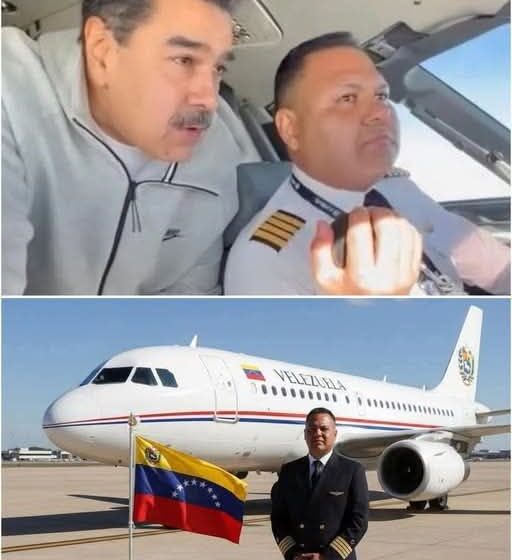
2025-11-05: Venezuelan Pilot Hailed as a National Hero for Resisting US Bribe

Based on a Miqrab AI analysis of 481 X / Twitter posts trending in Iraq on November 5, 2025, the social media landscape was dominated by a mix of international news, regional geopolitical tensions, and domestic political controversies. The most widely shared story praised a Venezuelan pilot for refusing a bribe, presented as a model of patriotism. Significant attention was also given to Saudi Arabia’s decision to scale back its “The Line” megaproject due to financial pressures. Discussions on regional conflicts were prominent, with detailed reports on the United Arab Emirates’ alleged role in arming factions in the Sudanese civil war. Domestically, the release and subsequent statements of Israeli researcher Elizabeth Tsurkov, who was held captive by Kata’ib Hezbollah, sparked intense debate about militia power and US influence. The election of Zohran Mamdani as New York City’s mayor also generated diverse reactions, ranging from celebration of his Muslim identity to analysis of his political platform.
Table Of Content
- 1. Venezuelan Pilot Hailed as a National Hero for Resisting US Bribe
- 2. Saudi Arabia Scales Back “The Line” Megaproject Amid Financial Reassessment
- 3. UAE’s Alleged Support for RSF in Sudan Faces Renewed Scrutiny
- 4. Israeli Researcher Tsurkov Details Captivity Under Kata’ib Hezbollah
- 5. Election of Zohran Mamdani as NYC Mayor Sparks Diverse Reactions
- 6. Politician Ezzat Al-Shabandar Criticized for Comments on Family Heritage
- 7. Calls to Boycott Upcoming Elections Circulate Online
- 8. Minister of Higher Education Announces Major University Expansion
- 9. Guards of Parliament Speaker Accused of Assaulting a Citizen
- 10. Sectarian Debates Resurface Around the Death of Fatimah al-Zahra
Today’s Top 10 X (Twitter) Trends in Iraq:
1. Venezuelan Pilot Hailed as a National Hero for Resisting US Bribe
The most impactful story circulating on Iraqi X / Twitter celebrates Venezuelan pilot Peter Villegas as a national symbol for reportedly refusing a $50 million bribe from US intelligence. According to the post by Aayad Al Twfan (Post Impact: 100%), the bribe was intended to persuade Villegas to divert the presidential plane and make an emergency landing at a US base to facilitate the arrest of President Nicolás Maduro. The account highlights that Villegas, despite being a political opponent of Maduro and suffering financially, chose national loyalty over personal gain, stating, “he realized that treason is not a political opinion… Treason is a fall into an abyss from which there is no return.” The post contrasts the pilot’s integrity with the actions of those in the Arab world who, it claims, abandon their principles and align with powers hostile to their nations, concluding that principled stances are not measured by salary but by one’s steadfastness when their honor is tested.
2. Saudi Arabia Scales Back “The Line” Megaproject Amid Financial Reassessment
News of Saudi Arabia scaling back its ambitious desert megaproject, “The Line,” gained significant traction. Citing an article from The Independent, ZaidBenjamin Zaid Benjamin (Post Impact: 30%) reports that the Saudi government has decided to reassess the project and reduce its scope due to budget deficits and a need to “rearrange priorities.” The project, part of Crown Prince Mohammed bin Salman’s Vision 2030, was initially planned to be a 170-kilometer-long futuristic city housing 9 million people. However, the revised plan will now accommodate only around 300,000 residents in a much shorter span. The report attributes this shift to lower-than-expected oil revenues and quotes a senior advisor, Jerry Inzerillo, who stated the kingdom is making a “course correction.” The focus of investment may now shift towards artificial intelligence and data centers.
3. UAE’s Alleged Support for RSF in Sudan Faces Renewed Scrutiny
The United Arab Emirates’ role in the Sudanese civil war is a major topic of discussion, with detailed reports translated and shared by ZaidBenjamin Zaid Benjamin (Post Impact: 21%) from The Guardian and the Financial Times (Post Impact: 5%). The articles suggest the UAE is facing damage to its reputation for allegedly supporting the Rapid Support Forces (RSF), a militia accused of mass killings. One post highlights a statement by senior Emirati diplomat Anwar Gargash, who admitted it was a “huge mistake” not to have acted against the 2021 coup led by the army and the RSF. The reports detail the UAE’s strategic interests in Sudan, including access to natural resources like gold and agricultural land, as well as its goal of countering political Islam. Despite the UAE’s official denials and claims of neutrality, the articles cite evidence gathered by the UN and independent experts alleging that Abu Dhabi has secretly armed the RSF.
4. Israeli Researcher Tsurkov Details Captivity Under Kata’ib Hezbollah
The recent release of Israeli-Russian researcher Elizabeth Tsurkov has generated widespread discussion, with multiple accounts sharing her statements about her kidnapping and two-and-a-half-year captivity. Shaho Al-Qaradaghi (Post Impact: 18%) quotes Tsurkov describing one of her Kata’ib Hezbollah captors as “very dirty and sex-obsessed.” In another post, he relays her claim that the militia demanded a $600 million ransom but ultimately released her for free following threats from the Trump administration. Accounts like Salim Al-Jumaili (Post Impact: 10%) and Shaho Al-Qaradaghi (Post Impact: 6%) cite Iraqi MP Adnan al-Zurfi, who stated that militia leaders fled Iraq after the US threatened to strike them, leading to her release. Ali Farhan ali farhan (Post Impact: 5%) shares Tsurkov’s assertion that her captors are not genuinely interested in the Palestinian cause and have become “worshippers of this fleeting world” after stealing billions from their own people.
5. Election of Zohran Mamdani as NYC Mayor Sparks Diverse Reactions
The victory of Zohran Mamdani in the New York City mayoral election became a major talking point, eliciting a range of reactions. Accounts like Haidar (Post Impact: 8%) celebrated the win as a “major shift in the mood of the American people,” highlighting that Mamdani is the first Shia Muslim to hold the position. In contrast, critics like Sufian Al-Samarrai (Post Impact: 6%) portrayed Mamdani as a radical figure backed by Qatar, Iran, and Turkey, who changed his name from “Muhammedani” to “Mamdani” to “infiltrate power.” Other accounts focused on the political dynamics of his win. Adam (Post Impact: 3%) argued that Mamdani won by promising social services like free transportation and affordable housing, not because of his religious identity, and that Iraqis celebrating his win for sectarian reasons misunderstand American politics.
6. Politician Ezzat Al-Shabandar Criticized for Comments on Family Heritage
Prominent politician Ezzat Al-Shabandar is facing sharp criticism following remarks he allegedly made about his heritage. In a direct response, Rusly Al-Maliki (Post Impact: 12%) rebukes Al-Shabandar for claiming his grandmother left him a legacy of “filth and confusion.” Al-Maliki contrasts this by stating his own grandmothers raised men who stood up to Iran, while Al-Shabandar’s heritage, according to Al-Maliki, includes the “humiliation” of serving Iran. The post questions the environment Al-Shabandar grew up in to describe it in such negative terms and frames the comments as a reflection of his personal character rather than a shared Iraqi experience.
7. Calls to Boycott Upcoming Elections Circulate Online
A narrative encouraging Iraqis to boycott the upcoming elections is being promoted, most notably by politician Faig Al-Sheakh Ali. In two separate posts, Faig Al-Sheakh Ali/Kalimati Lil Tarikh (Post Impact: 12%) and another (Post Impact: 12%) use the hashtag #قاطعوا_الانتخابات (#Boycott_the_elections). In one post, he claims that militias who stole money from the state and deposited it in banks in Lebanon, Turkey, and Iran have lost it all due to currency collapses and the bankruptcy of Iran’s Ayandeh Bank. He frames this as a form of divine justice, suggesting that participation in the current political system is futile.
8. Minister of Higher Education Announces Major University Expansion
Iraq’s Minister of Higher Education, Naeim Al-Aboudi, announced a significant expansion of the country’s university system. In a post on his official account, Naeim Al-Aboudi (Post Impact: 11%) reported the opening of new faculties of Engineering, Law, and Administration and Economics at Al-Karkh University for Science. He stated this is part of a broader strategy aiming for “Horizon 2030” to create a university system capable of accommodating one million students in the coming years. According to the minister, over the past three years, his ministry has successfully established 52 new colleges, 192 departments, and 70 branches as part of a strategic project focused on development, modernization, and alignment with global standards in higher education.
9. Guards of Parliament Speaker Accused of Assaulting a Citizen
A video allegedly showing the security detail of Parliament Speaker Mahmoud al-Mashhadani threatening a citizen and his family has circulated widely, sparking outrage. Accounts like Tamara Alkhazraji (Post Impact: 9%) and Dr. Qusay Shafiq (Post Impact: 7%) shared the footage, in which guards can be heard shouting threats like “I will kill you, you will die, and I will cut you in half.” Dr. Shafiq criticized the 81-year-old speaker for using a large motorcade for his election campaign and noted the incident took place on Al-Rabi’ Street in Baghdad’s Hayy al-Jami’a neighborhood. The posts condemn the aggressive behavior of the security convoy and question the abuse of power by public officials.
10. Sectarian Debates Resurface Around the Death of Fatimah al-Zahra
The commemoration of the death of Fatimah al-Zahra, the daughter of the Prophet Muhammad, has triggered a sectarian debate online. On one side, Dr. Hussein Al-Moayed (Post Impact: 9%) argues there is no scientific evidence that she was killed, calling such claims “baseless” and a deliberate attempt to promote sectarianism and insult the Prophet’s companions. On the other side, Shia perspectives are strongly defended. Ali Al-Mohandes (Post Impact: 8%) shares a clip of Sheikh Al-Shaarawi discussing Imam Ali’s grief, suggesting the community wronged her. Similarly, Dr. Hussein Al-Safi (Post Impact: 6%) asserts that Muslims “strove to inflict the most severe harm upon her.” These posts reflect the deep-seated and conflicting historical narratives that continue to fuel sectarian tensions in the region.