2025-11-06: UAE’s Influence Praised in Reconstruction Efforts Amidst Counter-Narrative

Based on 538 X / Twitter posts analyzed on November 6, 2025, by Miqrab AI, the primary conversations in Iraq revolve around the upcoming elections and the significant influence of foreign actors, particularly the United Arab Emirates. A major campaign under the hashtag #الامارات_ايدها_بيضة (UAE’s hand is generous) highlights Emirati-funded reconstruction projects, most notably in Mosul, generating both praise and sharp criticism. This is contrasted by detailed reports alleging the UAE’s role in supplying mercenaries to the conflict in Sudan. The pre-election atmosphere is tense, with polarizing debates over participation versus boycotting, accusations of corruption and vote-buying, and appeals to voters along sectarian lines. Key political figures and groups, such as Nouri al-Maliki and Kata’ib Hezbollah, have issued statements shaping the political discourse, while ongoing security incidents in Anbar and regional escalations involving Israel also capture significant attention.
Table Of Content
- 1. UAE’s Influence Praised in Reconstruction Efforts Amidst Counter-Narrative
- 2. Intense Debate Surrounds Upcoming Elections with Calls for Both Participation and Boycott
- 3. UAE Linked to Mercenaries and War Crimes in Sudan
- 4. Kata’ib Hezbollah Secretary-General Issues Pre-Election Statement
- 5. Nouri al-Maliki’s Statements on PMF and De-Ba’athification Spark Controversy
- 6. Candidates and Parties Intensify Campaigning Efforts
- 7. Sectarian Rhetoric and Accusations of Religious Hypocrisy Surface in Political Discourse
- 8. Security Incidents Reported in Anbar and Southern Lebanon
- 9. Kurdistan Regional Government Highlights Major Development Projects
- 10. Minister of Higher Education Announces New Academic Initiatives
Today’s Top 10 X (Twitter) Trends in Iraq:
1. UAE’s Influence Praised in Reconstruction Efforts Amidst Counter-Narrative
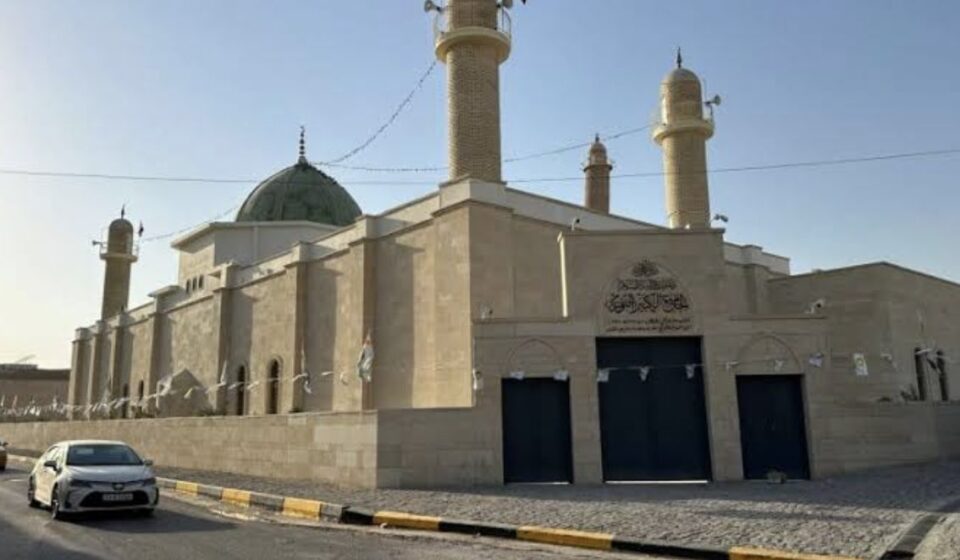
A major trend centered on a campaign praising the United Arab Emirates’ role in Iraq under the hashtag #الامارات_ايدها_بيضة (UAE’s hand is generous). The most prominent post, by Tamara Alkhazraji 🍓 (Post Impact: 100%), credited the UAE with rebuilding Mosul’s identity by funding the reconstruction of the Al-Nouri Mosque, which was destroyed by ISIS. Other accounts, such as Mujtahid Al-Iraq (Post Impact: 17%) and Bahaa khaleel Bahaa khaleel (Post Impact: 9%), shared similar sentiments of gratitude for the UAE’s support. However, this narrative was challenged by accounts like Haidar (Post Impact: 18%), who pointed out that the hashtag was being promoted by individuals who ignore the UAE’s alleged role in the conflict and suffering in Sudan, suggesting the campaign was a paid effort to improve the country’s image.
2. Intense Debate Surrounds Upcoming Elections with Calls for Both Participation and Boycott
Discussions about the upcoming elections are widespread, featuring strong and opposing viewpoints. Accounts like Muna Sami – Muna Sami (Post Impact: 52%) and Dr. Hussein Al-Safi (Post Impact: 39%) urged Iraqis to participate in the elections, framing it as a duty and the best way to elect worthy representatives and prevent corrupt individuals from winning. In sharp contrast, Faig Al-Sheikh Ali/Kalimati Lil Tarikh (Post Impact: 44%) called for a boycott, sharing what he claimed was evidence of corruption and vote-buying schemes. His follow-up post explained the term “Rakiza” as a candidate’s agent who distributes money to buy votes. This division highlights a deep public rift over the legitimacy and potential efficacy of the electoral process.
3. UAE Linked to Mercenaries and War Crimes in Sudan
A detailed report shared by ZaidBenjamin Zaid Benjamin (Post Impact: 59%) from the organization The Sentry implicates the UAE in the Sudanese conflict. The report alleges that an Emirati businessman, Mohamed Hamdan Al Zaabi, who is a business partner of a high-ranking UAE official, is providing Colombian mercenaries to the Rapid Support Forces (RSF) in Sudan. The post details the corporate structures and individuals involved, including companies in the UAE, Colombia, and Panama. This narrative is reinforced by Haidar (Post Impact: 18%), who directly connects the pro-UAE hashtag campaign to what he describes as an attempt to distract from the country’s role in the violence in Sudan, where he claims 150,000 have been killed and millions displaced.
4. Kata’ib Hezbollah Secretary-General Issues Pre-Election Statement
A statement from Abu Hussein al-Hamidawi, the Secretary-General of Kata’ib Hezbollah, circulated widely, outlining the group’s perspective on Iraq’s political history and future. Shared by accounts like Emad Al-Musafir (Post Impact: 22%) and Haidar (Post Impact: 12%), the statement argues that Shia parties have only truly governed for about four and a half years and have been successful during that time. Al-Hamidawi called for active participation in the elections and declared that the next government, “from its alpha to its omega, will be formed at the table of the Coordination Framework, with the support of the Islamic Resistance, the Popular Mobilization Forces, and the zealous people of the nation.” This message asserts the continued dominance of the Coordination Framework and its affiliated armed groups in Iraq’s political future.
5. Nouri al-Maliki’s Statements on PMF and De-Ba’athification Spark Controversy
Former Prime Minister Nouri al-Maliki’s recent statements have drawn significant commentary. Ali Farhan ali farhan (Post Impact: 26%) criticized al-Maliki’s call to restructure the Popular Mobilization Forces (PMF) and integrate them into the army, suggesting this aligns with American demands and is a move to secure a third term. Similarly, Shaho Al-Qaradaghi (Post Impact: 10%) viewed the call as an overture to the United States. In another post, Tamara Alkhazraji 🍓 (Post Impact: 20%) sarcastically commented on al-Maliki’s promise to form committees to fight corruption if elected, reminding him of his alleged involvement in the loss of the 2014 budget and the Speicher massacre.
6. Candidates and Parties Intensify Campaigning Efforts
As the election approaches, candidates and their supporters are actively promoting their campaigns on social media. Emad Bajalan (Post Impact: 52%) released a video message addressed to the Iraqi people, particularly in Mosul, and posted another video explaining how to vote for candidate Rafeh Hammouka. In a separate post, Sajjad Salem (Post Impact: 33%), head of the Al-Badil Alliance, shared a clip from a large electoral conference in Wasit, highlighting the widespread support for his coalition’s political project. These posts reflect the final push by various political contenders to mobilize voters and secure support.
7. Sectarian Rhetoric and Accusations of Religious Hypocrisy Surface in Political Discourse
Sectarianism and religious themes featured prominently in online discussions. Sufian Al-Samarrai (Post Impact: 88%) posted a highly engaged tweet criticizing Afghan and Pakistani “jihadists,” claiming they believe they are more devout than Arabs, and linked their support for New York’s new mayor to a video of a veiled woman struggling with daily tasks. Separately, a video of Abu Azrael, a commander in an Iran-backed militia, was shared by Salem Al-Jumaili (Post Impact: 20%) and Shaho Al-Qaradaghi (Post Impact: 19%), in which Abu Azrael urged Sunnis to vote for Al-Halbousi, describing him as a man of “partying and dancing,” while advising against voting for Al-Khanjar, who he called a man of “religion.” The commentators viewed this as hypocritical and a tactic to divide Sunni voters.
8. Security Incidents Reported in Anbar and Southern Lebanon
Recent security developments were reported across the region. Mazin Al-Eshaiker (Post Impact: 40%) reported breaking news of shelling on Popular Mobilization Forces (PMF) headquarters in the Al-Baghdadi area of Anbar, near the Ain al-Asad base. Meanwhile, regional tensions escalated as both Rusly Al-Maliki 🇮🇶 Rusli Al-Maliki (Post Impact: 14%) and Haidar (Post Impact: 13%) shared videos of Israeli airstrikes targeting southern Lebanon. These events highlight the ongoing instability both within Iraq’s borders and across the broader Middle East.
9. Kurdistan Regional Government Highlights Major Development Projects
Masrour Barzani, Prime Minister of the Kurdistan Region, shared updates on several large-scale infrastructure projects. His posts highlighted a visit to the new Dwin Dam, which he said will support agriculture and tourism (Masrour Barzani, (Post Impact: 18%)), and the opening of the final phase of a $480 million emergency water project for Erbil (Masrour Barzani, (Post Impact: 12%)). Commentators like Kifah Mahmood (Post Impact: 20%) praised these achievements, contrasting the development in Kurdistan with the failure of Baghdad and other provinces to manage basic services like sewage treatment.
10. Minister of Higher Education Announces New Academic Initiatives
The Minister of Higher Education and Scientific Research, Dr. Naeim Al-Aboudi, highlighted recent achievements in Iraq’s university sector. In one post, Naeim Al-Aboudi (Post Impact: 37%) announced the opening of the College of Nursing at Al-Mustansiriya University, emphasizing the goal of producing a skilled nursing workforce that meets international quality standards. In another post, he celebrated three years of accomplishments at Al-Nahrain University, including progress in international rankings, digitalization, and research innovation (Naeim Al-Aboudi, (Post Impact: 35%)). These announcements aim to project an image of progress and development within the country’s educational institutions.