2025-11-21: U.S. Envoy’s Comments on Iraqi Government Formation Spark Widespread Debate

Based on an analysis of 428 X / Twitter posts trending on November 21, 2025, Miqrab AI identified several key narratives circulating in Iraq. The most prominent conversations centered on the formation of the next Iraqi government, with significant attention paid to the statements of U.S. envoy Mark Savaiya, which were widely interpreted as a warning against Iranian interference. Domestic political criticism was also rampant, with influential figures like Faiq Al-Sheikh Ali issuing direct threats to militias and the ruling Coordination Framework. Concurrently, public discontent was voiced over alleged land seizures by the Popular Mobilization Forces (PMF) in Baghdad. Regional affairs featured heavily, including mockery of a scandal involving fake Iranian-made robots and sharp criticism of Iraqi tribal leader Ali Hatem Al-Suleiman for praising Syrian leader Al-Jolani, fueling existing sectarian tensions.
Table Of Content
- 1. U.S. Envoy’s Comments on Iraqi Government Formation Spark Widespread Debate
- 2. Popular Mobilization Forces (PMF) Land Seizure in Baghdad Sparks Public Outcry
- 3. Sheikh Ali Hatem Al-Suleiman Criticized for Praising Syrian Leader Al-Jolani
- 4. Iran Mocked Over “Fake Robot” Exhibition Scandal
- 5. Politician Faiq Al-Sheikh Ali Issues Stern Warnings to Militias and Political Blocs
- 6. Sectarian Rhetoric Surfaces in Discussions of Sunni Political Representation
- 7. Enhanced Security Measures on the Iraq-Syria Border Are Highlighted
- 8. Speculation Over Candidates for Iraq’s Next Prime Minister Circulates Online
- 9. Former MPs Praised for Rejecting Parliamentary Pensions
- 10. Discussion of Donald Trump’s Claim of a $1 Trillion Deal with Saudi Arabia
Today’s Top 10 X (Twitter) Trends in Iraq:
1. U.S. Envoy’s Comments on Iraqi Government Formation Spark Widespread Debate
Statements by Mark Savaiya, described as U.S. President Trump’s special envoy to Iraq, have dominated political discussions, with many users interpreting his words as a direct warning against foreign interference, particularly from Iran, in the formation of the new Iraqi government. Accounts like Haidar (Post Impact: 2%) and Rafid Jaboori (Post Impact: 5%) shared Savaiya’s reported quote: “The United States will not accept or allow any external interference in the formation of the new Iraqi government.” Influential politician Faiq Al-Sheikh Ali (Post Impact: 12%) amplified the message, suggesting Savaiya’s mission has not even truly begun and warning Iraqi militias that they “will fly like terrified doves.” The comments were seen by accounts like Mohammed Jabbar (Post Impact: 2%) as a significant shift in U.S. policy, placing the selection of the next prime minister under clear international scrutiny.
2. Popular Mobilization Forces (PMF) Land Seizure in Baghdad Sparks Public Outcry
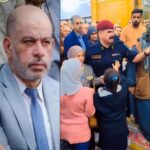
A significant story gaining traction involves allegations that the Popular Mobilization Forces (PMF), or Hashd, have seized a large plot of land in the upscale Jadriya district of Baghdad. Rusly Al-Maliki (Post Impact: 13%) shared a video of citizens appealing for help after the PMF allegedly took over their lands. In response to the backlash, the PMF issued a statement, reported by accounts such as Haidar (Post Impact: 2%) and Raad Hashim (Post Impact: 2%), claiming that the 20-dunum plot was transferred to them legally with official approvals from the Ministry of Construction and Housing and the Baghdad Municipality. Despite the official explanation, users like Mohammed Jabbar (Post Impact: 3%) sarcastically questioned whether the land would be distributed to the families of wounded and fallen PMF fighters.
3. Sheikh Ali Hatem Al-Suleiman Criticized for Praising Syrian Leader Al-Jolani
Tribal leader Sheikh Ali Hatem Al-Suleiman has drawn sharp criticism for comments made in a video where he praised the leader of Hay’at Tahrir al-Sham, Ahmed al-Sharaa (Abu Mohammad al-Jolani), while insulting Iraqi leaders. Accounts such as Asaad Al-Basri (Post Impact: 9%) and Wasan Al-Shaikhli (Post Impact: 6%) shared the clip, highlighting that Al-Suleiman described Iraqi officials with the pejorative term “Dabash” (lame/stupid). This prompted questions about why such open insults against the state are tolerated. The praise for Al-Jolani was linked by commentators like Essam Hussein (Post Impact: 5%) to what he describes as a pattern among some Sunni leaders who favor an authoritarian model of rule.
4. Iran Mocked Over “Fake Robot” Exhibition Scandal
A video allegedly from an Iranian robot exhibition went viral after it was reported that the “advanced robots” on display were actually humans in costumes. The story was covered with a mocking tone by Rusly Al-Maliki (Post Impact: 100%) in a post with exceptionally high engagement. The post describes the event as a “scandal,” stating that the Iranian government presented the robots as Iranian-made, only for it to be revealed that they were “humans performing robot movements!!” The post ends with the sarcastic phrase “Salam Farmandeh!!”, referencing a popular Iranian patriotic song, to further ridicule the incident.
5. Politician Faiq Al-Sheikh Ali Issues Stern Warnings to Militias and Political Blocs
Prominent Iraqi politician Faiq Al-Sheikh Ali published a series of highly engaged posts warning the ruling political class and associated militias of impending change. In one post, he dismisses the ongoing political negotiations by addressing the Prime Minister, the Coordination Framework, and Iran with derision, stating, “I tell them the mission has not started yet.” in a post from Faiq Al-Sheikh Ali/My word for history (Post Impact: 20%). In another post, he specifically threatens militias, claiming they “will fly like terrified doves,” as stated by Faiq Al-Sheikh Ali/My word for history (Post Impact: 12%). He also cautioned his followers to stop asking for details about certain sensitive topics, implying that not everything can be publicly discussed, as shared by Faiq Al-Sheikh Ali/My word for history (Post Impact: 15%). All his posts included the hashtag #The_October_Revolution_Will_Triumph.
6. Sectarian Rhetoric Surfaces in Discussions of Sunni Political Representation
Discussions online reflected sectarian tensions regarding the political representation and rights of Iraq’s Sunni community. Wasan Al-Shaikhli (Post Impact: 10%) shared a clip of PMF leader Hassan Fadam complaining that the Sunni component, which he claims is 15% of the population, receives the parliament speakership and a quarter of the ministries, yet remains dissatisfied and praises enemies out of spite for the Shia. In a different analytical thread, Essam Hussein (Post Impact: 5%) argued that Sunni representation in parliament is actually around 20% and that their political leaders’ history has been negative for Iraq, leading them to support figures like Al-Jolani, who represents an authoritarian model they aspire to.
7. Enhanced Security Measures on the Iraq-Syria Border Are Highlighted
Several accounts shared information and videos about new advanced security measures being implemented along the Iraqi-Syrian border. Haidar (Post Impact: 5%) reported on a statement from the Iraqi Border Guard Forces about a smart surveillance system covering the border with over a thousand thermal cameras. Other users, like Katab Fulan (Post Impact: 5%), celebrated the new security fence, noting that it includes drone bases, thermal cameras, mines, and long-range sensors, and declared, “Whoever reaches our border, we will cut off their hand.” The measures were framed by commentators such as Zainab Al-Ghanem (Post Impact: 5%) as a necessary step to protect Iraq from the chaos, terrorism, and drug trafficking emanating from a Syria now ruled by “gangs.”
8. Speculation Over Candidates for Iraq’s Next Prime Minister Circulates Online
As negotiations for government formation continue, social media accounts have been circulating lists of potential candidates for the next prime minister. Ali Farhan ali farhan (Post Impact: 6%) claimed there is “near consensus” within the Coordination Framework to nominate Omar Al-Waeli, the current head of the Border Ports Authority, for the position. Meanwhile, Dr. Hussein Al-Safi (Post Impact: 5%) ran a poll asking followers to choose from a list of the “strongest candidates,” which included Basim Al-Badri, Qasim Al-Araji, Hamid Al-Shatri, Abdul-Amir Al-Shammari, and Abdul-Ilah Al-Naeli. These posts highlight the public’s engagement and speculation regarding who will lead the country for the next four years.
9. Former MPs Praised for Rejecting Parliamentary Pensions
Two former members of parliament from the Ishraqat Kanoun bloc received praise online for their decision to reject their parliamentary pensions and return to their previous professions. Wasan Al-Shaikhli (Post Impact: 3%) highlighted that MP Nafouth Al-Mousawi is returning to her job as a lecturer at the University of Karbala. Similarly, Haidar (Post Impact: 3%) reported that former MP Haidar Al-Salami announced he was refusing the pension and returning to his position as a university professor at the University of Babylon, stating his goal was to “restore honor to politics.” The actions were presented as a positive example of public service and a rejection of the financial privileges often associated with political office in Iraq.
10. Discussion of Donald Trump’s Claim of a $1 Trillion Deal with Saudi Arabia
Donald Trump’s recent claim that he secured a trillion dollars from Saudi Arabia has been a topic of discussion among Iraqi social media users. The statement was reported by news aggregator ZaidBenjamin Zaid Benjamin (Post Impact: 3%), who quoted Trump as saying, “We had a successful meeting with the King of Saudi Arabia and we got a trillion dollars from him.” In a more detailed analysis, journalist Al-Muwatin Anwar Al-Hamdani (Post Impact: 4%) discussed the claim in the context of Saudi Crown Prince Mohammed bin Salman’s personality and the strategic U.S.-Saudi investment agreements, presenting a segment from his show “Studio Al-Tasi’a” on Al-Gharbia channel. The discussion reflects Iraqi interest in major geopolitical and economic shifts in the wider region.