2025-12-04: Mustafa Sanad’s Scathing Critique of the Political Process

Based on an analysis of 470 Facebook posts by Miqrab AI, the key narratives trending in Iraq on December 4, 2025, revolve around intense political polarization and governmental controversies. The most engaged-with content included sharp criticism of the political process by parliamentarian Mustafa Sanad and news of Prime Minister Mohammed Shai’a Al-Sudani personally suing an online influencer. A significant story creating widespread debate was a government decision to freeze the assets of certain armed groups, which the Prime Minister’s office later described as an error, sparking both outrage and defensive government clarifications. Concurrently, security developments in the Kurdistan region, post-election political meetings, and news of major infrastructure projects led by the Prime Minister also garnered significant attention, painting a complex picture of Iraq’s current political and social landscape.
Table Of Content
- 1. Mustafa Sanad’s Scathing Critique of the Political Process
- 2. PM Al-Sudani Sues Influencer Haider Al-Hamdani
- 3. Controversy over Government’s Asset Freeze Decision
- 4. Kurdistan Accuses Faction of Sabotage in Erbil
- 5. Praise and Defense of Prime Minister Al-Sudani
- 6. Former PM Abd Al-Mahdi’s Post-Election Meetings
- 7. PM Al-Sudani Inaugurates Development Road in Basra
- 8. Infant Found Abandoned on Nasiriyah-Basra Highway
- 9. Iraq Adopts “Ahmed al-Sharaa” for Al-Jolani
- 10. Polarized Commentary on Political Leadership and “Resistance”
Today’s Top 10 Facebook Trends in Iraq:
1. Mustafa Sanad’s Scathing Critique of the Political Process
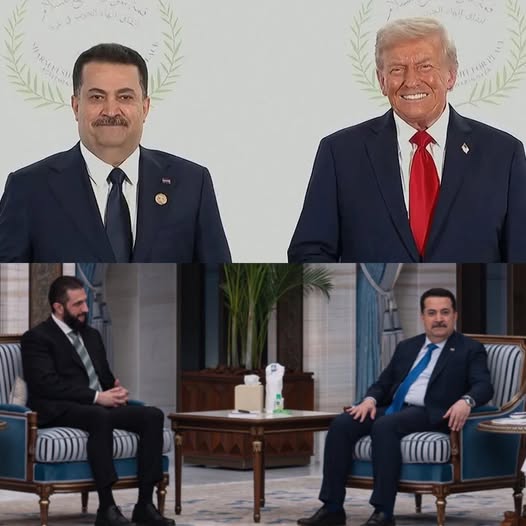
Parliamentarian Mustafa Sanad generated the highest engagement with a series of critical posts, most notably one condemning what he called the “humiliating political process.” The post by Mustafa Sanad (Post Impact: 100%) juxtaposed positive sentiment for “Trump and al-Jolani” against negative sentiment for figures he referred to as “Al-Shayeb, Sayyed Hassan, and Abu Jibril.” In other highly engaged posts, he made pointed statements such as “He who thinks of freezing honor gets frozen,” published by Mustafa Sanad (Post Impact: 38%), and “It’s over, and he who has no stance shouldn’t say ‘I am here’,” posted by Mustafa Sanad (Post Impact: 34%). These posts reflect a deep-seated frustration with the current political establishment and its recent actions.
2. PM Al-Sudani Sues Influencer Haider Al-Hamdani
A major story circulating on Facebook is that Prime Minister Mohammed Shai’a Al-Sudani has personally filed lawsuits against online personality Haider Al-Hamdani. According to a reel from Haider Al-Hamdani (Post Impact: 82%), the Prime Minister arrived at the Karkh Investigation Court with his armored cars and personal protection to file three judicial complaints with “shocking and unexpected charges.” Another page, Haider Khalaf Ghazi (Post Impact: 15%), shared a video that it claims is the reason behind Al-Sudani’s lawsuit against Al-Hamdani. The direct legal action by the head of government against a media figure has sparked significant discussion about freedom of speech and political accountability.
3. Controversy over Government’s Asset Freeze Decision
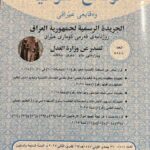
A government decision published in the official gazette, “Al-Waqai’a al-Iraqiyya,” caused a major backlash after it was interpreted as placing groups like Hezbollah and Ansar Allah (the Houthis) on terrorism lists. In response, the Prime Minister’s office issued a clarification, shared by pages like Alkhuwa Alnadifa (Post Impact: 19%) and Dr. Mudhaffar Qasim Hussein (Post Impact: 9%). The statement described the publication as an “error” and ordered an investigation, clarifying that Iraq’s approval for the asset freeze, requested by Malaysia, was limited to entities linked to “ISIS and Al-Qaeda.” The government reaffirmed its “principled” stance against aggression in Lebanon and Palestine. Despite this, pages such as Hussam Alhaj (Post Impact: 6%) reported on the initial news, fueling the controversy.
4. Kurdistan Accuses Faction of Sabotage in Erbil
The Kurdistan Region Security Council (KRSC) publicly accused the armed faction Kata’ib Sayyid al-Shuhada of orchestrating sabotage and destructive acts in the Khabat district of Erbil. According to posts by Alkhuwa Alnadifa (Post Impact: 12%) and Ahmed AlHamdani (Post Impact: 10%), the KRSC claimed that the events were not protests but a “fully-fledged sabotage operation” involving internal and external parties. The council stated that the group exploited demonstrations to burn government headquarters and planned to target fuel and electricity stations, aiming to create chaos. Erbil Events (Post Impact: 15%) also reported on security forces foiling a separate terror plot targeting Erbil and Dohuk.
5. Praise and Defense of Prime Minister Al-Sudani
Amidst the wave of criticism, a strong counter-narrative of support for Prime Minister Al-Sudani also appeared. A highly engaged reel from Haider Khalaf Ghazi (Post Impact: 68%) asserted that “a word of truth must be said in favor of Al-Sudani, regardless of differing positions.” In a similar vein, the page Al-Qasr Al-Hukoumi (Post Impact: 13%) defended the Prime Minister against what it described as a campaign of lies and disinformation aimed at undermining public trust in the state. The post criticized the opposition’s tactics as destructive and called for “honor in disagreement.”
6. Former PM Abd Al-Mahdi’s Post-Election Meetings
Former Prime Minister Adil Abd Al-Mahdi was reported to be actively engaged in post-election political discussions. A post on his official page, Adil Abd Al-Mahdi Adil Abd Al-Mahdi (Post Impact: 21%), detailed his visit to Sheikh Qais Khazali, the Secretary-General of Asa’ib Ahl al-Haq. The two discussed the election results and emphasized the need to expedite the formation of a new government with “competent figures” capable of facing challenges. Another post from the same page (Post Impact: 5%) covered his meeting with Haj Abu Alaa al-Walai, where they also discussed political developments and the importance of continued dialogue among national forces.
7. PM Al-Sudani Inaugurates Development Road in Basra
Prime Minister Mohammed Shai’a Al-Sudani’s activities in Basra received positive coverage, particularly his inauguration of a key infrastructure project. As reported by Alkhuwa Alnadifa (Post Impact: 9%) and the Prime Minister’s official page, Al-Mohandes Mohamed Shia Al-Sudani (Post Impact: 3%), he opened the first 63-kilometer section of the Development Road, which connects the Grand Faw Port to the international highway. The visit was also celebrated by pages like Ammar Al-Hilfi (Post Impact: 20%), which linked the Prime Minister’s arrival in Basra with the news that Iraq had achieved self-sufficiency in gasoline production.
8. Infant Found Abandoned on Nasiriyah-Basra Highway
A heart-wrenching human interest story that gained widespread traction involved the discovery of an abandoned infant. According to posts from Taraif Al-Alam bi-Uyun Iraqiyya (Post Impact: 12%), Sharq Al-Iraq – East of Iraq (Post Impact: 7%), and Al-A’dhamiyah News (Post Impact: 6%), a truck driver on the Nasiriyah-Basra road found a baby inside the wreckage of an old, abandoned car in a remote area. The pages reported that the child was crying from hunger and cold and was “fighting for his last moments.” The story prompted an emotional outcry online, with posts questioning “to what extent can the lack of mercy in some human hearts reach?”
9. Iraq Adopts “Ahmed al-Sharaa” for Al-Jolani
Several pages reported on a formal change in how the Iraqi government refers to the leader of Hay’at Tahrir al-Sham. Posts by Hussam Alhaj hussam alhaj (Post Impact: 6%) and Erbil Events (Post Impact: 4%) noted that Iraq has officially adopted the name “Ahmed al-Sharaa” instead of the widely used moniker “al-Jolani.” This move, reflected in the same official gazette that caused the asset-freeze controversy, signals a deliberate shift in official terminology and state recognition of his formal name.
10. Polarized Commentary on Political Leadership and “Resistance”
The broader political discourse was characterized by deeply divided opinions on leadership and the concept of “resistance.” The page Al-Qasr Al-Hukoumi (Post Impact: 13%) defended the government against what it termed a campaign of lies and destructive opposition, arguing that such actions “demolish the state” and public trust. In contrast, Ahmed Al-Washah (Post Impact: 12%) praised a figure believed to be Hassan Nasrallah as the “real resistance,” while accusing others of being “traders in blood, religion, and sect who built empires for themselves in the name of resistance.” These contrasting viewpoints highlight the ideological battles playing out on Iraqi social media.