2025-12-25: Muqtada al-Sadr Issues Major Political Statement

Based on an analysis of 494 X / Twitter posts by Miqrab AI on December 25, 2025, the primary narratives in Iraq revolve around significant political and security developments. The most impactful event was a major political statement released by Muqtada al-Sadr, which dominated online engagement. A secondary major story focused on the killing of Ahmed Tawisa in Basra, a man accused of assassinating several activists and journalists, prompting widespread commentary on justice and militia infighting. Concurrently, discussions around Christmas celebrations highlighted themes of national unity and interfaith coexistence, with various political and religious leaders making public outreach efforts. These positive messages were contrasted by a controversy surrounding remarks by Cardinal Louis Sako, fears among Coordination Framework leaders about potential U.S. sanctions, and assertive statements from the Iranian ambassador regarding Iran’s role in Iraqi sovereignty, all of which underscore the complex political and social dynamics currently at play.
Table Of Content
- 1. Muqtada al-Sadr Issues Major Political Statement
- 2. Killing of Accused Assassin Ahmed Tawisa Dominates Discussion
- 3. Political and Religious Leaders Mark Christmas with Interfaith Outreach
- 4. Coordination Framework Leaders Reportedly Fear US Sanctions
- 5. Cardinal Sako’s Remarks on “Normalization” Spark Controversy
- 6. Iranian Ambassador’s Statements on Sovereignty Stir Debate
- 7. Criticism Mounts Over PMF Victory Anniversary Celebrations
- 8. Concerns Voiced Over Iraq’s Worsening Financial Situation
- 9. Speculation Grows About Haider al-Abadi’s Return as PM
- 10. Internal Christian Political Disputes Resurface
Today’s Top 10 X (Twitter) Trends in Iraq:
1. Muqtada al-Sadr Issues Major Political Statement
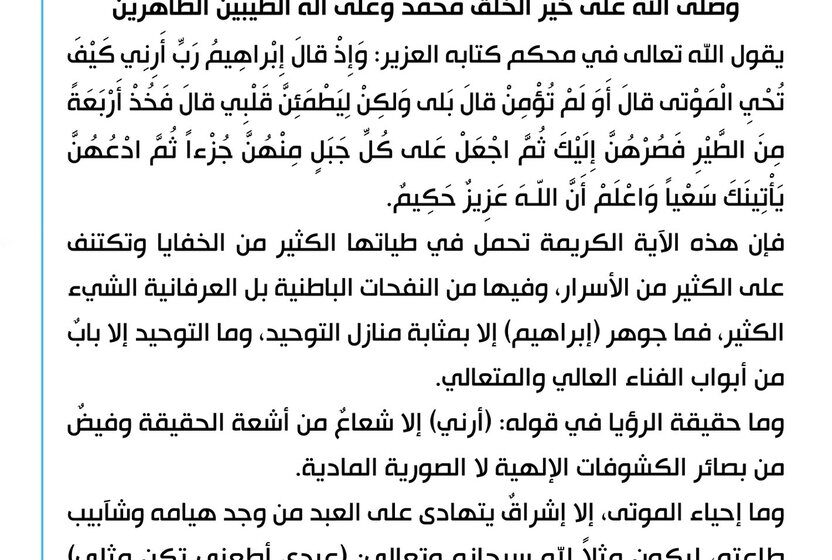
The most impactful post of the day came from influential cleric Muqtada al-Sayyid Muhammad al-Sadr (Post Impact: 100%), who published a formal statement via an image link. While the post itself contained no text, the linked statement addressed key political issues, reportedly outlining a vision for “national salvation” and reasserting the concept of a “Sadrist majority.” Such announcements from al-Sadr are typically interpreted as significant indicators of his political direction and intentions, generating massive engagement and speculation among followers and analysts about his next moves on the Iraqi political stage.
2. Killing of Accused Assassin Ahmed Tawisa Dominates Discussion
Multiple accounts widely reported on the death of Ahmed Tawisa, a man accused of leading a “death squad” in Basra responsible for assassinating activists and journalists during the Tishreen protests. Rusly Al-Maliki 🇮🇶 رسلي المالكي (Post Impact: 20%) stated Tawisa was a “militiaman terrorist” whose body was found with four bullet wounds in a sewage canal in Basra. Ali farhan (Post Impact: 10%) commented, “A killer is promised to be killed, even after a while,” framing his death as justice for the martyred journalist Ahmed Abdul Samad. Similarly, Yasser Eljuboori – ياسر الجبوري (Post Impact: 7%) and Othman Al-Mukhtar (Post Impact: 9%) reported on the news, listing Tawisa’s alleged crimes, including the murder of Sheikh Yousef Al-Hassan in 2006. The consensus across these posts is that Tawisa was a notorious criminal and that his death, whether by internal purging or divine retribution, was a welcome development.
3. Political and Religious Leaders Mark Christmas with Interfaith Outreach
Christmas Day was marked by numerous messages of solidarity and interfaith outreach from various Iraqi leaders and institutions. Ammar Al-Hakim | عمار الحكيم (Post Impact: 5%) shared details of his visits to several churches in Baghdad, where he congratulated the Christian community and called on expatriates to return to Iraq. Similarly, Qais al-Khazali (Post Impact: 47%) released a statement via an image showing him visiting a Christian family to celebrate the holiday, an event also covered by accounts like Haidar (Post Impact: 5%). The official account for the Counter-Terrorism Service (Post Impact: 8%) also contributed to the theme by posting a photo of one of its Christian members celebrating the birth of Christ, reinforcing a message of national unity across different faiths.
4. Coordination Framework Leaders Reportedly Fear US Sanctions
A prominent narrative emerged detailing anxiety within the Shia Coordination Framework, particularly concerning leader Nouri al-Maliki. According to Salim Al-Jomaili (Post Impact: 4%), Shia political leaders are less concerned with government positions and more focused on securing guarantees against potential U.S. actions, including sanctions, removal from decision-making centers, or the pursuit of their assets. Shaho Al-Qaradaghi (Post Impact: 4%) echoed this, stating that al-Maliki is seeking protection for himself and his inner circle. Ali farhan (Post Impact: 4%) added that some leaders have allegedly sent assurances to the US via intermediaries, signaling their readiness to meet American demands, including restricting arms and ending Iranian influence.
5. Cardinal Sako’s Remarks on “Normalization” Spark Controversy
A speech by Cardinal Louis Raphaël Sako during Christmas celebrations ignited a significant controversy after his use of the word “normalization” was interpreted by some as a call to normalize relations with Israel. In response, several accounts shared clarifications. Haidar (Post Impact: 5%) posted a statement attributed to Sako, explaining he meant that all countries should normalize relations with Iraq, the land of Abraham, to encourage tourism. The same account later posted another clarification where Sako denied ever visiting Israel. In a video post, Ghaith Al-Tamimi GHAITH ALTAMIMI (Post Impact: 2%) defended the Cardinal, calling the law criminalizing normalization unconstitutional and arguing Sako’s statement was a clear call to make Iraq a center for global dialogue.
6. Iranian Ambassador’s Statements on Sovereignty Stir Debate
Statements made by the Iranian ambassador in Baghdad were widely circulated, sparking debate on Iranian influence in Iraq. Haidar (Post Impact: 4%) summarized the ambassador’s key points, which included the claim that U.S. planes conduct surveillance on Iran from Iraqi airspace and a declaration that Iran is “ready to protect the Iraqi regime” if Baghdad requests it. In another post, Shaho Al-Qaradaghi (Post Impact: 2%) highlighted the ambassador’s comment on disarming factions, quoting him as saying Iran would “deal with it in a way that preserves the rights of the resistance.” These remarks were viewed as an assertion of Iran’s deep involvement in Iraq’s security and political affairs.
7. Criticism Mounts Over PMF Victory Anniversary Celebrations
Videos purportedly showing members of the Popular Mobilization Forces (PMF) and affiliated factions like Asa’ib Ahl al-Haq celebrating the anniversary of the victory over ISIS drew sharp criticism online. Hiba Alnnayib HIBA Alnnayib (Post Impact: 8%) shared a video of dancing and celebrations, sarcastically commenting that they were not at a nightclub in Erbil or Jadriyah but at PMF headquarters. Ali farhan (Post Impact: 2%) also posted a video with the caption, “Asa’ib celebrates the day of victory over ISIS!” The tone of the commentary suggests disapproval of the festive nature of the celebrations, viewing them as inappropriate.
8. Concerns Voiced Over Iraq’s Worsening Financial Situation
A number of posts expressed alarm over the state of Iraq’s economy and financial management. David Yassin (Post Impact: 6%) warned that Iraq is seeing the effects of a plan to “stop supporting the existing regime after its financial exhaustion,” describing the current situation not as a salary crisis but as a “phase of implementation.” This suggests a deliberate and managed decline. Meanwhile, Dr. Qusay Shafiq (Post Impact: 2%) criticized the government directly, pointing out that while financial management law caps the deficit at 3%, it has reached a “disastrous” 35% under the current administration, an admission he calls “very serious.”
9. Speculation Grows About Haider al-Abadi’s Return as PM
Discussion surrounding the formation of the next government included speculation about former Prime Minister Haider al-Abadi’s potential return to the role. Waleed Ibrahim (Post Impact: 2%) described a recent statement by al-Abadi, in which he said he was “ready psychologically and realistically for the post of prime minister,” as a significant development amid divisions within the Coordination Framework. He notes al-Abadi’s lack of a party in parliament could make him a more acceptable candidate. Salam Al-Husseini (Post Impact: 2%) also named al-Abadi as “the closest and most fortunate of the nine candidates for the position,” adding to the narrative that he is a serious contender.
10. Internal Christian Political Disputes Resurface
The controversy surrounding Cardinal Sako also brought attention to ongoing political rivalries within Iraq’s Christian community. Najah Mohammed Ali (Post Impact: 3%) referenced the “long-standing dispute between the nationalist youth Rayan al-Kildani and Patriarch Louis Raphaël Sako over church property and the true representation of Christians.” Siding with al-Kildani, the account suggested that the recent controversy proves al-Kildani was right and that Iraqi Christians deserve leadership that defends their rights rather than engaging in “suspicious settlements.” The defense of Sako by accounts like Ghaith Al-Tamimi GHAITH ALTAMIMI (Post Impact: 2%) highlighted the clear divisions among different political and social commentators regarding the leadership of the Christian community.