2026-01-01: Widespread Anti-Government Protests Erupt Across Iran

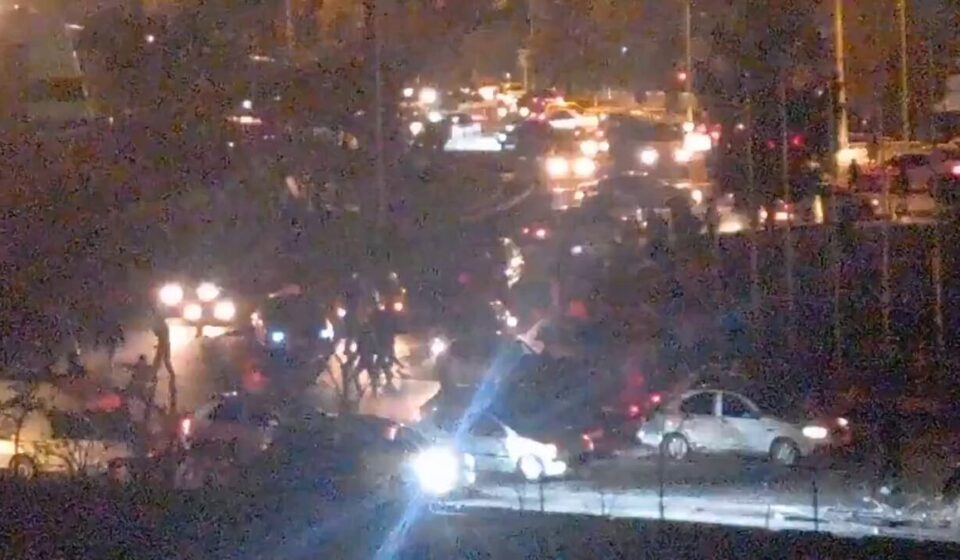
Based on Miqrab AI’s analysis of 511 X / Twitter posts trending on January 1, 2026, the primary narrative dominating online conversations in Iraq is the widespread anti-government protests across Iran. Numerous accounts shared videos and reports of demonstrators clashing with security forces, taking control of cities, and calling for the downfall of the clerical regime, with many expressing support for the return of a monarchy. A related but distinct topic involved a controversial event held by the Hashd al-Shaabi (Popular Mobilization Forces) at Baghdad’s Al-Shaheed Monument, where images of allied world leaders were used as targets in a shooting game, drawing condemnation and accusations of creating a diplomatic embarrassment for Iraq. Other significant discussions revolved around escalating tensions between Saudi Arabia and the UAE over Yemen, social outrage over mass harassment of women during New Year’s celebrations in Basra, and polarized commentary on the anniversary of Qasem Soleimani’s death.
Table Of Content
- 1. Widespread Anti-Government Protests Erupt Across Iran
- 2. Militias’ Event at Al-Shaheed Monument Sparks Outrage
- 3. Calls for Monarchy’s Return and Secularism in Iran
- 4. Growing Saudi-UAE Tensions Over Yemen Conflict
- 5. Outrage Over Mass Harassment of Women in Basra
- 6. Polarized Views on the Anniversary of Qasem Soleimani’s Death
- 7. Hope for Tishreen Revolution Amid Regional Changes
- 8. Debate on New Year’s Celebrations and Coexistence
- 9. U.S. Envoy Mark Savaya’s Agenda for Iraq in 2026
- 10. Iranian President Admits Government Failings
Today’s Top 10 X (Twitter) Trends in Iraq:
1. Widespread Anti-Government Protests Erupt Across Iran
The most dominant story on Iraqi social media is the outbreak of major protests across Iran. Accounts shared numerous videos allegedly showing demonstrators clashing with security forces and taking control of key cities. Mujtahid al-Iraq (Post Impact: 100%) reported on revolutionaries taking control of Fuladshahr. Similarly, Radhy Al-Ardhhalji (Post Impact: 47%) claimed that all prisoners in the city of Arak were freed after the city fell to “revolutionaries” and security forces withdrew. Other accounts like Rusly Al-Maliki (Post Impact: 37%) shared footage of protesters burning a seminary in the city of Farsan, interpreting it as Iranians destroying the “incubator of Safavid Shiism.” The sentiment across these posts is overwhelmingly supportive of the protests, framing them as a popular uprising against the clerical regime, with Faig Al-Sheikh Ali (Post Impact: 40%) stating, “Iran is on a volcano!” and predicting that this time, when the people rise, the “turbans will flee, but they will not return!”
2. Militias’ Event at Al-Shaheed Monument Sparks Outrage
A significant controversy emerged from an event organized by the Hashd al-Shaabi (Popular Mobilization Forces) at the Al-Shaheed Monument in Baghdad. According to Omar Abdul Sattar Mahmoud (Post Impact: 45%), the event featured an electronic game where images of several world leaders were used as targets for killing. The list of targets reportedly included Saudi Crown Prince Mohammed bin Salman, King Abdullah II of Jordan, Syrian President Ahmed al-Sharaa, and former U.S. President Donald Trump. Steven Nabil (Post Impact: 27%) described the incident as a source of “severe diplomatic predicament and embarrassment” for Iraq, questioning how the country can advance when a government entity places pictures of allied leaders as targets. He and others, including Rusly Al-Maliki (Post Impact: 10%), condemned the act as a desecration of a national monument and a childish display that damages Iraq’s international standing.
3. Calls for Monarchy’s Return and Secularism in Iran
Alongside general reports of protests, a strong narrative emerged advocating for the end of the Islamic Republic and the return of a monarchy under Reza Pahlavi. Sufian Al-Samarrai published multiple high-impact posts (Post Impact: 50%) and (Post Impact: 45%) arguing that the Iranian people are chanting the name of the Shah and want salvation from the Islamic clergy forever. He asserted that protesters’ slogans are against Islam and its teachings, stating their desire for Iran to return as a “beacon and fortress of secularism.” Al-Samarrai refutes claims that the people support other opposition figures like Rajavi, demanding evidence of any protests in her favor. He concludes with the strong statement, “Understand it well: Iran will completely leave Islam.” This sentiment was echoed by others, including Tamara Alkhazraji (Post Impact: 10%), who shared a picture of Iranian leaders’ photos in a trash can, contrasting the Iranian people’s actions with their “followers” in Iraq who “worship them.”
4. Growing Saudi-UAE Tensions Over Yemen Conflict
Tensions between Saudi Arabia and the United Arab Emirates were a major topic of discussion. ZaidBenjamin (Post Impact: 77%) reported, citing a diplomatic source, that Saudi Crown Prince Mohammed bin Salman rejected advice to de-escalate with the Emirati President over Yemen, using the word “Ma’si,” meaning impossible. In a more detailed post, ZaidBenjamin (Post Impact: 17%) translated a New York Times article explaining how the two allies reached the point of conflict. The article details how their interests have diverged, with the UAE backing southern separatists in Yemen against the Saudi-supported government. The report highlights growing economic competition and differing foreign policy approaches, noting that recent tensions culminated in a Saudi-led airstrike on an Emirati shipment to Yemen. The analysis suggests this rift could destabilize the region and create political challenges for the United States.
5. Outrage Over Mass Harassment of Women in Basra
Multiple accounts expressed outrage over videos showing mass harassment of women in Basra during New Year’s Eve celebrations. Wasan Al-Shaikhli (Post Impact: 47%) posted a video criticizing a woman who was allegedly attacked, linking it to a rejection of traditional and religious values. A more direct condemnation came from Hiba Al-Nnayib (Post Impact: 22%), who described the scenes as men “chasing women and harassing them” and attacking them like “rabid animals.” She connected this behavior to the “education of the seminaries, visits, and Husseiniyas.” Tamara Alkhazraji (Post Impact: 15%) called the scenes “brutal” and blamed the repeated incidents on the leniency of authorities and lack of societal condemnation, arguing that mass harassment is a process of “intimidating and excluding women from the public space.”
6. Polarized Views on the Anniversary of Qasem Soleimani’s Death
The anniversary of the killing of Iranian General Qasem Soleimani prompted sharply divided reactions. Rusly Al-Maliki (Post Impact: 32%) wrote a lengthy post denouncing Soleimani as “the head of militia terrorism in Iraq,” accusing him of ordering the suppression of the Tishreen protests and the killing of activists. He celebrated Soleimani’s death on Baghdad’s soil, stating, “Soleimani was killed, and Baghdad remained… Soleimani was killed, and Iraq remained.” In stark contrast, Ali Al-Muhandis (Post Impact: 30%) posted a supportive video with the caption, “Despite you, we love Soleimani,” indicating continued reverence for the late general among certain groups. This highlights the deep polarization within Iraqi society regarding Soleimani’s legacy and Iran’s influence.
7. Hope for Tishreen Revolution Amid Regional Changes
Supporters of Iraq’s Tishreen protest movement expressed renewed hope, often linking their cause to the ongoing unrest in Iran. Faig Al-Sheikh Ali (Post Impact: 42%) posted a reflective message about dedicating his life to serving his people and nation, ending with the hashtag #The_Tishreen_Revolution_Will_Be_Victorious. In another post (Post Impact: 40%), he explicitly connected the protests in Iran to the potential for change in Iraq. This sentiment was shared by Hassan Basketball -HASSAN AL HAMMADI (Post Impact: 18%), who posted an image of a sniper with the caption, “The picture is of the third party in the Iran protests,” drawing a parallel to the “third party” blamed for killing protesters in Iraq. Accounts like Mulla Aboud Al-Karkhi (Post Impact: 15%) also used the Tishreen hashtag to signal anticipation for future developments.
8. Debate on New Year’s Celebrations and Coexistence
The New Year’s holiday sparked a debate about cultural values and social norms. Sufian Al-Samarrai (Post Impact: 46%) shared a video of celebrations in China, commenting that the Chinese Communist government did not forbid its people from celebrating, instead encouraging them to celebrate together. He framed this as “the art of coexistence and respect,” suggesting that no one considered it a call to convert to Christianity. On the other hand, Wasan Al-Shaikhli (Post Impact: 47%) took a critical stance, posting a video of a woman who was allegedly harassed. Al-Shaikhli claimed this woman is one of those who describe people demanding respect for religious and social traditions as “reactionary,” but now “screams from the intensity of Christmas being practiced on her by youth liberated from religious, doctrinal, and social values.”
9. U.S. Envoy Mark Savaya’s Agenda for Iraq in 2026
The announced priorities of a U.S. envoy named Mark Savaya for 2026 drew significant attention and mixed reactions. Rusly Al-Maliki (Post Impact: 15%) shared an image listing Savaya’s goals, which include combating corruption, uncontrolled weapons, foreign interference, and poverty, adding that it came with a “warning and threat to the scoundrels.” Hayder (Post Impact: 9%) also summarized this ambitious agenda. In a separate post, Rusly Al-Maliki (Post Impact: 16%) noted that Prime Minister Mohammed Shia’ Al Sudani had recently rejected Savaya’s tweets as “external interference,” but Savaya has since increased his statements, indicating a potential point of friction between the Iraqi government and the U.S. envoy. Conversely, Wesam Aziz (Post Impact: 11%) issued a threat, stating that “mujahid youth” await Savaya in Iraq and will make his time “hell.”
10. Iranian President Admits Government Failings
A statement attributed to Iranian President Masoud Pezeshkian, admitting his government’s role in the country’s economic crisis, was highlighted by several Iraqi commentators. Rusly Al-Maliki (Post Impact: 13%) quoted Pezeshkian as saying, “The Iranian government is responsible for the deteriorating living conditions in the country, not the United States.” Raad Hashim (Post Impact: 12%) shared a similar report, framing it as the Iranian president “exonerating America.” This admission was seen as significant, as it appears to validate the grievances of the protesters who blame the regime for their economic hardships, undermining the government’s long-standing narrative of blaming foreign sanctions and “the Great Satan” for the country’s problems.