2026-01-03: Muqtada al-Sadr on the Fall of Venezuela’s President

Based on a Miqrab AI analysis of 793 X / Twitter posts trending in Iraq on January 3, 2026, the primary online conversations focused on the dramatic US special forces operation in Venezuela that resulted in the arrest of President Nicolás Maduro. This event dominated the discourse, with users drawing direct parallels to the political situations in Iraq and Iran, interpreting it as a show of American strength and a warning to its adversaries in the region. A secondary, yet significant, narrative centered on statements from influential Iraqi cleric Muqtada al-Sadr, who framed the events in Venezuela as a divine message to corrupt rulers. Concurrently, discussions continued around escalating anti-government protests in Iran and commemorated the anniversary of the killing of Qasem Soleimani and Abu Mahdi al-Muhandis, with commentators sharply divided in their views of the two figures.
Table Of Content
- 1. Muqtada al-Sadr on the Fall of Venezuela’s President
- 2. US Arrest of Venezuelan President Maduro Dominates Discussion
- 3. Implications of Maduro’s Fall for Iran and its Allies
- 4. Reports of Escalating Protests Across Iran
- 5. Qais Khazali Issues Defiant Statement
- 6. Analysis of Geopolitical and Economic Consequences
- 7. Commemoration and Denunciation on Anniversary of Soleimani’s Death
- 8. Venezuelan Government’s Response to US Operation
- 9. US Senator Rubio Meets with the “Future Shah of Iran”
- 10. Calls for New Political Approach in Iraq
Today’s Top 10 X (Twitter) Trends in Iraq:
1. Muqtada al-Sadr on the Fall of Venezuela’s President
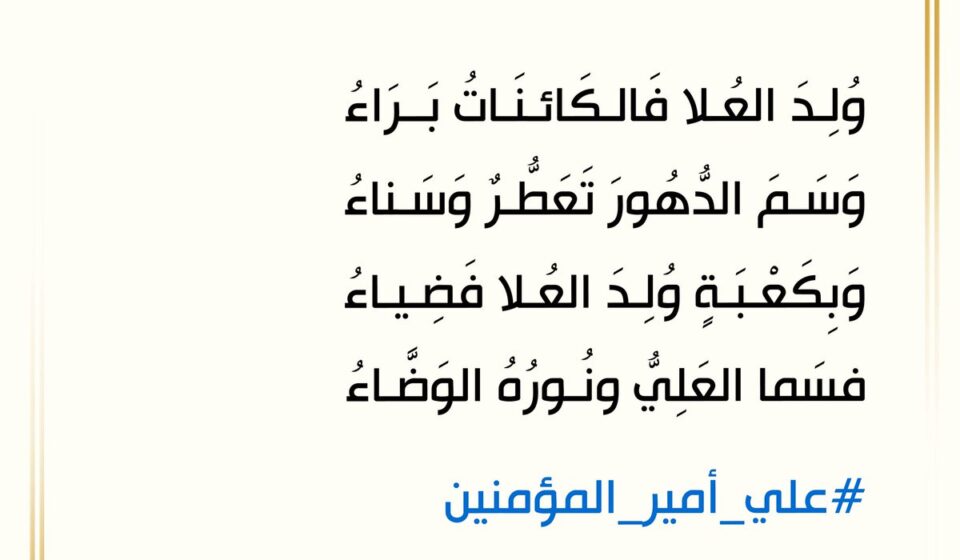
Influential Shia cleric Muqtada al-Sadr released several statements that garnered the highest engagement. Muqtada Al-Sadr (Post Impact: 96%) described the events in Caracas as a “divine message” highlighting the vulnerability of rulers distracted by wealth and corruption from the suffering of their people. In other posts, he shared symbolic imagery, echoed by his associate Salih Muhammad al-Iraqi (Post Impact: 56%), who also disseminated the cleric’s messages. User Hayder (Post Impact: 4%) quoted al-Sadr’s prayer: “Oh God, occupy the oppressors with the oppressors and bring us out from among them safely. Oh God, liberate our country, for You are capable of all things.” These posts framed the international incident through a religious and moral lens, applying its lessons to Iraq’s own political landscape.
2. US Arrest of Venezuelan President Maduro Dominates Discussion
The central topic of discussion was the US special forces operation that led to the capture of Venezuelan President Nicolás Maduro and his wife. Accounts widely circulated news and video clips of the event, expressing shock and awe at the execution of the operation. Sufian Al-Samarrai (Post Impact: 68%) questioned how forces entered Maduro’s room, noting he was protected by Cuban special forces and had recently met with a Chinese delegation in the same palace. Omar Abdul Sattar Mahmoud (Post Impact: 15%) shared a statement attributed to former President Trump confirming the operation’s success. Commentators like Steven Nabil (Post Impact: 13%) and Aayad Al Twfan (Post Impact: 9%) emphasized the speed and surprise of the raid by elite US units like Delta Force, noting that Maduro was captured while he was sleeping.
3. Implications of Maduro’s Fall for Iran and its Allies
Many users interpreted the US action in Venezuela as a direct message to Iran and its allied militias in the Middle East. Sufian Al-Samarrai (Post Impact: 31%) listed the external support Maduro received from Qatar, Iran, Russia, and Cuba, stating none of it could save him. Steven Nabil (Post Impact: 13%) warned Iraqi leaders against threatening Trump and risking the country’s fate for Iran. Similarly, Faiq Al-Sheikh Ali (Post Impact: 15%) observed that militia leaders in Iraq become fearful whenever the US strikes a foreign country or arrests a president. Rusly Al-Maliki (Post Impact: 6%) directly addressed Iran’s Supreme Leader Khamenei, warning that despite his threats, he could not predict where the US would strike next, citing Maduro’s capture from his bedroom as an example.
4. Reports of Escalating Protests Across Iran
Following the news from Venezuela, several accounts reported a significant escalation in anti-government demonstrations across Iran. Sufian Al-Samarrai (Post Impact: 11%) claimed that protests in Tehran intensified after the fall of Maduro, an ally of the Iranian regime, with demonstrators chanting “Death to Khamenei.” He also reported on protests and the fall of the city of Mashhad to “Iranian revolutionaries.” Other accounts like Bahaa Khaleel (Post Impact: 8%) and Raad Hashim (Post Impact: 7%) shared videos of the unrest, urging followers not to be distracted by Venezuela and to remember the ongoing revolution in Iran against Khamenei.
5. Qais Khazali Issues Defiant Statement
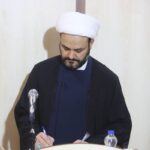
Amidst the regional turmoil, Qais Khazali (Post Impact: 54%), leader of the Asa’ib Ahl al-Haq militia, posted an image of himself with a quote reinforcing themes of resistance and martyrdom. The statement, shared without additional text, was seen as a message of defiance in the face of perceived American aggression and threats. This was complemented by a post from Abu Alaa al-Walai (Post Impact: 9%), leader of Kata’ib Sayyid al-Shuhada, who shared a similar graphic message of steadfastness. These posts represent the perspective of Iran-aligned factions, who continue to project strength despite the apparent warning sent by the US operation in Venezuela.
6. Analysis of Geopolitical and Economic Consequences
Commentators analyzed the wider strategic implications of the US takeover in Venezuela, particularly concerning global energy markets. As’ad Al-Basri (Post Impact: 17%) argued that by controlling Venezuela’s oil, the US now controls 70% of China’s energy needs, thereby preventing Beijing from challenging Washington militarily. Rusly Al-Maliki (Post Impact: 10%) highlighted that Venezuela has the world’s largest oil reserves and is now under US control, questioning what other oil-producing nations, including Iraq, will do in response. This sentiment was echoed by Hayder (Post Impact: 6%), who warned of a potential collapse in oil prices that would necessitate drastic economic reforms in Iraq.
7. Commemoration and Denunciation on Anniversary of Soleimani’s Death
The date coincided with the anniversary of the killing of Iranian General Qasem Soleimani and Iraqi militia commander Abu Mahdi al-Muhandis, prompting polarized reactions. Faiq Al-Sheikh Ali (Post Impact: 15%) described the two as “enemies of Iraq,” accusing Soleimani of being a “killer of the Iraqi people” and al-Muhandis of being an “Iranian agent.” In a similar vein, Othman Al-Mukhtar (Post Impact: 7%) called Soleimani “the filthiest person” known to Iraq and Syria, blaming him for the bombing of Fallujah. These posts stood in stark contrast to the defiant messaging from Iran-aligned figures, highlighting the deep internal divisions in Iraq over the legacy of these two men.
8. Venezuelan Government’s Response to US Operation
Offering a counter-narrative, some accounts reported on the Venezuelan government’s official response. Zaid Benjamin (Post Impact: 19%), citing The New York Times, detailed how Venezuela’s interim president, Delcy Rodríguez, appeared on television flanked by top military officials to condemn the US. Rodríguez presented a show of unity, reaffirming that Maduro is the legitimate president, a move that reportedly weakened previous US statements about working with her to manage the country. Another post by Hayder (Post Impact: 6%) showed a clip of the Venezuelan Minister of Information in Caracas asserting that life in the capital was normal, attempting to project an image of stability and control despite the crisis.
9. US Senator Rubio Meets with the “Future Shah of Iran”
Amidst the turmoil in Iran, Sufian Al-Samarrai (Post Impact: 38%) posted a photo showing US Senator Marco Rubio meeting with Reza Pahlavi, the son of the last Shah of Iran. Al-Samarrai referred to Pahlavi as the “coming Shah of Iran” and included the hashtag #JavidShah, suggesting American support for a monarchist restoration as a potential alternative to the current Islamic Republic. This post points to a narrative among some opposition supporters that international powers are actively considering and engaging with figures who could lead a post-regime Iran.
10. Calls for New Political Approach in Iraq
Some commentators linked the dramatic international events back to Iraq’s fragile domestic politics. Hayder (Post Impact: 9%) analyzed the situation as a lesson for Baghdad, arguing that neither the Eastern nor Western camps can be fully trusted and that Iraq must maintain a balanced foreign policy to avoid being crushed between them. Taking a more specific stance, Mashaan Al-Jabouri (Post Impact: 5%) warned that there can be “no stability” in Iraq without the inclusion of the Sadrist movement. He stated that if the government continues its policy of exclusion, the fall of the system under a Trump presidency “will not be far away” and will be “devastating for those in power.”