2026-01-07: Heated Debate Over Iran’s Regional Role

Miqrab AI’s analysis of 584 trending X / Twitter posts on January 7, 2026, reveals a social media landscape dominated by regional turmoil, particularly the widespread anti-government protests in Iran and the ensuing debate within Iraq about Iran’s influence. Discussions frequently cover geopolitical shifts, including Saudi Arabia’s assertive new strategy in Yemen and heightened tensions involving the United States and Israel, which are perceived as preparing for potential military action against Tehran. Domestically, a cultural controversy over an Iraqi dialectical term sparked conversations about national identity and sectarianism, while growing economic anxieties over rising prices and new taxes also featured prominently.
Table Of Content
- 1. Heated Debate Over Iran’s Regional Role
- 2. Widespread Anti-Government Protests Erupt in Iran
- 3. “Ajal” Dialect Word Sparks Cultural and Sectarian Controversy
- 4. Iraqi Reactions to Saudi-Emirati Disputes
- 5. Saudi Arabia Consolidates Control in Yemen
- 6. U.S. and Israel Signal Potential Action Against Iran
- 7. U.S. Embassy Calls for Dismantling Militias in Iraq
- 8. Growing Economic Hardship and Price Hikes in Iraq
- 9. Conflict Escalates Between HTS and Kurdish Forces in Aleppo
- 10. Muqtada al-Sadr Issues a Stern Warning to Militias
Today’s Top 10 X (Twitter) Trends in Iraq:
1. Heated Debate Over Iran’s Regional Role
A divisive conversation about Iran’s role in the Middle East captured the highest engagement, with posts presenting starkly contrasting viewpoints. Pro-Iran accounts like Dr. Hussein Al-Safi (Post Impact: 100%) praised Iran as “the only Islamic country that bombed the enemy with hundreds of missiles,” contrasting its actions with Arab nations that have normalized relations with Israel. Conversely, critics of the Iranian regime, such as Faiq Al-Sheikh Ali/My Word for History (Post Impact: 73%), shared an interview with the late Shah of Iran, Mohammad Reza Pahlavi, to argue that the Shah was not a dictator and that it was the current clerical leadership that killed its own people. This sentiment was echoed by Omar Al-Janabi (Post Impact: 25%), who questioned the future of pro-Iran “loyalists” after the potential collapse of the Iranian regime.
2. Widespread Anti-Government Protests Erupt in Iran
Multiple accounts reported extensively on large-scale anti-government demonstrations across Iran, sharing videos of protesters clashing with security forces and taking over official buildings. Rusly Al-Maliki (Post Impact: 98%) posted a video allegedly showing protesters storming a religious seminary in Shahrestan and attacking clerics. Other posts from accounts like Ali Farhan (Post Impact: 24%) reported similar attacks on a seminary in Khorasan Razavi. The protests were not limited to Iran, as Noor – Um Omar (Post Impact: 57%) shared a video from Beirut, Lebanon, showing restaurant workers holding signs with slogans against Iran’s Supreme Leader Khamenei.
3. “Ajal” Dialect Word Sparks Cultural and Sectarian Controversy
A significant domestic debate erupted over the Iraqi dialect word “ajal” (meaning “so” or “then”), commonly used in the north and west of Iraq. The controversy began after a pro-militia figure was perceived as mocking the term. In response, numerous Iraqis defended the word as part of their heritage. Suhair Al_jumaili (Post Impact: 79%) shared a video of a man from Maysan proudly affirming his dialect and identity. Mashaan al-Jabouri (Post Impact: 35%) described the reaction as exposing “the amount of hatred” some hold against those with different identities. Meanwhile, Issam Hussein (Post Impact: 28%) contrasted the outrage over the word with what he described as a lack of reaction to a cleric in Tikrit allegedly declaring Shiites as infidels.
4. Iraqi Reactions to Saudi-Emirati Disputes
The ongoing rivalry between Saudi Arabia and the United Arab Emirates was a topic of discussion, with some Iraqis seen as taking sides. A post by Ali Farhan (Post Impact: 87%) highlighted a video of an Iraqi who accused Saudi Arabia of wrongdoing while simultaneously supporting the UAE. Farhan questioned this stance, asking, “Do we as Iraqis have to be a party to every problem that happens?” The post suggests a frustration among some social media users with Iraqis becoming involved in regional conflicts that do not directly concern their country.
5. Saudi Arabia Consolidates Control in Yemen
Accounts monitored developments in Yemen, where Saudi Arabia appears to be consolidating its control following the withdrawal of the UAE. Liqaa Maki (Post Impact: 68%) analyzed the situation, stating that Saudi Arabia has managed to change the political landscape in Yemen and is moving to eliminate the southern separatist movement, a move that could unify forces against the Houthis. This was corroborated by Rusly Al-Maliki (Post Impact: 50%), who reported that Saudi Arabia now controls the entire country except for Houthi-held areas. Journalist ZaidBenjamin (Post Impact: 27%) translated a New York Times article detailing the standoff between Saudi Arabia and the southern separatist leader Aidarous al-Zubaidi.
6. U.S. and Israel Signal Potential Action Against Iran
A narrative of impending military action against Iran gained traction, fueled by statements from American officials and reports of Israeli military preparations. Shaho Al-Qaradaghi (Post Impact: 60%) shared a video of Iranian official Amir Mousavi threatening a “preemptive disciplinary strike” against US interests, questioning Iran’s ability to do so. This came as Rusly Al-Maliki (Post Impact: 33%) quoted U.S. Senator Lindsey Graham warning that Iranian Supreme Leader Ali Khamenei would become a target if protesters were killed. Separately, Steven Nabil (Post Impact: 33%) cited Israeli outlet Ynet, reporting that Prime Minister Netanyahu received a “green light” from the Trump administration for military operations in the Middle East.
7. U.S. Embassy Calls for Dismantling Militias in Iraq
A strong statement from the U.S. Embassy in Baghdad calling for the dismantlement of Iran-backed militias generated significant discussion. The official U.S. Embassy Baghdad account (Post Impact: 24%) posted about a meeting between the Chargé d’Affaires and the Iraqi Minister of Justice, stating the U.S. will continue to speak out on the “urgent need to dismantle Iran-backed militias, which undermine Iraq’s sovereignty.” This message was amplified by accounts like Steven Nabil (Post Impact: 31%), who described it as a “fiery statement,” and Ali Farhan (Post Impact: 20%), highlighting the embassy’s accusation that these groups plunder Iraqi resources.
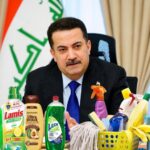
8. Growing Economic Hardship and Price Hikes in Iraq
Users expressed widespread frustration over deteriorating economic conditions in Iraq, including rising prices for essential goods and new taxes. Rusly Al-Maliki (Post Impact: 46%) warned that Iraq is on the verge of “fiery price hikes,” bankruptcy, and taxes. Dr. Qusay Shafiq (Post Impact: 33%) detailed the rising costs of gas, electricity, and phone cards, claiming that Iraqis have been set back 20 years economically. These sentiments were echoed by Ameer aldaami (Post Impact: 16%), who stated that Iraq has never witnessed such taxes in its history, even during the worst of the economic sanctions.
9. Conflict Escalates Between HTS and Kurdish Forces in Aleppo
Reports emerged of escalating conflict in Aleppo, Syria, between Hay’at Tahrir al-Sham (HTS), led by Abu Mohammad al-Jolani, and the Kurdish-led Syrian Democratic Forces (SDF). Haider (Post Impact: 23%) reported that Jolani’s “terrorist gangs” declared Kurdish neighborhoods as legitimate targets and gave SDF militias a deadline to withdraw. Ahmed Al-Thawaq (Post Impact: 17%) claimed that the U.S. gave a “green light” to Jolani to attack the Kurds. This situation prompted a response from Kurdish leader Masoud Barzani, who, according to another post from Haider (Post Impact: 13%), issued a statement condemning “ethnic cleansing against the Kurdish people” as a crime against humanity.
10. Muqtada al-Sadr Issues a Stern Warning to Militias
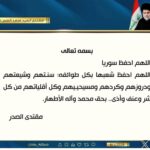
Sadrist leader Muqtada al-Sadr released a message directed at his followers and rival militias, which was widely shared by his supporters. In the message, posted by accounts like Safaa Al-Asadi (Post Impact: 13%) and Alaa Alabadi (Post Impact: 18%), al-Sadr thanked the people of Amarah province and warned his rivals, stating, “The insolent should not test our patience, for our morals contradict their morals.” The statement draws a sharp line between his movement and other armed groups, concluding with the words, “We have our religion and they have theirs, we have our Hussein and they have their Yazid.” Steven Nabil (Post Impact: 21%) summarized it as a “fiery direct message to the militias.”