2026-01-15: US-Iran Tensions Escalate Amid Strike Speculation

Based on an analysis of 1212 X / Twitter posts trending on January 15, 2026, Miqrab AI identified several key narratives circulating in Iraq. The overwhelming focus is on the escalating tensions between the United States and Iran, with widespread speculation about an imminent US military strike. This main narrative includes discussions of statements from US officials like Senator Lindsey Graham, conflicting signals from the White House regarding President Trump’s intentions, and reports of US military deployments in the region. Correspondingly, there is significant chatter from pro-Iranian accounts and Iraqi militias expressing defiance and readiness for conflict. Other prominent topics include the ongoing internal protests within Iran, the role of Gulf states in attempting to mediate the crisis, and analyses of President Trump’s unpredictable political strategy.
Table Of Content
- 1. US-Iran Tensions Escalate Amid Strike Speculation
- 2. Iran & Allied Militias Signal Readiness for Conflict
- 3. Internal Unrest and Protests Continue Across Iran
- 4. Gulf States Reportedly Mediate to Avert US Strike
- 5. Criticism of Gulf States’ Position on Iran
- 6. Pro-Iran Narratives Defend Regime and Khamenei
- 7. Analysis of Trump’s Unpredictable Iran Strategy
- 8. Iraqi Airspace Activity and US Military Patrols
- 9. Iraqi Domestic Political Disputes and Criticism
- 10. US Diplomatic Conditions for De-escalation with Iran
Today’s Top 10 X (Twitter) Trends in Iraq:
1. US-Iran Tensions Escalate Amid Strike Speculation
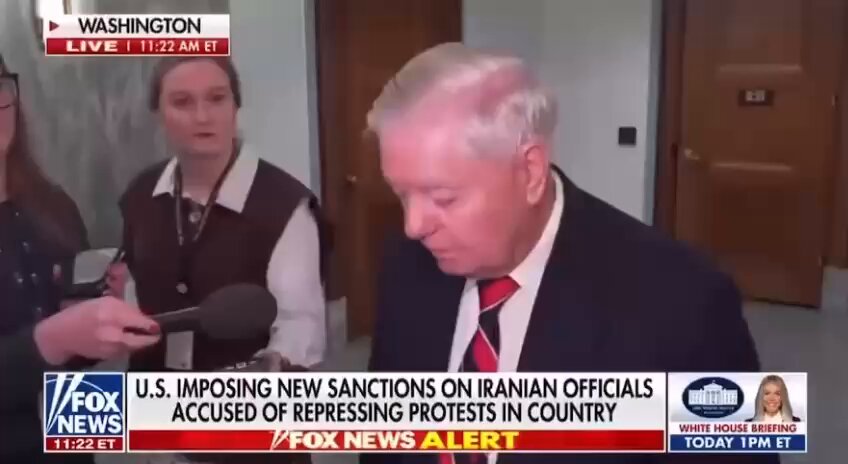
Discourse is dominated by the possibility of a US military strike against Iran, fueled by statements from American officials and conflicting reports about President Donald Trump’s intentions. Rusly Al-Maliki (Post Impact: 11%) shared a video of Senator Lindsey Graham stating the question is not if Trump will act against Iran, but whether the operation will be “major or minor,” adding, “I support a major operation.” In contrast, another post by Rusly Al-Maliki (Post Impact: 7%) quotes the White House spokesperson, who asserted that no one knows what is in President Trump’s mind and that he alone will make the decision. Accounts like Rafid Jaboori (Post Impact: 7%) questioned whether Trump has backed down from a strike, while Dr. Hussein Al-Safi (Post Impact: 2%) expressed skepticism, warning that Trump cannot be trusted and may be setting a trap. Further fueling speculation, Rusly Al-Maliki (Post Impact: 4%) cited the Wall Street Journal, claiming Trump postponed an attack due to insufficient forces but has ordered a military buildup, including the USS Lincoln aircraft carrier.
2. Iran & Allied Militias Signal Readiness for Conflict
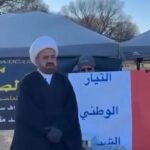
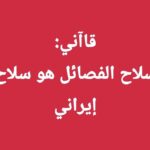
Amid rising tensions, pro-Iranian and Iraqi militia-affiliated accounts are broadcasting messages of defiance and preparation. Dr. Hussein Al-Safi (Post Impact: 10%) posted a video claiming Iranian television was broadcasting a “war symphony.” Other accounts shared religiously-toned messages of resolve, such as a post from Ashouri (Post Impact: 9%) with the phrase “In the name of Allah, the breaker of the tyrants.” A significant development came from the security official for Kataib Hezbollah, Abu Ali al-Askari, whose message was widely circulated by pages like Sabereen News (Post Impact: 3%) and Ahmad Abdulsada (Post Impact: 4%). This message, interpreted by Steven Nabil (Post Impact: 3%) and Hydikm (Post Impact: 2%) as a call for general mobilization, urged followers to be cautious and ready.
3. Internal Unrest and Protests Continue Across Iran
Alongside external threats, social media accounts are highlighting ongoing internal turmoil within Iran. Asaad Al-Basri (Post Impact: 6%) shared a lengthy summary of an interview with Iranian media figure Mohammad Marandi, who defended the state’s response to protests, claiming protesters are “rebels” funded by foreign powers and that reports of mass killings by Reuters are false. Conversely, other accounts shared footage of active dissent, with Dr. Zaid Abdulwahab Al-Adhami (Post Impact: 4%) posting a video of what he described as protests in Kermanshah, and Raad Hashim (Post Impact: 2%) sharing a clip of protesters returning to the streets in Tehran. In a related story, Hydikm (Post Impact: 3%) posted a video of a large funeral in Tehran for 100 security personnel allegedly assassinated by armed cells.
4. Gulf States Reportedly Mediate to Avert US Strike
Several posts indicate that Gulf Arab states are actively trying to de-escalate the crisis between Washington and Tehran. Rusly Al-Maliki (Post Impact: 8%) shared a statement from Senator Lindsey Graham expressing that reports of Arab “allies” intervening on behalf of Iran are “extremely disturbing.” Graham warned that if true, he would “radically reconsider the nature of this ‘alliance’.” ZaidBenjamin زيد بنيامين (Post Impact: 3%) cited the New York Times, reporting that Oman, a frequent intermediary, advised the Trump administration against a military strike. Another post from ZaidBenjamin زيد بنيامين (Post Impact: 3%), also citing the New York Times, suggested a strategic shift, noting some Gulf governments now view an “aggressive” Israel as a potentially greater regional threat than a weakened Iran.
5. Criticism of Gulf States’ Position on Iran
The diplomatic maneuvering by Gulf countries has drawn sharp criticism from some Iraqi accounts. The page {مَنَصَةُ الْعرَاْقْ} (Post Impact: 5%) posted a video with a caption that harshly condemned the rulers of Saudi Arabia, Qatar, Kuwait, and the UAE, accusing them of protecting Iran’s leader Khamenei after having “rejoiced” at the occupation of Iraq. The account labeled them as traitors who have “removed the robe of Arabism, Islam, and humanity.” In a seemingly contradictory narrative, Hydikm (Post Impact: 6%) shared a post attributed to Saudi media, claiming that Mohammed bin Salman has ordered Turki Al-Sheikh to form an emergency committee to remove and eradicate an old saying, “I wish there was a mountain of fire between us and the Persians,” on the grounds that it incites hatred and threatens Arab-Persian unity.
6. Pro-Iran Narratives Defend Regime and Khamenei
A number of accounts shared content in strong defense of the Iranian government and its Supreme Leader, Ali Khamenei. Wesam Aziz (Post Impact: 3%) and Ibrahim Al-Maliki (Post Impact: 2%) reacted to a statement from Trump that Khamenei doesn’t respect him, with Aziz proudly stating, “This is our Imam Khamenei, the son of the conqueror of Khaybar.” Asaad Al-Basri (Post Impact: 3%) presented a detailed analysis arguing that Khamenei’s sacrifices and long-term vision have successfully exposed American and Israeli hypocrisy to the world. In a different vein, Ali Abd Al-Sahib Al-Jabouri (Post Impact: 4%) shared a post by writer Salama Al-Salihi, who described a recent visit to Iran in glowing terms, praising it as an organized, clean, and modern country with a vibrant society, directly contradicting Western narratives about the nation.
7. Analysis of Trump’s Unpredictable Iran Strategy
Commentators are attempting to decipher President Trump’s strategy, widely characterizing him as unpredictable and deceptive. Ezzat Alshabandar | Ezzat Alshabandar (Post Impact: 3%) argued that Trump knows a strike won’t topple the regime but is proceeding with a “show” to display his strength to a global audience, regardless of the consequences for regional stability. Dr. Ali Al-Jabiri (Post Impact: 2%) described Trump’s typical behavior: “He says what he will not do, and does what he does not say,” warning that the most dangerous decisions are implemented, not announced. Both Dr. Hussein Al-Safi (Post Impact: 2%) and Sufian Al-Samarrai (Post Impact: 3%) believe the mixed signals are a deliberate tactic to lull Iran into a false sense of security before a surprise attack, with Al-Safi recalling similar tactics used against Venezuela.
8. Iraqi Airspace Activity and US Military Patrols
Amid the tension, users monitored and reported on unusual aviation activity over Iraq and Iran. Hydikm (Post Impact: 2%) shared a flight tracker image showing that Iraqi and Iranian airspace was “semi-empty.” In a more detailed report, Dr. Ali Al-Jabiri (Post Impact: 2%) stated that dozens of US Air Force fighters were conducting patrols over Iraq, supported by refueling tankers, with the goal of intercepting potential drone attacks launched by Iran-linked groups. In a related observation, Steven Nabil (Post Impact: 2%) noted the presence of military aircraft over Azizia, in Wasit province, east of Iraq.
9. Iraqi Domestic Political Disputes and Criticism
Separate from the Iran crisis, some posts focused on domestic political figures and commentary. Wasin Al-Shaikhli (Post Impact: 4%) shared a video of historian Ali Al-Nashmi harshly criticizing media personality Adnan Al-Taie, calling him a “trivial and despicable media person who works for whoever pays more.” Another post by Wasin Al-Shaikhli (Post Impact: 5%) attacked an unnamed individual as a “collaborator” and “sectarian.” On the other hand, Sheikh Mohammed Al-Basri (Post Impact: 2%) posted in support of former Prime Minister Nouri al-Maliki, praising him as “the man of the state” who created the Coordination Framework and saved its members from being in “the eye of the storm.”
10. US Diplomatic Conditions for De-escalation with Iran
Discussion also touched upon the conditions the US has reportedly set for Iran to avoid conflict. Sheikh Thair Al-Bayati (Post Impact: 5%) listed a series of what he described as “clear and strict” American conditions, including the complete shutdown of Iran’s nuclear program, halting its ballistic missile program, and ending the rule of the “Wilayat al-Faqih.” A more specific diplomatic channel was highlighted by accounts like Omar Abd Al-Sattar Mahmoud (Post Impact: 2%) and Ali farhan ali farhan (Post Impact: 2%), both citing Axios. They reported that President Trump has stipulated that the only way to prevent the fall of the Iranian regime is through direct negotiations with Supreme Leader Ali Khamenei himself.