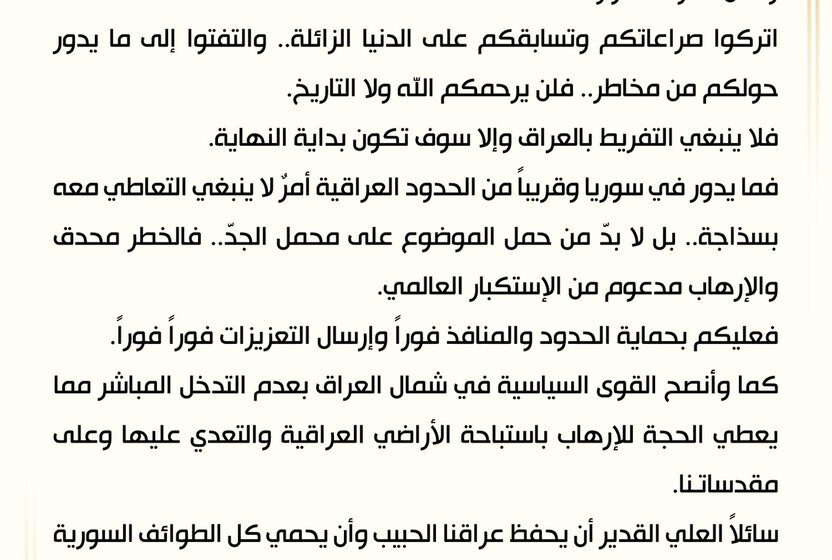
2026-01-18: Muqtada al-Sadr’s Urgent Call to Secure Iraqi Borders

Miqrab AI’s analysis of 773 X / Twitter posts trending in Iraq on January 18, 2026, reveals that the online discourse was overwhelmingly dominated by the rapidly deteriorating security situation in eastern Syria. Key narratives included the collapse of the Syrian Democratic Forces (SDF), the subsequent urgent call by influential cleric Muqtada al-Sadr to secure Iraq’s borders, and reports of Iraqi security forces reinforcing their positions in response. A secondary major theme was the ongoing domestic political negotiations, with a strong focus on Nouri al-Maliki’s potential return as Prime Minister and the internal divisions within the Shia Coordination Framework. Additionally, significant attention was given to reports of widespread, deadly protests across Iran and the harsh government crackdown, which garnered solidarity from Iraqis online.
Table Of Content
- 1. Muqtada al-Sadr’s Urgent Call to Secure Iraqi Borders
- 2. SDF Collapse in Syria Prompts Iraqi Border Reinforcements
- 3. Reports of Deadly Protests and Unrest Across Iran
- 4. Nouri al-Maliki’s Potential Premiership Stirs Iraqi Politics
- 5. KRG President Discusses Syrian Kurds with French President
- 6. Kuwait Revokes Citizenship of its Ambassador to the UK
- 7. Accusations of 2014 Mass Executions of Prisoners Resurface
- 8. Frustration Mounts Over Decades of Alleged Corruption
- 9. Reports of Increased US Military Movements to Middle East
- 10. Militant Rhetoric Targets Israel and Regional Adversaries
Today’s Top 10 X (Twitter) Trends in Iraq:
1. Muqtada al-Sadr’s Urgent Call to Secure Iraqi Borders
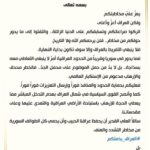
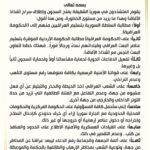
In what was the single most impactful post of the day, cleric Muqtada al-Sadr (Post Impact: 100%) issued a statement expressing grave concern over the escalating conflict in Syria near the Iraqi frontier. He urged political leaders to “leave your conflicts and your race for this fleeting world,” and called for the immediate reinforcement of Iraq’s borders and entry points, warning “the danger is imminent.” The statement, also shared by accounts like Hayder (Post Impact: 3%) and Hisham Ali (Post Impact: 3%), further advised political forces in northern Iraq to refrain from direct intervention, arguing it could provide a pretext for terrorist groups to violate Iraqi territory and its sanctities.
2. SDF Collapse in Syria Prompts Iraqi Border Reinforcements
Numerous accounts discussed the rapid collapse of the Syrian Democratic Forces (SDF) in eastern Syria and the advance of rival factions. Othman al-Mukhtar (Post Impact: 10%) asserted that the SDF’s loss of key oil fields meant the end of its main source of funding and that the United States had “lifted its cover.” Issam Hussein (Post Impact: 14%) blamed the SDF’s downfall on its misplaced trust in Sunni Arab tribes, drawing parallels to the events in Iraq in 2014. In response to the instability, the PMU Media Directorate (Post Impact: 4%) and Dr. Hussein Al-Safi (Post Impact: 7%) reported that the Popular Mobilization Forces (PMF) were on high alert and increasing their deployment to secure the Iraqi-Syrian border and prevent terrorist infiltration.
3. Reports of Deadly Protests and Unrest Across Iran
A significant narrative focused on major protests across Iran and the violent state response. Rusly Al-Maliki (Post Impact: 12%), citing Reuters, reported shocking casualty figures, claiming the death toll had reached 16,500 with 330,000 injured, and commented, “This is a war!” Dr. Zaid Abdulwahab Al-Adhami (Post Impact: 5%) shared videos allegedly showing clashes between protesters and security forces in cities like Tehran. International solidarity was also a key theme, with Dr. Ali Al-Jabiri (Post Impact: 8%) highlighting a large demonstration in Toronto, Canada, held to condemn the Iranian regime’s violent suppression of the uprising.
4. Nouri al-Maliki’s Potential Premiership Stirs Iraqi Politics
The potential return of Nouri al-Maliki as Prime Minister was a central topic of political discussion. Hussam Alhaj (Post Impact: 5%) described Maliki as being on the verge of being tasked with forming the government but noted a concurrent struggle to exclude armed factions from participating, allegedly due to a “decisive American decree.” Diplomatic movements were closely watched, with Othman al-Mukhtar (Post Impact: 6%) and Hayder (Post Impact: 4%) reporting on a visit by Saudi Ambassador Abdul Aziz Al-Shammari to Maliki. Meanwhile, Ammar Al-Hakim (Post Impact: 7%) shared details of his meeting with Maliki, emphasizing the importance of preserving the unity of the Shia Coordination Framework.
5. KRG President Discusses Syrian Kurds with French President
Amid the turmoil in Syria, Kurdistan Region President Nechirvan Barzani (Post Impact: 20%) announced he held a phone call with French President Emmanuel Macron. Barzani stated he thanked France for its role in promoting regional stability and reiterated that “the rights of the Kurds must be protected in the country’s new constitution.” This high-level diplomatic outreach comes as other commentators, such as Wasan Al-Shaikhli (Post Impact: 5%), opine that the United States has abandoned its Kurdish allies in Syria, stating, “The one covered by America is naked.”
6. Kuwait Revokes Citizenship of its Ambassador to the UK
Journalist Zaid Benjamin (Post Impact: 11%) reported on the rare decision by Kuwait to strip its ambassador to the United Kingdom, Badr Mohammed Al-Awadi, of his citizenship by Emiri decree. Citing Kuwait’s official gazette, the report explains the decision was made “by dependency” after his late father’s citizenship was posthumously revoked. This action is part of a wider government campaign initiated in 2024 to review nationality records, which has drawn criticism from human rights groups over concerns about rising statelessness. The ambassador’s official social media accounts have reportedly ceased activity since the news broke.
7. Accusations of 2014 Mass Executions of Prisoners Resurface
Journalist Othman al-Mukhtar (Post Impact: 9%) published a detailed account of several alleged mass executions of prisoners, predominantly Sunni Iraqis, in June and July 2014. The post listed specific prisons in Tal Afar, Mosul, and the Baqubah area where Iraqi police and militias, including Badr and Asa’ib Ahl al-Haq, allegedly killed dozens of inmates before withdrawing as ISIS advanced. The account claims that subsequent investigations revealed a “central directive from Nouri al-Maliki’s office to execute the prisoners before withdrawing and leaving the sites to ISIS.”
8. Frustration Mounts Over Decades of Alleged Corruption
A prominent theme online was deep-seated frustration with government corruption and financial mismanagement since 2003. Rusly Al-Maliki (Post Impact: 10%) compiled figures totaling billions in US and international aid, debt forgiveness, and nearly two trillion dollars in oil revenue, questioning where the money went while Iraq remains heavily indebted. This sentiment was echoed by accounts like Aayad Al Twfan (Post Impact: 5%), which shared a story about a former Iraqi minister’s funds being confiscated in the UK and asked followers to help identify the “thieves who stole from the Iraqi people.”
9. Reports of Increased US Military Movements to Middle East
Rusly Al-Maliki (Post Impact: 5%) shared multiple reports indicating increased US and NATO military movements toward the Middle East. One post cited a report of “very heavy air traffic of various NATO aircraft towards the British base on the island of Cyprus,” naming French, British, and German planes. A more detailed follow-up post described a specific US Air Force “Coronet” mission on January 18, involving F-15E fighter jets and KC-135 tankers deploying from bases in the UK. The account suggested this was the “first major movement in the buildup of the American presence in the Middle East.”
10. Militant Rhetoric Targets Israel and Regional Adversaries
Prominent militia-affiliated accounts posted messages with strong militant rhetoric. Abu Azrael (Post Impact: 10%) shared a video declaring that “Zionist colonialism and Arab traitors” are headed for the “dustbin of history” and will be defeated. In a similar vein, Hassan Al-Kaabi (Post Impact: 10%) issued a direct threat to advancing forces in Syria, whom he referred to as the “rats of Banu Umayya,” stating, “We are waiting for you to turn the ground beneath you to ash.” These posts reflect a persistent narrative of defiance and combat readiness among armed factions.