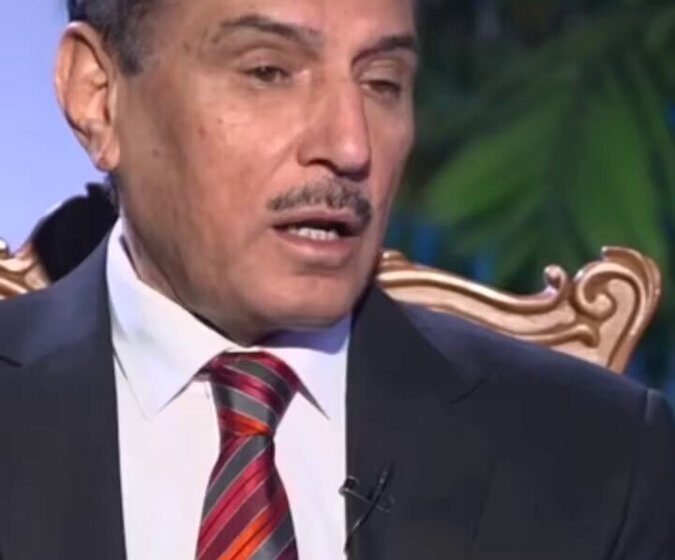
2025-09-14: Aras Habib Accuses Syrian Regime of Terrorism in Iraq

Based on a Miqrab AI analysis of 439 X / Twitter posts trending in Iraq on September 14, 2025, online conversations were dominated by regional political tensions and domestic criticism. Key narratives included explosive allegations from a former intelligence official about the Syrian regime’s past role in terrorism within Iraq, which sparked widespread debate. Concurrently, users heavily criticized the Iraqi government’s alleged use of social media influencers for propaganda, viewing it as a wasteful and ineffective strategy. Discussions also covered regional security, focusing on an Iranian official’s call for a military alliance against Israel, and social issues, such as a new ban on university graduation parties. Foreign policy topics, including proposed US military aid and the possibility of new American sanctions on Iraqi leaders, were also prominent themes.
Table Of Content
- 1. Aras Habib Accuses Syrian Regime of Terrorism in Iraq
- 2. Criticism of Iraqi Government’s Use of Social Media Influencers
- 3. Iranian Advisor’s Call for Anti-Israel Military Alliance
- 4. US Admiral’s “Soft Diplomacy” Visit to Damascus
- 5. Cleric Othman Al-Khamis’s Controversial Remarks on Gaza
- 6. Iraqi Sawaed Tribe Sends School Aid to Lebanon
- 7. Ministry of Education Bans University Graduation Parties
- 8. Maria Maalouf on Potential US Sanctions on Iraqi Figures
- 9. US Proposes Military Aid to Iraq and Peshmerga for 2026
- 10. Debates Over the Rise of the Madkhali Movement in Iraq
Today’s Top 10 X (Twitter) Trends in Iraq:
1. Aras Habib Accuses Syrian Regime of Terrorism in Iraq
A video of former Iraqi intelligence director Aras Habib gained significant traction, with users highlighting his claim that the Syrian regime under Bashar al-Assad was the source of “all the affliction, evil, and destruction” in Iraq after 2004, including sending car bombs, equipment, and suicide bombers. Accounts such as Aayad Al Twfan (Post Impact: 49%) and Shaho Al-Qaradaghi (Post Impact: 15%) shared the clip, arguing that this proves the hypocrisy of Iraqi factions who defended the Assad regime. Mustafa Al-Dulaimi (Post Impact: 17%) amplified this sentiment by pointing out Habib’s own connections to the post-2003 establishment, suggesting that the information comes from a credible insider. The consensus among these accounts is that Habib’s statement implicates Iran and successive Iraqi governments in covering up Syria’s role in the deaths of hundreds of thousands of Iraqis.
2. Criticism of Iraqi Government’s Use of Social Media Influencers
A prominent theme involved sharp criticism of the Iraqi government for allegedly paying social media influencers to promote its projects and political agenda. Hiba Alnnaayib (Post Impact: 36%) questioned why the government fights “low-quality content” while simultaneously recruiting “scum” for propaganda. Similarly, Mustafa Al-Dulaimi (Post Impact: 36%) described the efforts as “failed scenarios” that have become a “laughingstock for the nation of Muhammad.” Omar Al-Janabi (Post Impact: 33%) shared a video of an influencer praising Prime Minister Al-Sudani, sarcastically commenting on her aggressive promotion. The sentiment across these posts is that the government’s media strategy is transparent, clumsy, and out of touch.
3. Iranian Advisor’s Call for Anti-Israel Military Alliance
Statements by Mohsen Rezaei, an advisor to the Iranian Supreme Leader, sparked controversy. Haydar (Post Impact: 27%) reported that Rezaei warned that if a regional military coalition is not formed against Israel, then Saudi Arabia, Turkey, and Iraq should “expect Israeli fighters to bomb their capitals.” The statement was met with derision by other users. Faiq Al-Sheikh Ali (Post Impact: 27%) reacted strongly, calling Rezaei a “thief, lowly, hated and despised by his own Iranian people” who is only calling for war to increase his own wealth and illicit gains, alleging he had previously embezzled a billion dollars.
4. US Admiral’s “Soft Diplomacy” Visit to Damascus
A high-impact post from Cliff Captain (Post Impact: 100%) focused on the visit of US Admiral Cooper to Damascus, framing it as more than a standard military meeting. The post highlights that the admiral was accompanied by his wife, Susan, who met with Syrian First Lady Latifa al-Sharaa. The account interprets this as a “high-level diplomatic step with soft, humane dimensions,” intended to “melt the ice and repair the image of relations.” This gesture is presented as a clear political signal that dialogue is shifting from military and political channels to include societal and national symbols, concluding with the taunt, “swallow it, sons of the Axis, the era of guns is over.”
5. Cleric Othman Al-Khamis’s Controversial Remarks on Gaza
A video clip of cleric Othman Al-Khamis circulated widely after being posted by Haydar (Post Impact: 92%). In the clip, Al-Khamis is reported to have said that God “unleashed the infidels on Muslims in Gaza because of their sins,” drawing parallels to the Mongol invasion of Baghdad and the Crusades. He also allegedly stated that Muslims cannot declare jihad to help Gazans due to the existence of borders and states. The post strongly criticized this position, sarcastically summarizing the cleric’s stance as: “Jihad is only against the Shiites of Iraq!” The commentary frames Al-Khamis’s words as a justification for inaction and sectarianism.
6. Iraqi Sawaed Tribe Sends School Aid to Lebanon
Multiple accounts reported that the Iraqi Sawaed tribe is funding and sending a convoy of prefabricated rooms to establish temporary classrooms for the new school year in Mays al-Jabal, southern Lebanon. Accounts like Wasan Al-Sheikhli (Post Impact: 21%) and Raad Hashim (Post Impact: 19%) shared videos of the convoy, portraying the initiative as a gesture of solidarity from the “resistance environment.” However, the act drew criticism from others, such as _. suhair Al_jumaili (Post Impact: 10%), who argued that Iraqi people’s money is being used to support Iranian allies while schools in Iraq itself suffer from severe shortages and overcrowding.
7. Ministry of Education Bans University Graduation Parties
News of a decision by the Ministry of Higher Education and Scientific Research to cancel all graduation ceremonies at public and private universities was shared by several accounts. Abu Darandash Al-Askari (Post Impact: 33%) and Haydar (Post Impact: 19%) both reported that the ban was issued because recent parties had become “disgusting” and demonstrated a “lack of public taste.” The posts shared official documents and video clips related to the announcement, indicating that the behavior at these events prompted the ministry’s intervention.
8. Maria Maalouf on Potential US Sanctions on Iraqi Figures
Journalist Samer Al-Saadi shared several clips from his interview with Maria Maalouf, Executive Director of the Capital Institute in Washington. In one widely shared clip, Al-Sahafi Samer Al-Saadi (Post Impact: 32%) asks Maalouf if prominent Iraqi political figures, including Nouri al-Maliki, Mohammed Shia’ Al Sudani, Qais Khazali, and Akram al-Kaabi, have been placed on a US sanctions list. In another post, Al-Sahafi Samer Al-Saadi (Post Impact: 30%) highlights Maalouf’s assertion that the “Iraqi situation requires an Iraqi Ahmed al-Sharaa,” referencing the Syrian opposition leader and suggesting a need for a similar figure in Iraq.
9. US Proposes Military Aid to Iraq and Peshmerga for 2026
Details of proposed US military funding for Iraq in the 2026 budget were circulated online. Haydar (Post Impact: 28%) reported that Washington has allocated $65.5 million for the Counter-Terrorism Service and $48.4 million for the Iraqi Army, which includes a vote to provide 100 Hellfire missiles valued at $12 million. Adding another dimension to the story, Dr.Nayif Kurdistani (Post Impact: 5%) claimed that Washington is simultaneously reducing its support for the Iraqi Army while increasing military assistance to the Peshmerga forces in the Kurdistan Region.
10. Debates Over the Rise of the Madkhali Movement in Iraq
A discussion emerged regarding the growing influence of the Madkhali Salafist movement in Iraq. Haydar (Post Impact: 11%) shared a statement from Mustafa al-Bayati, head of the League of Imams and Preachers of Adhamiyah, claiming that Madkhalis are building mosques without official permits from the Sunni Endowment and are “supported from outside the borders with enormous funds.” Meanwhile, Hussam Alhaj (Post Impact: 9%) alleged that a “Sunni political party” is backing the movement for electoral purposes, linking this strategy to past violence. Dr. Hussein Al-Safi (Post Impact: 8%) called on the government to stand with mainstream Sunni scholars against what he termed the “Madkhali terrorist movement.”