2025-08-22: Commemoration of Prophet Muhammad’s Death

Based on Miqrab AI’s analysis of 510 X / Twitter posts trending in Iraq on August 22, 2025, the primary narratives were dominated by religious commemorations and significant political violence. The most prominent theme, led by influential Shia cleric Muqtada al-Sadr, was the remembrance of Prophet Muhammad’s death, with discussions focusing on the Shia belief that he was poisoned and critiques of the actions of his companions. A major secondary narrative concerned the eruption of heavy armed clashes in Sulaymaniyah between rival factions of the Patriotic Union of Kurdistan (PUK), resulting in the arrest of Lahur Sheikh Jangi and widespread commentary on the dangers of uncontrolled weapons in the Kurdistan region. Other significant topics included calls for a boycott of pilgrimage to Saudi Arabia in protest of the detention of Iraqi youths, sharp criticism of a new labor agreement with Lebanon, and commentary on Iran’s regional military posturing.
Table Of Content
- 1. Commemoration of Prophet Muhammad’s Death
- 2. Clashes in Sulaymaniyah and Arrest of Lahur Sheikh Jangi
- 3. Calls to Boycott Saudi Arabia Over Detained Iraqis
- 4. Faig Al-Sheikh Ali’s Personal Attack on Political Figure
- 5. Iran Thanks Iraq for Arbaeen Pilgrimage Hospitality
- 6. Criticism of Iraq-Lebanon Labor Agreement
- 7. Qais Khazali Defends Popular Mobilization Forces (PMF)
- 8. Continued Controversy Over Death of Dr. Ban Ziyad
- 9. Iran’s Military Posturing and Nuclear Program Discussions
- 10. Activists Accused of Ignoring Sulaymaniyah Clashes
Today’s Top 10 X (Twitter) Trends in Iraq:
1. Commemoration of Prophet Muhammad’s Death
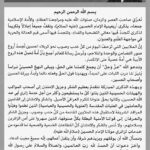
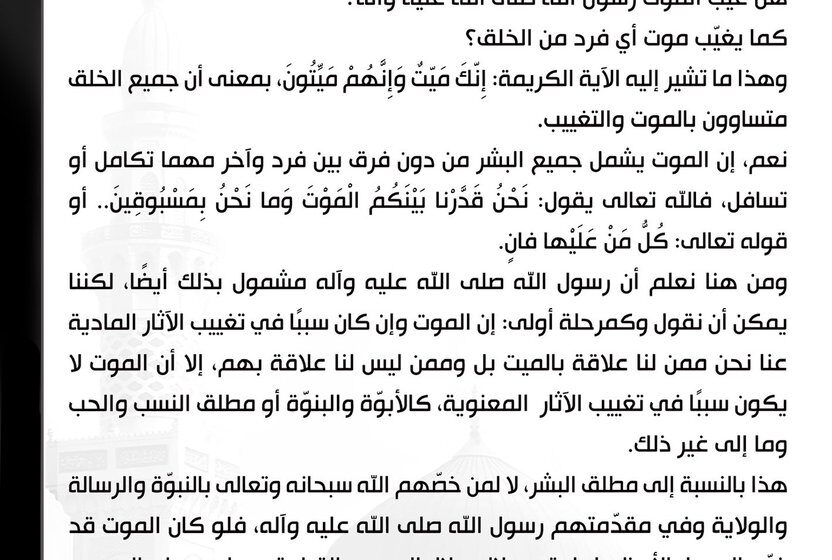
The anniversary of the death of Prophet Muhammad dominated X / Twitter, led by high-impact posts from the Sadrist movement. Cleric Muqtada al-Sadr (Post Impact: 100%) and his associate Saleh Muhammad al-Iraqi (Post Impact: 46%) shared commemorative content. Other accounts amplified Shia narratives surrounding the event. Dr. Hussein Al-Safi (Post Impact: 22%) asserted that the Prophet was murdered by poison, using the hashtag #شهادة_الرسول (The Martyrdom of the Prophet). Wasan Al-Shaikhli (Post Impact: 89%) questioned, “Why does the Sunni sect not care about the death of the Prophet Muhammad…?!?” Similarly, Ali Al-Muhandis (Post Impact: 31%) criticized the Prophet’s senior companions for allegedly prioritizing the political succession at Saqifah Bani Sa’idah over his burial, questioning why the Prophet would have left such a critical issue unaddressed if it was more important than his own funeral rites.
2. Clashes in Sulaymaniyah and Arrest of Lahur Sheikh Jangi
A major security crisis in Sulaymaniyah captured significant attention, as armed clashes erupted between forces loyal to Bafel Talabani, the head of the Patriotic Union of Kurdistan (PUK), and those of his rival, Lahur Sheikh Jangi. Accounts like Abbas Al-Ardawi (Post Impact: 12%) reported on “the chaos of uncontrolled weapons in the region,” noting that heavy weapons and tanks were used in the fighting. The clashes culminated in the arrest of Jangi, who was formerly the co-president of the PUK. Shaho Al-Qaradaghi (Post Impact: 6%) highlighted the irony that Jangi, who once led the counter-terrorism forces, was arrested by those same forces. Commentator Iyad Al-Anbar (Post Impact: 6%) framed the event as a dangerous precedent where state power is used to settle political disputes, signaling a failure of the governing system.
3. Calls to Boycott Saudi Arabia Over Detained Iraqis
A campaign emerged on social media calling for Iraqis to boycott pilgrimage to Mecca and Medina in Saudi Arabia. The posts allege that the holy sites have become a “trap for arresting Iraqi youth” based on their personal beliefs or social media activity outside of Saudi Arabia. Haydar (Post Impact: 24%) shared a post promoting this boycott. In a related video, Dr. Qusai Shafiq (Post Impact: 19%) lamented that young Iraqis have been in Saudi prisons for 11 months without any intervention from the Iraqi government. Feeling that Iraqi officials are powerless, he made a direct plea to Saudi Crown Prince Mohammed bin Salman, saying, “Your Majesty the King, I ask for their release, please.”
4. Faig Al-Sheikh Ali’s Personal Attack on Political Figure
Politician Faig Al-Sheikh Ali/My Word for History (Post Impact: 23%) posted a virulent personal attack against an individual identified by the hashtag #مصطفى_فرخ_قاآني (Mustafa Farkh Qa’ani). Al-Sheikh Ali addressed the individual directly, stating, “I made a promise to myself that I would discipline you… and so I will discipline you.” The post continued with highly insulting and derogatory language directed at the individual and his mother. The specific context of the dispute was not detailed, but the aggressive tone and personal nature of the attack generated significant engagement, with other users like Mulla Aboud Al-Karkhi (Post Impact: 4%) also sharing content mocking the same individual.
5. Iran Thanks Iraq for Arbaeen Pilgrimage Hospitality
Several posts highlighted a gesture of gratitude from Iran towards Iraq. Images and statements showed the Iraqi flag displayed on billboards in Tehran with messages thanking the Iraqi people for their hospitality during the recent Arbaeen pilgrimage. Haydar (Post Impact: 17%) shared a picture from the streets of the Iranian capital with the caption, “Thank you to the people of Iraq.” Jaafar Al-Aboudi (Post Impact: 5%) described the initiative as embodying the deep spiritual and historical ties between the two peoples, stating it sends a clear message that “Iraq and Iran are not just two neighboring countries, but one soul in two bodies.”
6. Criticism of Iraq-Lebanon Labor Agreement
An agreement announced by the Lebanese Minister of Labor following a visit to Iraq drew widespread condemnation. According to Haydar (Post Impact: 13%), the agreement would involve sending Iraqis to Lebanon to work in restaurants, while Lebanese citizens would be brought to Iraq to work in the oil sector. This arrangement was met with derision by commentators like Rusly Al-Maliki (Post Impact: 7%), who sarcastically questioned the logic of the deal: “So the Lebanese who has no scent of oil understands oil and takes over Iraq’s fields, while we work taking orders for fattoush and tabbouleh?!” The posts expressed frustration that Iraqis would be given low-skilled jobs while foreigners would take high-value positions in a key Iraqi industry.
7. Qais Khazali Defends Popular Mobilization Forces (PMF)
Statements by Qais Khazali, the leader of the Asa’ib Ahl al-Haq militia, defending the Popular Mobilization Forces (PMF), or Hashd al-Shaabi, were circulated online. Haydar (Post Impact: 7%) quoted Khazali as saying that those who want to dissolve the PMF are delusional, adding, “This is further than the stars in the sky for you.” Khazali described the PMF as a guarantee for the existence and survival of Iraqis. This sentiment was echoed by Jaafar Al-Aboudi (Post Impact: 6%), who quoted Sheikh al-Amin stating that the insistence on dissolving or merging the PMF is evidence of a project that cannot be achieved while the PMF exists.
8. Continued Controversy Over Death of Dr. Ban Ziyad
The case of Dr. Ban Ziyad, a physician whose death was officially ruled a suicide, continues to stir debate. Dr. Zaid Abdul-Wahab Al-Adhamy (Post Impact: 5%) shared a clip of the Imam of the Abu Hanifa Mosque calling on the judiciary to reopen the investigation into her “mysterious” death. Meanwhile, Issam Hussein (Post Impact: 5%) criticized social media activists, or “trendawis,” for pushing a narrative that the family was responsible for her death. He noted that the family’s clan held a funeral service in a show of support and demanded that the activists stop discussing the case, though he expressed doubt they possessed the “ethics of apology.”
9. Iran’s Military Posturing and Nuclear Program Discussions
Iran’s military activities and strategic intentions were a topic of discussion. Hassan Al-Kaabi (Post Impact: 12%) reported that Iran conducted tests shortly before a 3.4 magnitude earthquake struck Tehran, and quoted the Iranian Defense Minister threatening to use newly developed missiles against Israel. Analyst David Yassin (Post Impact: 6%) suggested that Iran’s recent closure of its airspace was not a routine drill but a test of its air defense systems in preparation for a potential large-scale conflict. In a different vein, Salim Al-Jumaili (Post Impact: 5%) claimed that factions within the Iranian regime are pushing to halt uranium enrichment and secure a deal to save the system from collapse.
10. Activists Accused of Ignoring Sulaymaniyah Clashes
A meta-narrative emerged accusing prominent Iraqi journalists and social media influencers of hypocrisy for their silence on the violent events in Sulaymaniyah. Issam Hussein (Post Impact: 10%) sarcastically questioned why the “trendawis” were silent, asking, “Does this trend not involve money transfers?!” Haydar (Post Impact: 5%) explicitly asked followers to name the activists and media figures who ignored the “pitched battles” in Kurdistan, contrasting their silence with how they would cover a minor fight over a chicken in the south. The posts collectively suggest a double standard and imply that the selective coverage is motivated by financial interests rather than genuine concern for national issues.