2025-07-31: Israeli Spokesperson Tours Syrian Capital

Based on an analysis of 494 trending X / Twitter posts conducted by Miqrab AI on July 31, 2025, the dominant narratives in Iraq focus on regional security and internal political tensions. The most prominent story involves widespread shock and condemnation over the appearance of an Israeli military spokesperson in Syria, viewed as an act of Israeli normalization and an insult to the region. Internally, discussions are split between positive news, such as the Minister of Interior’s intervention to help an orphan, and serious concerns over alleged land seizures by militias, the raid on a television station, and the arrest of a former Ba’athist-era official. Additionally, regional dynamics feature heavily, with critical commentary directed at Saudi Arabia’s media focus on Iraq and renewed nationalist sentiment over the Khor Abdullah maritime dispute with Kuwait.
Table Of Content
- 1. Israeli Spokesperson Tours Syrian Capital
- 2. Defense of Shia Mourning Rituals
- 3. Criticism of Saudi Media’s Focus on Iraq
- 4. Mockery of Analyst Faiq Al-Marandi’s Failed Predictions
- 5. Interior Minister Helps Orphan Obtain Identity Documents
- 6. Arrest of Saddam-Era Security Officer
- 7. Allegations of Militia Land Seizures South of Baghdad
- 8. Washington Post Lists Gaza Child Martyrs
- 9. Iraq-Kuwait Tensions over Khor Abdullah Waterway
- 10. Security Forces Raid Al-Baghdadia TV Channel
Today’s Top 10 X (Twitter) Trends in Iraq:
1. Israeli Spokesperson Tours Syrian Capital
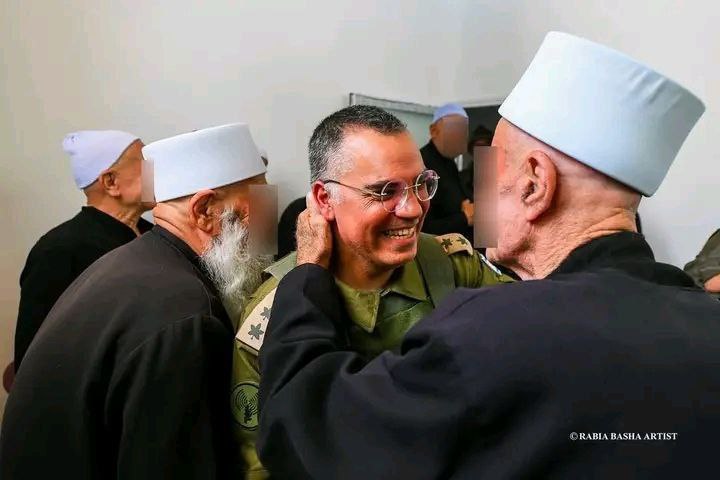
Posts report that Israeli army spokesperson Avichay Adraee was seen touring the Damascus countryside in Syria. Haidar (Post Impact: 99%) shared a photo of Adraee in what appears to be a Syrian market. Essam Hussein (Post Impact: 87%) commented on the event, questioning “Why Israel moves comfortably in Sunni-majority countries…” He suggests this happens either through “soft normalization like the UAE” or “humiliation as is happening in Syria.” The posts express outrage and view the event as a sign of Israeli dominance and a failure of Arab states.
2. Defense of Shia Mourning Rituals
A highly engaged topic involves commentary on Shia mourning rituals, particularly during Ashura commemorations. Abu Drandash Alaskree (Post Impact: 100%) shared a video of people drinking water with the caption “Drink water and curse the Umayyads,” a traditional Shia saying during Muharram. In another post, the same account Abu Drandash Alaskree (Post Impact: 76%) defends the practice of washing the feet of Iranian visitors against criticism from some Arabs, stating they “did not understand the meaning of being a Shia during the days of mourning.” These posts reflect a defense of religious practices and a sense of shared identity among Shia Muslims.
3. Criticism of Saudi Media’s Focus on Iraq
Users are criticizing Saudi media, specifically journalist Malik Al-Ruwaiqi, for focusing on Iraqi affairs while allegedly ignoring domestic problems. Haidar (Post Impact: 93%) highlighted a tragic accident in Taif, Saudi Arabia, where an amusement park ride collapsed, causing 23 critical injuries. The post sarcastically notes this occurred “coinciding with the preoccupation of the great Saudi journalist Malik Al-Ruwaiqi with Iraqi affairs,” attributing the accident to “negligence and weak technical and administrative oversight and being preoccupied with the affairs of others.” Another post by Haidar (Post Impact: 38%) satirically quotes Al-Ruwaiqi as blaming the Popular Mobilization Forces for demographic change in Iraq.
4. Mockery of Analyst Faiq Al-Marandi’s Failed Predictions
Several highly engaged posts mock Faiq Dabul Abdullah Al-Marandi for his failed predictions and controversial statements. Haidar (Post Impact: 94%) shared a screenshot of a private message allegedly from Al-Marandi. In another post, Haidar (Post Impact: 53%) notes that a month has passed since Al-Marandi’s tweet claiming that “after the 10th of Muharram, Israel will assassinate Khamenei… and the Tishreen revolutionaries should prepare.” The posts serve to discredit Al-Marandi and ridicule his analyses and forecasts about regional politics.
5. Interior Minister Helps Orphan Obtain Identity Documents
Journalist Muna Sami – Muna Sami (Post Impact: 80%) shared the story of a young orphan of unknown parentage who reached the age of 18 without a national identity card, preventing him from studying or working. After she brought his case to the attention of the Minister of Interior, the minister not only approved the issuance of an ID but also provided him with a job opportunity and housing. Sami frames the story as a success but also highlights the systemic issue affecting many orphans in state care, stating, “Identity is not just a document, but dignity.”
6. Arrest of Saddam-Era Security Officer
Security expert Fadhil Abu Ragheef (Post Impact: 63%) announced the arrest of Ajaj Ahmed Hardan Al-Nasiri, a former security officer described as “Saddam’s special executioner.” The post reports that the National Security Service captured Al-Nasiri, accusing him of being the “butcher of Anfal,” an executioner at Nugrat al-Salman prison, and a torturer. The arrest is presented as a long-overdue act of justice for his alleged crimes committed over decades under the previous regime.
7. Allegations of Militia Land Seizures South of Baghdad
Journalist Othman Al-Mukhtar (Post Impact: 55%) alleges that militias are carrying out demographic change by seizing agricultural land from Sunni tribes in areas south of Baghdad, including Dora, Arab Jabour, Madain, and Yusufiya. He claims that landowners are forced to either give up 50% of their land or sell it all, and if they refuse, they are threatened with accusations of terrorism or being “Ba’athist remnants” by “Hashd security.” He states that over 510 dunams have been seized in June and July by militias like Kata’ib Hezbollah, Asa’ib Ahl al-Haq, and Imam Ali Brigades, and that National Security Advisor Qasim al-Araji is aware of the situation.
8. Washington Post Lists Gaza Child Martyrs
Dr. Liqaa Maki (Post Impact: 73%) highlights a report by The Washington Post that published the names of 18,500 children killed in Israel’s war on Gaza, including their ages and photos when available. He notes that the names were originally released by the Palestinian Ministry of Health in mid-July. Maki reflects on the significance of an American newspaper publishing this information, suggesting that while such outlets have spread disinformation before, this publication should be viewed with seriousness and respect. He concludes, “The most important lesson is that the steadfastness of the Palestinian people in Gaza produces international solidarity… and that the martyrs will not remain just a number.”
9. Iraq-Kuwait Tensions over Khor Abdullah Waterway
Nationalist sentiment regarding the Khor Abdullah maritime channel on the Iraq-Kuwait border is a recurring theme. Abu Alaa Al-Walaei (Post Impact: 76%), Secretary-General of Kata’ib Sayyid al-Shuhada, posted a firm statement asserting Iraqi sovereignty: “Kuwait remains a dear and blessed neighbor, and Khor Abdullah remains authentically Iraqi. Full stop.” This follows reports shared by accounts like Abu Drandash Alaskree (Post Impact: 22%) alleging that Kuwaitis had removed an Iraqi flag in the waterway, prompting Iraqi forces to reassert their presence and raise the flag again.
10. Security Forces Raid Al-Baghdadia TV Channel
Multiple accounts reported that security forces raided the Baghdad office of the Al-Baghdadia television channel, arresting its staff and confiscating equipment. According to Haidar (Post Impact: 27%) and Mustafa Al-Dulaimi (Post Impact: 19%), the raid followed the channel’s criticism of the National Intelligence Service in a program hosted by Ali Al-Dhahabawi. Other users like Haidar (Post Impact: 21%) later reported the arrest of Al-Dhahabawi himself. Wasan Al-Shaikhli (Post Impact: 12%) commented that since the Intelligence Service conducted the raid, it implies the channel is “an agent collaborating with foreign countries.” The event sparked a conversation about press freedom and state authority.