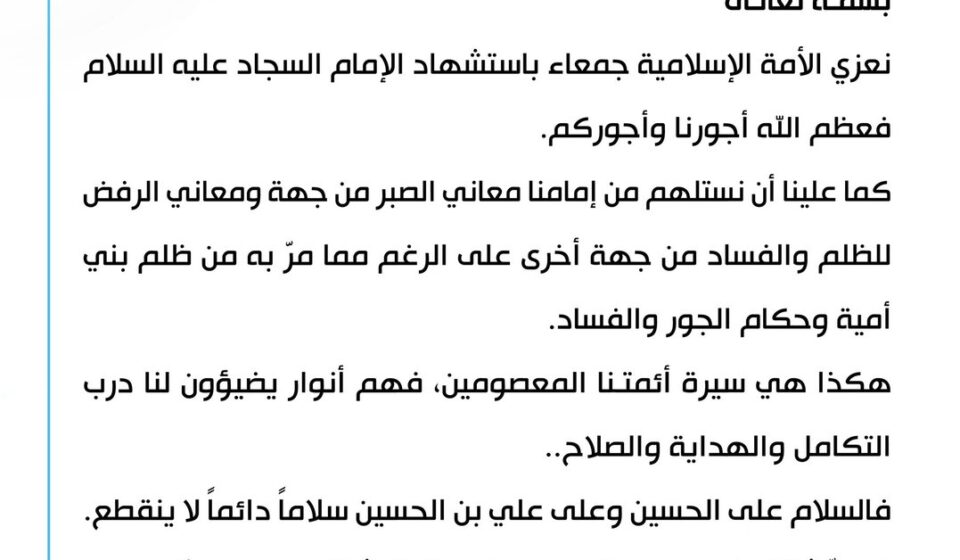
2025-07-20: Muqtada al-Sadr’s Message on Reform and Corruption

Based on a Miqrab AI analysis of 598 X / Twitter posts trending in Iraq on July 20, 2025, the online discourse was dominated by regional conflicts, domestic governance issues, and sharp sectarian rhetoric. The most prominent conversations centered on the escalating violence in As-Suwayda, Syria, with Iraqi accounts closely following the clashes between local Druze factions and al-Jolani’s forces. Domestically, there was a stark contrast in narratives, with praise for a major new water project in Erbil juxtaposed against widespread criticism of government failures in federal Iraq, particularly following a tragic fire in Wasit. This was compounded by rising sectarian tensions fueled by accounts engaging in inflammatory comparisons between Shia and Sunni groups, alongside political controversies involving figures like Muqtada al-Sadr and Khamis al-Khanjar, and growing distrust over electoral integrity ahead of upcoming elections.
Table Of Content
- 1. Muqtada al-Sadr’s Message on Reform and Corruption
- 2. Intense Focus on the Conflict in As-Suwayda, Syria
- 3. Surge in Sectarian Rhetoric and Commentary
- 4. Controversy Surrounds Politician Khamis al-Khanjar
- 5. Erbil Praised for Major New Water Infrastructure Project
- 6. Sharp Criticism of “Resistance” Factions in Iraq
- 7. Baghdad-Erbil Tensions Over Budget and Oil Deliveries
- 8. Alarm Raised Over Abolition of Electoral Ink
- 9. Aftermath and Accountability for Wasit Fire Tragedy
- 10. Reports of U.S.-Israel Tensions Over Syria Airstrikes
Today’s Top 10 X (Twitter) Trends in Iraq:
1. Muqtada al-Sadr’s Message on Reform and Corruption
The most impactful post came from the official account of Shia cleric Muqtada al-Sayyid Muhammad al-Sadr (Post Impact: 100%), who shared an image of a handwritten statement without any accompanying text. The statement reads, “Nothing pleases you but reform… and nothing alienates you but corruption.” This message was interpreted by followers as a direct critique of the current government and a reaffirmation of the Sadrist movement’s anti-corruption stance. The same image and quote were shared by supporters like Safaa Al-Asadi (Post Impact: 3%), signaling a unified narrative among Sadr’s base that positions him as the champion of reform against a failed political class.
2. Intense Focus on the Conflict in As-Suwayda, Syria
The violent clashes in As-Suwayda, Syria, captured significant attention among Iraqi users. The account Hayder (Post Impact: 24%) shared several viral updates, including a video allegedly showing Druze factions forcing captured members of al-Jolani’s forces to sing songs by the artist Fairuz. Another highly engaged post from the same account showed a photo of Syrian government ministers reportedly waiting for permission from Druze spiritual leader Sheikh Hikmat al-Hijri to enter the city. The page also reported on a bizarre incident where al-Jolani’s forces mistakenly removed an anti-illiteracy sign, believing it was an insult to the Umayyads. Amid these stories, Zaid Benjamin (Post Impact: 2%), citing the Syrian Observatory for Human Rights, reported that the death toll in the conflict had tragically risen to 1,120.
3. Surge in Sectarian Rhetoric and Commentary
A prominent and divisive trend involved inflammatory sectarian commentary. The account Hassan Al-Kaabi (Post Impact: 17%) posted multiple messages, including a controversial quote attributed to Islamic scholar Ibn Taymiyyah disparaging Shia Muslims. In another post, the account rhetorically asked if anyone has seen a Shia person commit acts like beheading or suicide bombing, drawing a sharp contrast with other groups. In a different vein, Ahmad Abdulsada (Post Impact: 14%) addressed Syrian Sunnis who demand the right to rule by stating, “Rule Syria, but rule like humans and not like monsters, bloodsuckers, and beasts of car bombing, slaughter, and takfir.” These posts highlight a deeply polarized and hostile online discourse.
4. Controversy Surrounds Politician Khamis al-Khanjar
Politician Khamis al-Khanjar was the subject of significant online discussion. Journalist Muna Sami (Post Impact: 20%) announced that a legal summons had been issued against her following a complaint filed by al-Khanjar. Simultaneously, other accounts fiercely criticized al-Khanjar for his perceived support of al-Jolani’s attacks in Syria. Issam Hussein (Post Impact: 6%) accused him of blessing “terrorist operations” and called for his arrest, arguing that al-Khanjar poses a threat to Iraq’s national security. This was reinforced by Dr. Hussein Al-Safi (Post Impact: 2%), who shared a quote from another politician claiming, “If al-Jolani sneezes in Damascus, Khamis al-Khanjar responds from Iraq with ‘God bless you’.”
5. Erbil Praised for Major New Water Infrastructure Project
A new water project in Erbil, the capital of the Kurdistan Region, received widespread praise as a significant achievement. Kurdistan Region Prime Minister Masrour Barzani (Post Impact: 8%) announced the launch of the first phase of a $480 million project designed to provide 24-hour clean water to the city for the next 30 years. This news was celebrated by commentators like Rusly Al-Maliki (Post Impact: 12%), who called it a “huge achievement” and contrasted it with the lack of services in Basra. Others, such as Aayad Al Twfan (Post Impact: 7%) and Dr. Nayif Kurdistani (Post Impact: 5%), framed the project as evidence of the Kurdistan government’s competence and commitment to its people, contrasting it with the perceived failures of the federal government in Baghdad.
6. Sharp Criticism of “Resistance” Factions in Iraq
Armed factions operating under the banner of the “Resistance” faced strong criticism online. A highly engaged post by Mustafa Al-Dulaimi (Post Impact: 25%) sarcastically questioned whether the “Axis of Resistance” still considered itself a resistance movement. This sentiment was echoed in widely circulated videos, including one shared by Salam Al-Husseini (Post Impact: 6%), showing a citizen from Wasit province addressing the authorities and their armed wings with the line, “Your rifle is only against me.” The narrative that these groups only exert their power over unarmed civilians was further amplified by Wikileaks Iraq (Post Impact: 5%), which posted a video of a young man calling the factions “cowards” and “agents” and urging others to speak out.
7. Baghdad-Erbil Tensions Over Budget and Oil Deliveries
Disputes between the federal government and the Kurdistan Regional Government (KRG) over budget allocations and resource sharing continued to trend. The account Hayder (Post Impact: 11%) reported that Iraqi Finance Minister Taif Sami stated she would halt salary payments to the region unless it hands over its agreed-upon share of oil and non-oil revenues. In response, another post from the same account noted that the KRG claimed it was unable to fulfill the agreement due to persistent drone attacks on its infrastructure. These tensions were further contextualized by Kifah Mahmood (Post Impact: 2%), who shared statements from the KRG Prime Minister accusing Baghdad of discriminatory policies in public hiring, social welfare, and development projects, questioning the nature of the partnership between the two governments.
8. Alarm Raised Over Abolition of Electoral Ink
A decision by Iraq’s election commission to cancel the use of indelible ink for voters has triggered widespread alarm and accusations of paving the way for electoral fraud. Safaa Al-Asadi (Post Impact: 5%) described the move as a “dangerous precedent” and questioned the motives of the ruling Coordination Framework, suggesting it was a plan to enable “mass fraud” in the face of expected high voter boycotts. These fears were shared by Yasser Eljuboori (Post Impact: 3%) and Alaa Alabadi (Post Impact: 2%), who argued that removing one of the simplest safeguards against multiple voting undermines the integrity of the entire electoral process.
9. Aftermath and Accountability for Wasit Fire Tragedy
The tragic fire in Wasit province prompted a swift response from authorities, leading to dismissals and legal action that were closely followed on social media. Hayder (Post Impact: 3%) reported that the Wasit police chief and the director of civil defense were among several officials dismissed for their poor management of the incident. Sheikh Falah Al-Quraishi (Post Impact: 4%) also posted a list of the officials who were fired and their political affiliations. However, the accountability measures were met with cynicism when it was revealed that the dismissed police chief, Mohammed Al-Fahd, was immediately reassigned to a senior position as deputy commander of the Federal Police Forces, a development highlighted by both Yasser Eljuboori (Post Impact: 3%) and Hayder (Post Impact: 2%).
10. Reports of U.S.-Israel Tensions Over Syria Airstrikes
Discussions about international politics included reports of friction between the United States and Israel regarding Israeli military actions in Syria. Citing reporting from Axios, Salim Al-Jomaili (Post Impact: 3%) shared that recent Israeli bombings in Syria had “surprised President Trump and the White House.” The report, also circulated by Omar Abdul Sattar Mahmoud (Post Impact: 2%), indicated growing concern within the Trump administration about Israeli Prime Minister Netanyahu’s policies. U.S. officials were quoted expressing frustration that Netanyahu’s actions could undermine American efforts to stabilize the region, with one official reportedly saying he sometimes acts “like a child who is not behaving properly.”