2025-07-02: Muqtada al-Sadr’s Call for ‘Tatbir’ Ritual on Ashura

Based on an analysis of 581 X / Twitter posts conducted by Miqrab AI on July 2, 2025, the primary narratives in Iraq revolve around heightened religious fervor during Muharram and escalating sectarian tensions, particularly following the arrest of a Sunni cleric and a Shia poet. Discussions prominently feature a call from influential cleric Muqtada al-Sadr for his followers to perform a controversial Ashura ritual, which has generated significant engagement. Concurrently, there is widespread debate over the legal actions taken against figures accused of inciting hatred, with some users criticizing the perceived imbalance of justice while others call for national unity over sectarian identities. Political commentary also focuses on the actions of Iraqi leaders, the role of the UN mission, and ongoing regional dynamics involving Iran and Israel.
Table Of Content
- 1. Muqtada al-Sadr’s Call for ‘Tatbir’ Ritual on Ashura
- 2. Arrests of Cleric and Poet Fuel Sectarian Debate
- 3. Provocative Anti-Shia Commentary Gains Traction
- 4. Criticism of Iraqi President and UN Envoy
- 5. Messages from Sadrist-Affiliated Accounts
- 6. Appeals for National Unity Over Sectarianism
- 7. Grand Ayatollah Sistani’s Stabilizing Role Highlighted
- 8. Global Muharram Commemorations
- 9. Regional Tensions Between Iran and Israel
- 10. Faiq Al-Sheikh Ali Thanks Followers for Birthday Wishes
Today’s Top 10 X (Twitter) Trends in Iraq:
1. Muqtada al-Sadr’s Call for ‘Tatbir’ Ritual on Ashura
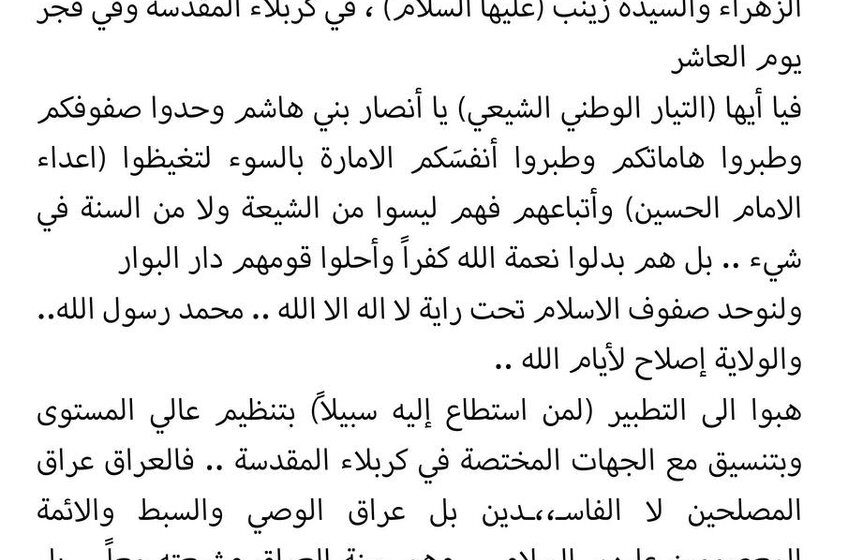
A statement shared by Minister Al-Qaid – Saleh Mohammed Al-Iraqi (Post Impact: 100%), an account associated with Muqtada al-Sadr, has driven the day’s conversation. Accounts such as Shaho Al-Qaradaghi (Post Impact: 20%) and Hayder (Post Impact: 7%) report that the statement is a call from al-Sadr to his followers to participate in a ‘Tatbir’ procession, a ritual involving self-flagellation with blades, at dawn on the day of Ashura in Karbala. Al-Sadr reportedly urged them to “strike your heads and your souls that command evil to anger the enemies of Imam Hussein.” The call is framed as a way to pledge allegiance to Imam Hussein and offer condolences to religious figures like Fatima al-Zahra and Sayyida Zainab.
2. Arrests of Cleric and Poet Fuel Sectarian Debate
The recent arrest of Sunni Sheikh Adai Al-Ghurairi and Shia poet Abdul Hussein Al-Hatimi for allegedly inciting sectarianism is a major topic of discussion. Rusly Al-Maliki (Post Impact: 72%) shared a photo of the two men together, calling it the “photo of the season.” Hayder (Post Impact: 18%) and Steven Nabil (Post Impact: 5%) reported they were seen side-by-side at the Karkh court during their trial. The case has elicited polarized reactions. Bahaa khaleel (Post Impact: 14%) criticized the “crooked scale of justice” for equating someone celebrating the Hijri New Year (Al-Ghurairi) with someone who insults religious figures. In contrast, Sabereen news (Post Impact: 15%) posted a video of Al-Hatimi praising their support. GHAITH ALTAMIMI (Post Impact: 7%) defended Al-Ghurairi, stating he is a man of religion who has not called for violence.
3. Provocative Anti-Shia Commentary Gains Traction
A highly inflammatory post from Mahdi Majeed (Post Impact: 36%) has generated significant attention. Presenting himself as a non-Muslim who has studied Shia texts, he suggests that “the Shia should announce that they have a religion independent of Islam,” citing alleged differences in beliefs regarding the Quran, the Prophet’s companions, and religious practices. This has fueled sectarian discourse online. In a related vein, Asaad Al-Basri (Post Impact: 6%) argued that the current “attack” on Shiism is likely funded by Zionists but paradoxically helps spread the faith. On the other side, Essam Hussein (Post Impact: 18%) defended Husseini mourning rituals and criticized what he calls the “Unitarian” who venerates “killers in Islamic history.”
4. Criticism of Iraqi President and UN Envoy
Iraqi officials and international representatives are facing criticism online. Both Rusly Al-Maliki (Post Impact: 11%) and Hussam Alhaj (Post Impact: 11%) accused the Iraqi president of violating his constitutional oath to “preserve the independence, sovereignty, and unity of Iraq’s land and people.” Separately, Othman Al-Mokhtar (Post Impact: 12%) condemned the UN’s Omani envoy to Iraq for meeting with leaders of militias “drenched in the blood of Iraqi Sunnis” and being a “permanent guest of Iran’s followers,” while allegedly failing to visit any Sunni Arab areas.
5. Messages from Sadrist-Affiliated Accounts
Alongside the direct call from Muqtada al-Sadr, accounts affiliated with or supportive of the Sadrist movement shared messages of defiance and principle. GHAITH ALTAMIMI (Post Impact: 29%), a figure close to the movement, posted a poetic verse: “The full heads of grain bow with humility / While the empty ones hold their heads high.” This is widely interpreted as a criticism of political rivals. In a more direct tone, Wesam Aziz (Post Impact: 23%) shared an image of a Sadrist figure with the defiant caption, “He got out despite the Baathists.”
6. Appeals for National Unity Over Sectarianism
Amidst the rising sectarian rhetoric, several users issued calls for a unified Iraqi identity. Rusly Al-Maliki (Post Impact: 12%) emphatically stated, “This is not the Iraq of the Shiites… nor the Iraq of the Sunnis… This is the Iraq of (Iraqis).” He added that one day, sectarian voices would be silenced. Reflecting on the image of the arrested cleric and poet sitting together in court, Ahmed Al-Ziyadi (Post Impact: 4%) noted that their fear of the judge brought them together, suggesting that the enforcement of law could curb sectarian discourse. Similarly, Amer Ibrahim (Post Impact: 3%) shared the same photo, commenting on the difference between the idea of justice and the reality where one might be seen as guilty and the other innocent.
7. Grand Ayatollah Sistani’s Stabilizing Role Highlighted
The influence of Grand Ayatollah Ali al-Sistani is being presented as a key stabilizing factor in the region. Hayder (Post Impact: 14%) relayed a statement from Ali Larijani, an advisor to Iran’s Supreme Leader, who claimed that Ayatollah Sistani’s intervention after the threat to assassinate Khamenei was “important and effective” and made adversaries realize “that the situation would radically change in the region.” This narrative aligns with a report shared by Rusly Al-Maliki (Post Impact: 7%), quoting the London-based newspaper *Al-Arab*, which states that Iran is seriously dealing with the possibility of its influence in Iraq eroding to the point of “losing it completely.”
8. Global Muharram Commemorations
The observance of Muharram extends beyond Iraq’s borders, as highlighted by multiple accounts. Wasan Al-Shaikhli (Post Impact: 19%) shared a video showcasing Husseini processions taking place in London. Within Iraq, several southern and central provinces, including Basra, Muthanna, and Wasit, have declared a public holiday to allow citizens to participate in mourning processions for the martyrdom of Abu al-Fadl al-Abbas, as reported by Hayder (Post Impact: 3%). Politician Ammar Al-Hakim (Post Impact: 5%) also shared a message from his Ashura council, stating that Muharram teaches lessons of brotherhood and sacrifice.
9. Regional Tensions Between Iran and Israel
Discussions on regional security focused on the escalating tensions between Iran and Israel. David Yassin (Post Impact: 8%) posted an analysis suggesting a secret high-level military appointment in Iran and that Mossad is preparing a scenario for a “post-Islamic Republic” era. Meanwhile, Rafid Jaboori (Post Impact: 6%) reported that Iran has officially begun a phase of challenging the International Atomic Energy Agency (IAEA) by implementing a law to suspend cooperation. Raad Hashim (Post Impact: 4%) echoed this by quoting Israeli Foreign Minister Gideon Sa’ar as saying, “The time has come to reactivate the trigger mechanism against Iran.”
10. Faiq Al-Sheikh Ali Thanks Followers for Birthday Wishes
Politician and public figure Faiq Al-Sheikh Ali took to his X / Twitter account to express gratitude for the outpouring of congratulations on his birthday. In his post, Faiq Al-Sheikh Ali/My Word for History (Post Impact: 28%) stated he stood “humbly before the volume of congratulations,” both public and private. He responded by praying for the well-being of his followers and for the fulfillment of their aspirations in “saving our country and our people.”