2025-06-21: Muqtada al-Sadr Disciplines Religious Orator

Based on an analysis of 935 X / Twitter posts trending in Iraq on June 21, 2025, Miqrab AI found that online conversations were overwhelmingly focused on regional military escalations and internal Iraqi affairs. The most prominent narrative involved Sadrist leader Muqtada al-Sadr issuing a public disciplinary action against a religious orator, which garnered the highest engagement. This was closely followed by extensive discussion and varied reactions to Israeli military strikes inside Iran, which reportedly resulted in the assassination of a senior Hezbollah operative and an Iraqi militia commander. Concurrently, users shared reports of a significant U.S. military buildup in the region, speculated on the health and stability of Iran’s Supreme Leader, and engaged in domestic political disputes involving prominent Iraqi figures.
Table Of Content
- 1. Muqtada al-Sadr Disciplines Religious Orator
- 2. Assassination of Hezbollah and Iraqi Figures in Iran
- 3. Reports of Israeli Military Successes Inside Iran
- 4. Faig al-Sheikh Ali’s Political Satire and Commentary
- 5. U.S. Military Buildup Reported in the Region
- 6. Speculation Surrounding Iranian Supreme Leader Khamenei
- 7. Widespread Iranian Intelligence and Security Failures
- 8. Condemnation of Turkish Foreign Policy
- 9. Religious Commemoration for Imam Ali
- 10. Ghaith al-Tamimi on the Killing of an Iraqi in Iran
Today’s Top 10 X (Twitter) Trends in Iraq:
1. Muqtada al-Sadr Disciplines Religious Orator
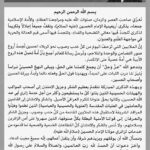
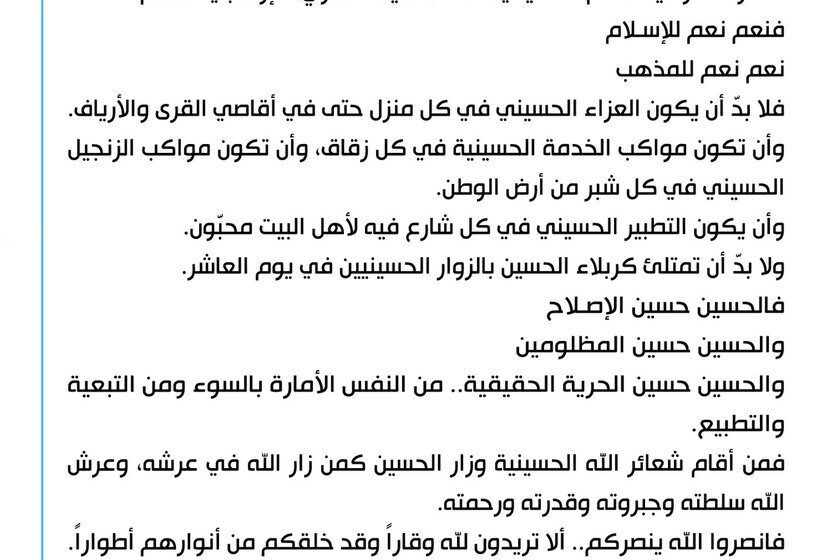
The most impactful story of the day originated from Sadrist leader Muqtada Al-Sadr (Post Impact: 100%), who issued a public statement demanding that Husseini orator Khader Abbas apologize and refrain from reciting for one year. The statement, also shared by Sadr’s associate Salih Mohammed al-Iraqi (Post Impact: 42%), warns that failure to comply will result in punishment from the Hawza (seminary). The disciplinary action was prompted by the orator’s use of the phrase “Ali is an oppressor to anyone who opposes God,” which al-Sadr condemned by stating that Imam Ali is the “prince of justice even to his enemies.” The account Haidar (Post Impact: 4%) also covered the story, summarizing al-Sadr’s call for the orator to be boycotted if he does not comply.
2. Assassination of Hezbollah and Iraqi Figures in Iran
A major topic of discussion was the reported assassination of senior figures in an Israeli strike inside Iran. Accounts across the spectrum reported on the killing of “Abu Ali” Khalil, identified as a close bodyguard to the late Hezbollah leader Hassan Nasrallah, along with his son and Sayyid Haydar al-Mousawi, a commander in the Iraqi militia Kata’ib Sayyid al-Shuhada. Pro-militia pages like Sabereen News (Post Impact: 13%) and Emad Al Musafir (Post Impact: 5%) mourned them as martyrs. In contrast, critics of the Iran-aligned axis, such as Tamara Alkhazraji (Post Impact: 7%), posted celebratory and mocking comments. Analyst Omar Abd al-Sattar Mahmud (Post Impact: 6%) also reported the news, highlighting the targeting of a high-profile Hezbollah personality alongside an Iraqi. Accounts like Haidar (Post Impact: 5%) shared a photo of Abu Ali and his son at the Imam Ali shrine in Najaf shortly before their deaths.
3. Reports of Israeli Military Successes Inside Iran
Alongside the assassinations, numerous posts detailed a broader narrative of successful Israeli military operations deep inside Iran. The account Sufian al-Samarrai (Post Impact: 11%) was a primary source for these claims, alleging that Israel had conducted hundreds of strikes on targets near Qom, Isfahan, and Bushehr, in addition to hitting Tehran and “crushing” the Arak nuclear reactor. Another post from Sufian al-Samarrai (Post Impact: 8%) claimed Israel destroyed Iran’s cyber security headquarters in Tehran. These posts portray Iran’s defenses as ineffective and Israeli intelligence as highly capable, with al-Samarrai (Post Impact: 24%) also sharing a video allegedly showing an Israeli pilot coordinating with a “Mossad operational base in Tehran.” Commentator Mahdi Majeed (Post Impact: 7%) echoed this sentiment, stating that Israel had destroyed most of Iran’s nuclear facilities in a week, causing immense psychological pain to Khamenei.
4. Faig al-Sheikh Ali’s Political Satire and Commentary
Prominent political critic Faig al-Sheikh Ali (Post Impact: 25%) shared multiple high-engagement posts mocking pro-Iran factions and their supporters. In one post, he ridiculed a group he called “Faiqa’s VeGa forces!” and celebrated what he termed the “splendor of schadenfreude,” ending with the hashtag “#TheTishreenRevolutionWillBeVictorious.” In another post, al-Sheikh Ali (Post Impact: 16%) sarcastically addressed an unnamed individual, saying, “Gaza is destroyed! So where will you read Dua Kumayl?” His posts reflect a critical and satirical stance against Iran-aligned groups and their priorities.
5. U.S. Military Buildup Reported in the Region
Several accounts shared information pointing to a significant U.S. military buildup in the Middle East. Journalist ZaidBenjamin (Post Impact: 22%) posted satellite images showing the arrival of American aircraft, including refueling tankers, at the Prince Sultan Air Base in Saudi Arabia. Separately, analyst Rusly Al-Maliki (Post Impact: 5%) reported that two flights of B-2A Spirit stealth bombers had departed from a base in Missouri and were en route to Diego Garcia in the Indian Ocean, a base approximately 4,000 km from Iran. These posts collectively suggest American preparations for a wider conflict.
6. Speculation Surrounding Iranian Supreme Leader Khamenei
The status and security of Iran’s Supreme Leader, Ali Khamenei, were the subject of intense speculation. Sufian al-Samarrai (Post Impact: 6%) posted a “confirmed” report alleging a deterioration in Khamenei’s health while he is inside a “bunker.” Adding to this narrative, Omar Abd al-Sattar Mahmud (Post Impact: 12%) shared a short video with the caption “#Khamenei writes his will.” He also cited a former U.S. official who claimed that Russia had offered Khamenei asylum. These posts contribute to a narrative of instability at the highest level of the Iranian regime.
7. Widespread Iranian Intelligence and Security Failures
The successful targeting of high-level figures and facilities inside Iran prompted widespread commentary on the country’s security vulnerabilities and the extent of foreign intelligence penetration. Sufian al-Samarrai (Post Impact: 16%) posted a video compilation claiming Mossad can assassinate Iranian leaders in their bedrooms, asserting they have recruited much of the Iranian populace. Analyst Shaho al-Qaradaghi (Post Impact: 5%) pointed out the irony of Iranian media accusing Iraqi activists of spying while spies operate freely within Iran’s sensitive centers. The account Abu Darandash al-Askari (Post Impact: 5%) suggested the assassination of Abu Ali implies that Mossad collaborators in Iraq are more numerous than those in Iran, concluding that all current Iraqi leaders are at risk of assassination.
8. Condemnation of Turkish Foreign Policy
Turkey’s role in the region was a subject of criticism. The account Kashf al-Abatil (Detectfalsehoods) (Post Impact: 16%) shared a video quoting Turkish President Erdoğan from 2003, in which he allegedly stated that Turkey supported the invasion of Iraq to protect Israel and that the Iraqi regime threatened Israel’s existence. Meanwhile, Sufian al-Samarrai (Post Impact: 17%) claimed that Iran’s Islamic Revolutionary Guard Corps (IRGC) suspects Erdoğan and his intelligence chief of attempting to communicate with Khamenei to determine his location.
9. Religious Commemoration for Imam Ali
Amid the political and military turmoil, posts with a religious focus also gained traction. The account Wasan Al-Shaikhli (Post Impact: 35%) shared a video from the shrine of Imam Ali ibn Abi Talib with the caption, “In the sanctuary of the Commander of the Faithful Ali ibn Abi Talib .. Before the martyrdom.” This reflects the ongoing religious commemorations and sentiments among a segment of Iraqi social media users, particularly as the events coincided with a period of mourning in the Shi’a calendar. This theme was reinforced by other posts noting that the assassinated official Abu Ali Khalil had visited the shrine just before his death.
10. Ghaith al-Tamimi on the Killing of an Iraqi in Iran
Political commentator Ghaith al-Tamimi (Post Impact: 16%) commented on the death of Sayyid Haydar al-Mousawi, describing him as “the first Iraqi to be struck by Israeli fire.” In a separate, more critical post, al-Tamimi (Post Impact: 14%) appeared to refer to the killing of Hassan Nasrallah’s bodyguard, stating, “He fled the confrontation in Lebanon, so the Israeli army followed him to Tehran! The ugliest death is the death of the plotter.” These posts highlight the direct involvement of Iraqi nationals in the regional conflict and offer a critical perspective on the actions of Iran’s allies.