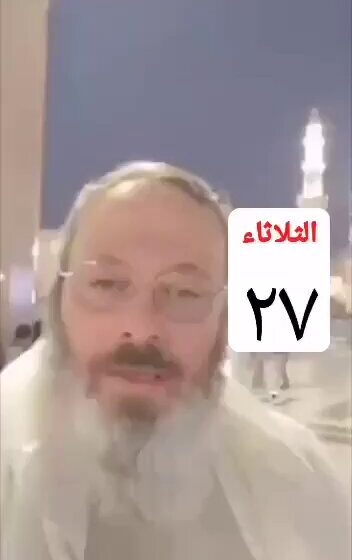
2025-05-27: Iranian Cleric Arrested in Saudi Arabia During Hajj

Based on an analysis of 363 X / Twitter posts by Miqrab AI on May 27, 2025, the primary narratives in Iraq revolve around regional tensions and domestic political maneuvering. The most significant story involved the arrest of a controversial Iranian cleric in Saudi Arabia, which sparked a wide range of reactions from condemnation of the cleric’s incendiary rhetoric to criticism of Iran’s official response. Domestically, conversations centered on the upcoming parliamentary elections, highlighting the formation of new Sunni political alliances, widespread calls for accountability for corrupt officials, and sharp critiques of the political establishment. A viral video, alleging a tragic plane crash involving pilgrims, garnered massive engagement, while other notable topics included a celebrated visit by a Kuwaiti actress to Baghdad, contrasting visions for Iraq’s future, and commentary on geopolitical tensions between Iran and the United States.
Table Of Content
- 1. Iranian Cleric Arrested in Saudi Arabia During Hajj
- 2. Political Criticism and Election Preparations Intensify
- 3. Sunni Political Alliances Reshape for Upcoming Elections
- 4. Video of Purported Mauritanian Plane Crash Goes Viral
- 5. Kuwaiti Actress Hayat Al-Fahad Warmly Welcomed in Baghdad
- 6. Differing Visions for Political Change in Iraq Discussed
- 7. Critique of Political and Religious Establishment’s Legitimacy
- 8. Backlash Over Government Demands on an Academy for Special Needs
- 9. Conflicting Views on Iran-US Military Tensions
- 10. Cabinet Approves “Baghdad is More Beautiful” and Lifts Bans
Today’s Top 10 X (Twitter) Trends in Iraq:
1. Iranian Cleric Arrested in Saudi Arabia During Hajj
Iraqi social media widely discussed the arrest of Iranian cleric Gholamreza Ghasemian in Saudi Arabia. Accounts like _. suhair Al_jumaili (Post Impact: 31%) reported that Ghasemian was detained after publishing a video claiming the spread of “brothels and gambling dens in Mecca and Medina.” This account described him as hateful toward Sunni Arabs. In contrast, Shaho Al-Qaradaghi (Post Impact: 16%) suggested the Iranian government was distancing itself from the cleric, quoting the Iranian Foreign Minister as saying, “We will not allow anyone to spoil our relationship with Saudi Arabia.” Al-Qaradaghi’s analysis is that Tehran views Ghasemian as an extremist embarrassing the government. Another post from Shaho Al-Qaradaghi (Post Impact: 4%) noted the Iranian judiciary deemed the arrest “unjustified and illegal,” also mentioning Ghasemian’s past claim that Saudi Arabia had placed snipers at the Kaaba to assassinate Imam Mahdi. Hiba Alnnaib (Post Impact: 2%) labeled the cleric’s video as “incitement” and pointed to his previous calls to attack Saudi Arabia.
2. Political Criticism and Election Preparations Intensify
As the next parliamentary elections approach, Iraqi users are increasingly critical of the political class and are closely watching campaign developments. Ezzat Alshabandar | Ezzat Alshabandar (Post Impact: 5%) called on authorities to activate the principle of “Where did you get this from?” to investigate the wealth of political leaders, pointing to their “palaces, villas, buildings, hotels, servants, and fleets of vehicles.” Similarly, Rusly Al-Maliki (Post Impact: 5%) accused politicians and military leaders of acquiring thousands of acres of land along the Tigris and Euphrates rivers, describing the situation as “kleptocracy,” or the “rule of thieves.” On the campaign front, politician Mohammed Al-Karbouli (Post Impact: 11%) shared a post with the hashtag “#Elections_not_confrontations,” stating, “We work quietly and in a civilized manner, far from fanfare and tense propaganda.” Meanwhile, Essam Hussein (Post Impact: 5%) advised Sunni candidates that if they lose in Sunni-majority cities, the problem lies with their own constituents, not with “the other component.”
3. Sunni Political Alliances Reshape for Upcoming Elections
The Sunni political landscape is undergoing significant shifts ahead of the elections, with the formation of a new major alliance. Mustafa Al-Dulaimi (Post Impact: 4%) announced a new Sunni coalition formed in Qatar, bringing together Parliament Speaker Mahmoud al-Mashhadani, Khamis al-Khanjar, and Ziad al-Janabi. He predicted that this new bloc would create a “fierce Sunni battle” against competitors like Mohammed al-Halbousi and Muthanna al-Samarrai, redrawing the Sunni political map. Adding another layer to the discussion, Meshchan Al-Jabouri (Post Impact: 2%) commented on external influence, stating, “Iran rarely intervenes to exclude a candidate, but it does intervene to exclude winners if it feels they threaten its project, as happened with me and with President Al-Halbousi.”
4. Video of Purported Mauritanian Plane Crash Goes Viral
A highly impactful post from Wasan Al-Shaykhli (Post Impact: 100%) circulated a dramatic video allegedly showing the final moments of a Mauritanian airplane. The post claims the plane was carrying 210 Hajj pilgrims to Mecca when it crashed off the coast of the Red Sea, resulting in the death of all passengers. The video captures passengers chanting “Takbir” (Allahu Akbar) as the aircraft descends towards the water. The post and its accompanying video generated massive engagement, making it one of the most shared stories of the day, though it originated from a single influential source.
5. Kuwaiti Actress Hayat Al-Fahad Warmly Welcomed in Baghdad
The visit of veteran Kuwaiti actress Hayat Al-Fahad to Baghdad was a prominent and positive topic of conversation. Rusly Al-Maliki (Post Impact: 5%) welcomed the actress, whom he called the “owner of the beautiful smile and a long Arab drama and theater history.” Sharing a similar sentiment, Falah Al-Mashal (Post Impact: 2%) posted a photo of her on Baghdad’s famous Al-Mutanabbi Street, commenting that her visit shows how “art triumphs over politics when it reveals love as one of life’s greatest beauties, not deals and enmities that end in hatred.” Both posts highlighted the warm reception she received from Iraqis, who celebrated the presence of the beloved star.
6. Differing Visions for Political Change in Iraq Discussed
Discussions on the future of Iraq featured different perspectives on how to achieve meaningful political change. Mahdi Majeed (Post Impact: 5%) questioned what method of change Iraqis truly want, noting a rejection of both mass protests and participation in elections. In another post, Mahdi Majeed (Post Impact: 4%) argued that the only realistic paths for change are either establishing a new opposition that engages with the U.S. or through the electoral process. Presenting a different approach, Sheikh Thaer Al-Bayati (Post Impact: 2%) announced his national project aimed at establishing a federal “Comprehensive Arab Region” to preserve identity and rights. He declared that after extensive dialogue, “the time for words is over, and the time for action has come,” promising that what was once a dream will become a reality.
7. Critique of Political and Religious Establishment’s Legitimacy
Accounts on X directed sharp criticism toward both the political and religious establishments in Iraq, questioning their integrity and role in the country’s governance. Rusly Al-Maliki (Post Impact: 5%) asserted that “The religious establishment in Iraq has formed an explicit cover for a corrupt political process, giving it legitimacy, ignoring its corruption, and granting it enough blood to continue.” This view was complemented by a post from Dr. Ghalib Al-Da’mi (Post Impact: 2%), who questioned the lavish lifestyles of those claiming to follow religious figures. He asked if the Prophet Muhammad or Imam Ali lived in palaces, concluding, “Every claimant to the love of Ali who lives in a palace is not one of his.” These posts reflect a growing sentiment of disillusionment with the moral authority of the country’s leadership.
8. Backlash Over Government Demands on an Academy for Special Needs
The government faced criticism for its treatment of the “Academy of Young Warriors,” a center for children with special needs founded by Tala Khalil, a winner of the UAE’s “Arab Hope Makers” award. Haidar (Post Impact: 2%) reported that while Khalil was receiving promises of government support, the government instead decided to charge her an annual rent of 60 million Iraqi dinars for the state-owned building the academy occupies. This sentiment was echoed by Yasser Eljuboori – Yasser Al-Jubouri (Post Impact: 1%), who expressed outrage that “the state that spends billions on celebrations and trips won’t spend 60 million dinars on the children of Iraq,” warning that the children now face the risk of eviction.
9. Conflicting Views on Iran-US Military Tensions
The escalating rhetoric between Iran and the United States prompted varied analyses. Aayad Al Twfan – Aayad Al Twfan (Post Impact: 4%) quoted IRGC commander Hossein Salami stating Iran is “ready to go to war if Washington carries out its threats.” The user advised Iran and its proxies to act first, using an Iraqi proverb: “Have them for lunch before they have you for dinner.” Offering a contrasting opinion, Salim Al-Jumaili (Post Impact: 1%) dismissed the threats as a sign of weakness. He argued, “We have never heard America or Israel threaten to ‘destroy Iran,’ simply because they do not need to shout… The abundance of statements is evidence of inability, not power, and emptiness, not prestige.”
10. Cabinet Approves “Baghdad is More Beautiful” and Lifts Bans
Decisions from the Iraqi Council of Ministers were shared, focusing on urban development and import regulations. The account Haidar (Post Impact: 2%) reported that the council approved the launch of the second phase of the “Baghdad is More Beautiful” campaign in the capital. This was also confirmed by the official account of the Prime Minister’s Media Office (Post Impact: 1%). In a separate decision also reported by Haidar (Post Impact: 2%), the cabinet decided to lift the import ban on e-cigarettes, electronic hookahs, and heated tobacco products.

