2025-05-05: Escalating Diplomatic Crisis Between Algeria and the UAE

Based on an analysis of 418 X / Twitter posts on May 5, 2025, Miqrab AI found that the primary narratives in Iraq revolve around escalating regional conflicts and contentious domestic political issues. The most prominent international story was the severe Israeli airstrikes on Yemen’s Hodeidah port, viewed as retaliation for Houthi attacks. Domestically, a major controversy erupted over allegations that Member of Parliament Mustafa Sanad stormed a TV station, sparking widespread debate about political intimidation and the rule of law. Another significant topic was the reaffirmation of Iraqi sovereignty over the Khor Abdullah waterway, with military leaders visiting the area to counter perceived Kuwaiti ambitions. Conversations also touched upon rising sectarian rhetoric in public discourse, allegations of corruption within the parliament, and discussions about the future of Syria and its implications for Iraq.
Table Of Content
- 1. Escalating Diplomatic Crisis Between Algeria and the UAE
- 2. Israeli Airstrikes Reportedly Destroy Yemen’s Hodeidah Port
- 3. MP Mustafa Sanad Accused of Storming TV Station
- 4. Army Chief’s Visit to Khor Abdullah Reaffirms Iraqi Sovereignty
- 5. Debate Over Inviting Syrian Leader Al-Jolani to Baghdad Summit
- 6. Concerns Over Rising Sectarian Rhetoric in Public Discourse
- 7. Parliament Speaker Accused of Covering Up Corruption
- 8. Discourse on Iraq’s Banking System Reforms and Criticisms
- 9. Prediction of Post-Conflict Partition in Syria and Iraq
- 10. Discussion on US-Iran Negotiations and Regional Implications
Today’s Top 10 X (Twitter) Trends in Iraq:
1. Escalating Diplomatic Crisis Between Algeria and the UAE
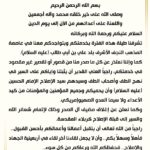
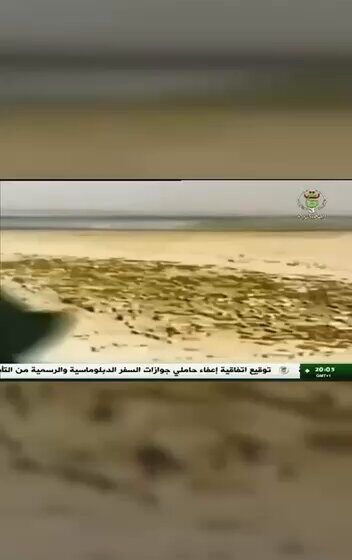
A diplomatic crisis between Algeria and the United Arab Emirates is intensifying, according to a widely circulated post. The account Hussam Alhaj (Post Impact: 100%) reports that the tension, which began after an Algerian historical researcher made comments about the origins of the Amazigh people, has escalated with Algerian state television broadcasting a report critical of the UAE. The post points out the peculiarity of the situation, noting that “the researcher himself had previously stated the same point of view in numerous interviews on media platforms belonging to other Arab countries, and no crisis with Algeria occurred before he appeared on Sky News…!”
2. Israeli Airstrikes Reportedly Destroy Yemen’s Hodeidah Port
A major topic of discussion was the heavy Israeli airstrikes on Hodeidah, Yemen, which accounts described as a retaliatory and devastating attack. Aayad Al Twfan (Post Impact: 12%) provided a detailed military analysis, stating the “qualitative and strategic” strikes involved 30 fighter jets dropping 48 one-ton bombs, effectively taking the port out of service. Other accounts, such as Haydar (Post Impact: 7%) and Rusly Al-Maliki (Post Impact: 5%), echoed these details. Some posts, including one by HIBA Alnnayib (Post Impact: 11%), went further, claiming Israel struck the port with a “tactical nuclear” weapon in response to Houthi attacks on Ben Gurion Airport. David Yassin (Post Impact: 8%) described the strikes as just the beginning, stating that “every Iranian support point on the map… has been placed on the table of fire.”
3. MP Mustafa Sanad Accused of Storming TV Station
A significant controversy erupted over allegations that Member of Parliament Mustafa Sanad stormed the headquarters of Al Ahed TV channel and threatened activist Oras Al-Mashhadani. Multiple accounts condemned the action, framing it as an abuse of power. Shaho Al-Qaradaghi (Post Impact: 10%) questioned, “MP Mustafa Sanad, a parliamentarian or a mafia man?”, while Sajad Al-Jubouri (Post Impact: 5%) argued that legal channels should have been used instead of intimidation. In contrast, other users supported Sanad’s actions. Abu Drandash Al-Askari (Post Impact: 4%) claimed Sanad was simply “disciplining” Al-Mashhadani for his repeated insults, stating there was no kidnapping attempt. The incident was widely viewed as a test of the rule of law and freedom of the press in Iraq.
4. Army Chief’s Visit to Khor Abdullah Reaffirms Iraqi Sovereignty
The visit of the Iraqi Army’s Chief of Staff, Lieutenant General Abdul Amir Yarallah, to the Khor Abdullah waterway garnered significant attention and praise. Accounts portrayed the visit as a crucial and timely assertion of Iraqi sovereignty against Kuwaiti ambitions. Aayad Al Twfan (Post Impact: 17%) stated the visit “carries a deep national message at a very important time, that you are the protectors of the land and its defenders, no matter how intense the conspiracies of some politicians who sold Khor Abdullah.” Similarly, Haydar (Post Impact: 5%) quoted a maritime expert emphasizing that Kuwait’s potential control of the channel would “kill” Iraq’s Development Road project. The visit was seen as a message that Iraq’s military stands ready to defend its territory.
5. Debate Over Inviting Syrian Leader Al-Jolani to Baghdad Summit
Comments made by Badr Organization leader Hadi Al-Amiri regarding the potential invitation of Syrian leader Ahmed Al-Sharaa (formerly known as Abu Mohammad al-Jolani) to the Arab Summit in Baghdad sparked debate. Najeh Abbas Al-Mizan (Post Impact: 9%) quoted Al-Amiri as saying, “Protocol-wise, Iraq has the right to invite President Ahmed Al-Sharaa to attend the Arab summit in Baghdad!” This statement was met with surprise and criticism by other users like suhair Al_jumaili (Post Impact: 4%), who noted that Al-Amiri had previously described Al-Sharaa as a terrorist and now refers to him as a head of state. This discussion highlights the shifting political dynamics concerning Syria within Iraqi political circles.
6. Concerns Over Rising Sectarian Rhetoric in Public Discourse
Several posts highlighted a growing concern over sectarian rhetoric in Iraqi politics and media. Ahmed Al-Thawaq (Post Impact: 13%) posted a strong defense of the Shia community, arguing they have given much to the Sunnis and warned against incitement driven by “Sunnis from abroad.” He asserted, “If you don’t shut up, we will come back stronger than before!” In a contrasting view, Salim Al-Jumaili (Post Impact: 5%) shared a quote alleging a double standard in how the state treats sectarian figures, claiming that a Shia figure would be “honored and appointed” to silence them, while a Sunni one would have “stones put in his mouth.”
7. Parliament Speaker Accused of Covering Up Corruption
Accusations that the Speaker of the Iraqi Parliament is complicit in covering up corruption circulated on the platform. Rusly Al-Maliki (Post Impact: 9%) shared a document and asked rhetorically, “Is there a system more failed than this? Is there a system more decayed than this!?” The sentiment was shared by Dr. Qusay Shafiq (Post Impact: 4%), who directly addressed the Speaker, questioning why the “highest authority in the country” would cover up a corruption file. Tamara Alkhazraji (Post Impact: 2%) also commented on the lack of accountability from integrity commissions or the judiciary.
8. Discourse on Iraq’s Banking System Reforms and Criticisms
The state of Iraq’s banking sector was discussed from two opposing viewpoints. On one side, Rusly Al-Maliki (Post Impact: 6%) expressed a complete lack of trust in the system, describing the policy of forcing dollar deposits to be withdrawn in dinars at the official rate as “daylight robbery.” He argued this “backwardness” discourages investment and leads citizens to hoard cash. In contrast, the Prime Minister’s Media Office (Post Impact: 3%) reported that Prime Minister Mohammed Shia’ Al Sudani met with bank chairpersons to discuss the implementation of comprehensive banking reform plans, urging them to simplify procedures and participate in the country’s development.
9. Prediction of Post-Conflict Partition in Syria and Iraq
A high-impact post outlined a future map of the Middle East following a hypothetical defeat of Syrian leader Al-Jolani. Sufian Al-Samarrai (Post Impact: 15%) predicted that the region would be partitioned into six new states based on sectarian and ethnic lines. According to this prediction, there would be separate states for the Kurds, the Syrian coast (Alawites), the Druze, Sunni Arabs (encompassing parts of Syria and Iraq), Shias, and Christians in Lebanon with autonomous zones. The post claims that Islamist factions supported by Qatar, Turkey, and Iran would be powerless to stop this outcome.
10. Discussion on US-Iran Negotiations and Regional Implications
The prospect of negotiations between the United States and Iran and their potential impact on the region was a topic of discussion. Ammar Al-Hakim (Post Impact: 6%), in a post about his meeting with the US Chargé d’Affaires, expressed hope that “ongoing negotiations between the Islamic Republic of Iran and the United States of America will lead to an agreement that spares both parties and the region from confrontation.” A more cynical perspective was offered by Al-Sahafi Samer Al-Saadi (Post Impact: 4%), who suggested that Iran would become an “American colony” and offer trillions to the US in exchange for the survival of Supreme Leader Khamenei’s rule, questioning the regime’s long-standing anti-American rhetoric.