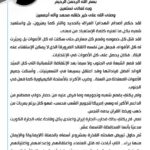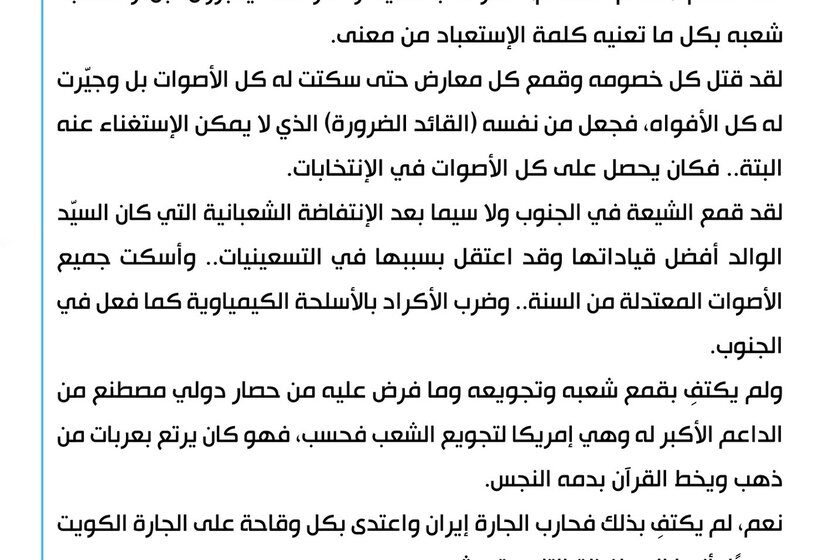
2025-05-03: Muqtada al-Sadr’s Statement on Ba’ath Regime and Alliances

Based on an analysis of 417 X / Twitter posts trending on May 3, 2025, Miqrab AI identified several key themes and narratives dominating online conversations in Iraq. The most prominent discussion revolved around a statement by cleric Muqtada al-Sadr, which included sharp criticisms of the former Ba’ath regime and comments on past political alliances, generating widespread reaction. Regional tensions were also a major topic, particularly a harsh media attack by Algerian state television against the United Arab Emirates. Domestically, there was a significant push from influencers for citizens to update their voter registration cards ahead of upcoming elections. Other key conversations included commentary on Israeli airstrikes in Syria, condolences from Kurdish leaders on the death of a Turkish politician, criticism of the Iraqi army’s role in non-military events, and concerns about Iraq’s economic future amid shifting OPEC oil production policies.
Table Of Content
- 1. Muqtada al-Sadr’s Statement on Ba’ath Regime and Alliances
- 2. Algerian State TV Launches Attack on UAE
- 3. Influencers Urge Iraqis to Update Voter Cards
- 4. Israeli Airstrikes in Syria Spark Debate
- 5. Kurdish Leaders Mourn Death of Turkish Politician
- 6. Iraqi Army’s Public Appearances Criticized
- 7. Sentencing of Former Tunisian PM for Sending Terrorists to Iraq
- 8. Baghdad Prepares for 2025 Arab Summit
- 9. Iraqi Leaders Commemorate World Press Freedom Day
- 10. Concerns Over Iraq’s Economy and OPEC+ Oil Policy
Today’s Top 10 X (Twitter) Trends in Iraq:
1. Muqtada al-Sadr’s Statement on Ba’ath Regime and Alliances
The most impactful story of the day was a statement from cleric Muqtada al-Sadr, which was shared by his official account Muqtada Sayyid Muhammad Al-Sadr (Post Impact: 100%). The statement was widely circulated and analyzed by other users. Shaho Al-Qaradaghi (Post Impact: 7%) quoted al-Sadr as saying, “Saddam starved the Iraqis while he reveled in chariots of gold, and his two sons, Uday and Qusay, were leading a campaign of dissolution.” In another post, Mahdi Majeed (Post Impact: 4%) highlighted al-Sadr’s claim that when he was besieged by American forces, Sunni factions were the ones who helped him, while Shia factions “were stabbing him in the back.” Majeed criticized al-Sadr for later allying with those same Shia factions and turning against the Sunnis who had aided him.
2. Algerian State TV Launches Attack on UAE
A major topic of discussion was a report from Algerian state television that harshly criticized the United Arab Emirates. ZaidBenjamin (Post Impact: 22%) shared a video and transcript of the report, which described the UAE as a “manufactured statelet” and its leaders as “bastards,” “dwarfs,” and “devoid of honor.” The report was apparently a response to a program on the UAE-based Sky News channel that discussed the Amazigh issue in Algeria. In response, Ghaith Al-Tamimi (Post Impact: 2%) condemned the Algerian media’s rhetoric, calling it “barbaric, aggressive speech” directed at “one of the greatest success stories in the Middle East.”
3. Influencers Urge Iraqis to Update Voter Cards
Prominent Iraqi satirist Ahmed Albasheer (Post Impact: 21%) issued a call to action for Iraqis to update their voter registration cards. He stressed the importance of having the card ready, regardless of whether one decides to participate in or boycott the upcoming elections. Albasheer argued, “don’t waste such an important document that could be used in a sensitive moment and cause real change,” and urged his followers not to be lazy. This sentiment was echoed in other posts discussing the elections, such as one by Hayder (Post Impact: 2%), who noted that the “boycott” narrative is re-emerging but that Baghdad has continued to gain international legitimacy since the last boycotted election.
4. Israeli Airstrikes in Syria Spark Debate
Recent Israeli airstrikes in Syria prompted varied reactions among Iraqi social media users. Rusly Al-Maliki (Post Impact: 9%) criticized some pro-Iran “Wilai” factions for allegedly celebrating the strikes, suggesting their previous “jihad” was not about defending Syria but driven by “sectarian حقارة (despicableness) and rotten Khomeinist foulness.” In a different analysis, Mahdi Majeed (Post Impact: 5%) claimed the Israeli strikes were not intended to harm the Syrian people or government but were a temporary measure to destroy dangerous weapons stockpiles and repay the Druze community for their support. Similarly, Tamara Alkhazraji (Post Impact: 3%) questioned the pro-Iran factions’ sudden support for Israel’s actions, asking, “So where is the road to Jerusalem?”
5. Kurdish Leaders Mourn Death of Turkish Politician
High-profile Kurdish leaders expressed condolences following the death of Turkish politician Sırrı Süreyya Önder. The President of the Kurdistan Region, Nechirvan Barzani (Post Impact: 9%), praised Önder for his role in trying to advance the peace process in Turkey, stating he “showed a high example of pacifism and humanitarianism that deserves everyone’s respect and appreciation.” Similarly, the Prime Minister of the Kurdistan Regional Government, Masrour Barzani (Post Impact: 8%), described Önder as “a long-time friend of the Kurdish people and a fighter for peace” who played an important role in strengthening brotherhood between Kurds and Turks.
6. Iraqi Army’s Public Appearances Criticized
Several users criticized the recent use of the Iraqi military in non-combat, ceremonial roles. Rusly Al-Maliki (Post Impact: 9%) shared a video of military personnel saluting a commander at a college, sarcastically suggesting the commander had a “Saddam Hussein complex.” In another post, Rusly Al-Maliki (Post Impact: 7%) commented on the “parading of army battalions in private colleges,” lamenting that “this is the end” for the over 100-year-old Iraqi army. Yasser Eljuboori (Post Impact: 1%) shared similar sentiments, expressing his frustration by asking the Ministry of Defense, “Is this the end of the Iraqi army?!!”
7. Sentencing of Former Tunisian PM for Sending Terrorists to Iraq
Multiple accounts reported on the 34-year prison sentence handed down to former Tunisian Prime Minister Ali Laarayedh for facilitating the travel of terrorists to Iraq and Syria. Hayder (Post Impact: 7%) and Fadel Abu Ragheef (Post Impact: 4%) both shared the news, highlighting Laarayedh’s leadership role in the Ennahda party, which they described as affiliated with the Muslim Brotherhood. Fadel Abu Ragheef stated that Laarayedh “contributed to the killing, car bombs, and suicide bombers through the terrorist groups he pushed into Iraq,” concluding that “behind every calamity are the Brotherhood.”
8. Baghdad Prepares for 2025 Arab Summit
The Iraqi government began promoting the upcoming Arab Summit, scheduled to be held in Baghdad. The Iraqi PMO (Post Impact: 5%) released a promotional video with the slogan “The capital of civilization welcomes its brothers.” Hayder (Post Impact: 6%) also shared the official announcement and logo for the summit. However, the event was met with some skepticism. User Adam (Post Impact: 1%) recalled the 2012 summit, which he claimed cost $500 million, and questioned what benefit Iraq received, suggesting the current summit is merely an attempt by Prime Minister Al-Sudani to surpass his predecessor’s legacy.
9. Iraqi Leaders Commemorate World Press Freedom Day
On World Press Freedom Day, several Iraqi political figures issued statements supporting journalists. Prime Minister Mohammed Shia’ Al Sudani (Post Impact: 5%) praised the “great sacrifices” of Iraqi journalists and affirmed his government’s support for press freedom, while hoping the press remains objective. Similarly, Ammar Al-Hakim (Post Impact: 4%) congratulated those in the field and called for honoring their martyrs. Former Prime Minister Mustafa Al-Kadhimi (Post Impact: 2%) also commemorated the day, stating, “Freedom is not a luxury, but a fundamental pillar for building a state of institutions and free consciousness.”
10. Concerns Over Iraq’s Economy and OPEC+ Oil Policy
Economic analysts on X expressed concern over Iraq’s financial stability following reports of shifting oil production policies. Haider Al Mulla (Post Impact: 6%) criticized the government’s economic approach as a simplistic “sell oil and distribute salaries” model, highlighting structural problems like corruption and a lack of non-oil revenue. Ziyad Al-Hashimi (Post Impact: 4%) warned of a potential oil price war, reporting that Saudi Arabia may increase production in response to countries like Iraq exceeding their quotas. He predicted this could be a “violent blow” to the Iraqi government, potentially pushing oil prices below what is needed to cover state salaries. Rafid Jaboori (Post Impact: 2%) also noted that OPEC+ decided to increase production, with Iraq being among those accused of overproducing.