2025-05-01: Criticism of Muqtada al-Sadr’s Treatment of His Followers

Based on an analysis of 547 X / Twitter posts trending on May 1, 2025, Miqrab AI found that online conversations in Iraq were dominated by domestic political and religious events, alongside regional disputes. The most prominent narrative centered on criticism of Shiite cleric Muqtada al-Sadr’s conduct towards his followers during the annual commemoration for his assassinated father, which itself was a major topic of discussion with messages from top political figures. Other significant conversations included controversy over the raising of a religious flag in Khanaqin, renewed debate over the Khor Abdullah maritime dispute with Kuwait, and extensive coverage of political leader Ammar al-Hakim’s outreach tour in Anbar province. Discussions also touched on regional affairs, including conflicting views on the conflict in Syria, Iran’s unveiling of a new tank, and messages from Iraqi leaders on International Workers’ Day.
Table Of Content
- 1. Criticism of Muqtada al-Sadr’s Treatment of His Followers
- 2. Controversy Over “Zainab” Flag in Khanaqin
- 3. Debate Over Khor Abdullah Waterway Dispute with Kuwait
- 4. Commemoration of Mohammed Sadiq al-Sadr’s Assassination
- 5. Ammar al-Hakim’s Political Tour of Anbar Province
- 6. Conflicting Views on Syrian Conflict and Al-Jolani
- 7. Iran Unveils New “Fallaq” Tank, Drawing Mockery
- 8. National Line Current Announces Election Boycott
- 9. Political Leaders Mark International Workers’ Day
- 10. Speculation on Trump’s Potential Middle East Policy
Today’s Top 10 X (Twitter) Trends in Iraq:
1. Criticism of Muqtada al-Sadr’s Treatment of His Followers
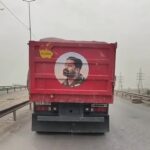
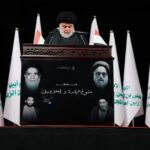
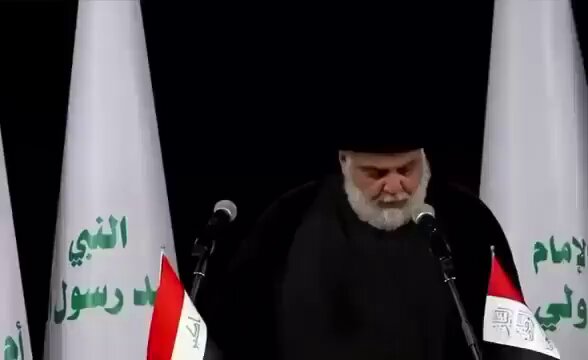
A significant trend involved sharp criticism of Muqtada al-Sadr’s behavior towards his followers. Faiq Al-Sheikh Ali (Post Impact: 46%) mockingly praised Sadr for “beating his sheep with his shoe” and contrasted the “master” Tishreen revolutionaries with Sadr’s followers, whom he called “beaten sheep.” Similarly, Mahdi Majeed (Post Impact: 16%) described Sadr’s followers as masochistic, claiming they love being humiliated and noting that Sadr had previously insulted them as “ignorant, ignorant” and left the stage. This was corroborated by Haidar (Post Impact: 10%), who reported that Sadr left the stage during a speech commemorating his father’s death because he was annoyed by the loud voices of his supporters.
2. Controversy Over “Zainab” Flag in Khanaqin
Social media accounts reported on and criticized the raising of a religious flag, referred to as the “flag of Zainab,” in the city of Khanaqin in Diyala province. Omar Al-Janabi (Post Impact: 46%) shared a video of the event, which he noted was attended by security and official figures, and questioned why the flag was being raised in Khanaqin instead of Syria, where it had previously been lowered. He also mentioned that slogans against the “new Syrian administration and the Umayyads” were chanted. Mahdi Majeed (Post Impact: 9%) argued that there is no religious basis for raising this flag and accused “despicable clerics” of exploiting the Prophet’s family to “spill people’s blood, ignite problems, and achieve their interests.”
3. Debate Over Khor Abdullah Waterway Dispute with Kuwait
The ongoing maritime border dispute with Kuwait over the Khor Abdullah waterway was a prominent topic. Haidar (Post Impact: 21%) highlighted a statement from Kurdish politician Hoshyar Zebari, who warned that the Federal Supreme Court’s delay in its ruling is “not good” and that if Iraq does not hand over Khor Abdullah to Kuwait, “Gulf attendance at the Arab Summit will be affected.” This sentiment was also noted by Salem Mashkour (Post Impact: 5%). In response to the issue, Mahdi Majeed (Post Impact: 9%) expressed more anger towards Kuwait than Iran, arguing that while Iran is an occupier that will eventually leave, Kuwait wants to “steal and annex Iraqi lands.”
4. Commemoration of Mohammed Sadiq al-Sadr’s Assassination
Numerous political figures and social media accounts commemorated the anniversary of the assassination of Grand Ayatollah Mohammed Mohammed Sadiq al-Sadr and his two sons. Prime Minister Mohammed Shia’ Al Sudani (Post Impact: 12%) extended his condolences, describing the late cleric as not just a religious authority but also a “political revolutionary and a social reformer” who was targeted by the “dictatorial regime” for his efforts to unite Iraqis. Hussam Alhaj (Post Impact: 11%) remembered him as “the only one who rejected servitude in all its forms.” Other figures like Mashan al-Jabouri (Post Impact: 5%) and MP Aliya Nusseif (Post Impact: 5%) also posted messages of condolence, praising his legacy.
5. Ammar al-Hakim’s Political Tour of Anbar Province
Ammar al-Hakim, leader of the National Wisdom Movement, conducted a widely publicized tour of Anbar province, meeting with a wide range of local leaders. Ammar Al-Hakim (Post Impact: 7%) documented his meetings with former Speaker Mohammed al-Halbousi (Post Impact: 4%), tribal elders, PMF commanders, and university officials. Across his posts, Hakim emphasized themes of national unity, reconstruction, overcoming sectarianism, and the need for a strong state. His visit was also covered by others, such as Mustafa Al-Dulaimi (Post Impact: 7%), who praised a local figure for speaking frankly to Al-Hakim about the province’s needs.
6. Conflicting Views on Syrian Conflict and Al-Jolani
Iraqi commentators expressed strong and conflicting opinions regarding the conflict in Syria and the role of Hay’at Tahrir al-Sham leader Abu Mohammad al-Jolani. Hassan Al-Kaabi (Post Impact: 14%) voiced extreme opposition to Jolani, stating, “If Jolani and Satan were to fight, we would stand with Satan,” and condemned the Syrian revolution for allegedly handing the country over to terrorists. Conversely, Sufian Al-Samarrai (Post Impact: 6%) accused Jolani of igniting sectarian strife by fabricating a story about the Prophet being insulted to justify attacks on the Druze community as part of a larger Turkish-Iranian-Qatari plan.
7. Iran Unveils New “Fallaq” Tank, Drawing Mockery
News of Iran unveiling a new tank named “Fallaq” circulated on Iraqi X/Twitter, prompting both reporting and ridicule. Rusly Al-Maliki (Post Impact: 20%) shared an image of the new tank, simply announcing its reveal. In a critical response, Mahdi Majeed (Post Impact: 6%) mocked the vehicle’s appearance, joking that a banana peel would make it slip. He contended that Iran’s real power lies not in its “failed military strength” but in its ideology and its network of militias led by “traitors” in Arab countries.
8. National Line Current Announces Election Boycott
It was reported that the “National Line Current” (Tayar Al-Khat Al-Watani) has announced it will not participate in the upcoming elections. Azeez Sahib Alrubaye (Post Impact: 14%) shared the official announcement. Salam Al-Husseini (Post Impact: 3%) detailed the reasons for the boycott, which include the persistence of armed factions, the use of corrupt political money, an unfair election law, and a lack of confidence in the independence and fairness of the electoral process. The party stated the move was not a withdrawal from politics but a step toward building an alternative national project.
9. Political Leaders Mark International Workers’ Day
On International Workers’ Day, several prominent Iraqi and Kurdish political leaders issued statements honoring the nation’s labor force. Kurdistan Regional Government Prime Minister Masrour Barzani (Post Impact: 15%) expressed his appreciation for the contributions of Kurdistan’s workers to development and economic infrastructure. Iraqi Prime Minister Mohammed Shia’ Al Sudani (Post Impact: 5%) reaffirmed his government’s commitment to workers’ rights, citing the activation of the social security law. Similarly, Ammar Al-Hakim (Post Impact: 5%) and former Prime Minister Mustafa Al-Kadhimi (Post Impact: 4%) also posted tributes, calling for the protection of workers’ rights and recognizing their role in building the country.
10. Speculation on Trump’s Potential Middle East Policy
Commentators discussed the potential foreign policy of former U.S. President Donald Trump regarding the Middle East, particularly Syria and Iran. Omar Abd Al-Sattar Mahmoud (Post Impact: 6%) shared a video segment titled “Trump and Syria” as part of his “Political Lenses” series. In a related post, Rafid Jaboori (Post Impact: 5%) also posted a video with the caption, “Trump distances an enemy of Iran!“, suggesting potential shifts in U.S. strategy in the region should Trump be re-elected.