2025-04-07: Muqtada al-Sadr Calls on Saudi Arabia to Rebuild Baqi’ Graves

Based on an analysis of 688 X / Twitter posts by Miqrab AI, the key narratives trending in Iraq on April 7, 2025, were dominated by a significant religious-political statement from cleric Muqtada al-Sadr and widespread public outrage over the death of an engineer allegedly tortured in police custody. The conversation highlighted a deep crisis of faith in state security institutions, with users demanding justice and systemic reform. This domestic focus was paralleled by intense discussion of regional geopolitics, fueled by announcements from former U.S. President Donald Trump regarding negotiations with Iran and a widely circulated Reuters report suggesting that major Iraqi armed factions were prepared to disarm to avoid a potential conflict with the United States. These topics collectively paint a picture of a public concerned with internal governance failures, corruption, and the profound impact of external powers on Iraq’s sovereignty and future.
Table Of Content
- 1. Muqtada al-Sadr Calls on Saudi Arabia to Rebuild Baqi’ Graves
- 2. Outrage Over Torture and Death of Engineer Bashir Khalid
- 3. Trump’s Statements on Syria, Turkey, and Iran Negotiations
- 4. Reports of Iraqi Armed Factions Agreeing to Disarm
- 5. Critique of Iranian Influence and “Unity of Fronts” Slogan
- 6. Bahaa al-Araji Criticized for Pressuring Electricity Minister
- 7. Mashaan al-Jubouri Responds to Accusations by Bahaa al-Araji
- 8. Calls for Security Sector Reform Amid Official Statements
- 9. Discussion on Geopolitical Shifts in Syria
- 10. Qais Khazali Condemns Killing of Bashir Khalid
Today’s Top 10 X (Twitter) Trends in Iraq:
1. Muqtada al-Sadr Calls on Saudi Arabia to Rebuild Baqi’ Graves
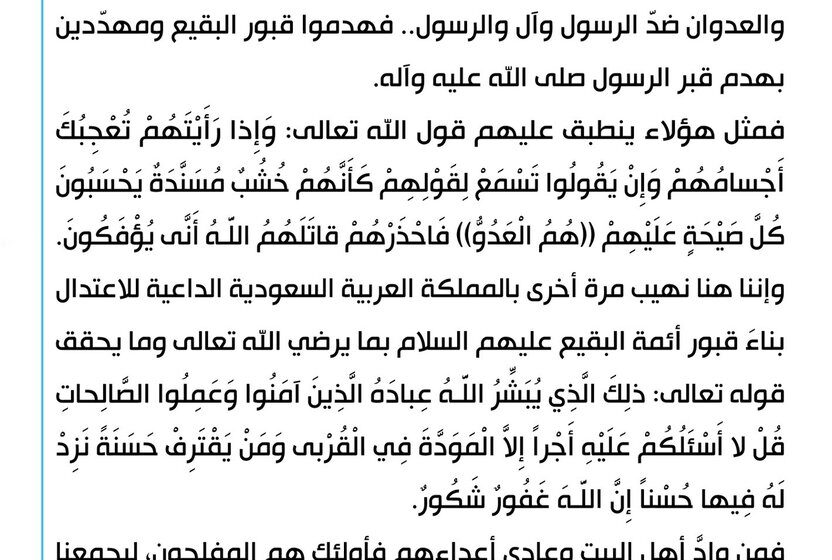
The most impactful story was a statement from influential cleric Muqtada al-Sadr, who called upon the Kingdom of Saudi Arabia to rebuild the graves of the Imams in the Al-Baqi’ cemetery in Medina. The post from Muqtada Sayyid Muhammad Al-Sadr (Post Impact: 100%) consisted of an image of the formal request. This call was amplified by other accounts, such as Shaho Al-Qaradaghi (Post Impact: 23%), who summarized the message, stating that al-Sadr urged Saudi Arabia to undertake the construction in a manner that “pleases God.” The appeal is a significant religious and political gesture directed at the Saudi leadership, touching upon a historically sensitive issue for Shia Muslims.
2. Outrage Over Torture and Death of Engineer Bashir Khalid
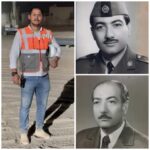
A wave of anger swept across Iraqi social media following the death of engineer Bashir Khalid Al-Hiti, who reportedly died after being severely tortured while in police custody in Baghdad. Multiple accounts shared photos and videos related to the incident, demanding justice. Othman Al-Mukhtar (Post Impact: 14%) stated that Bashir was arrested and then assaulted in his cell by individuals linked to a senior officer with whom he had a dispute, calling his story a “simple model of the terrifying reality of prisons in Iraq.” Similarly, Muna Sami (Post Impact: 14%) questioned how many similar stories have gone untold and warned that the “cycle of injustice will continue as long as accountability is absent.” Other users, including Hassan Basketball – HASSAN AL HAMMADI (Post Impact: 15%) and Mashaan al-Jubouri (Post Impact: 12%), labeled the incident as “state terrorism” and part of “systematic barbarism,” calling on the public not to let the case be forgotten.
3. Trump’s Statements on Syria, Turkey, and Iran Negotiations
Statements by former U.S. President Donald Trump on foreign policy generated significant discussion. ZaidBenjamin Zaid Benjamin (Post Impact: 25%) reported Trump’s claim that he congratulated Turkish President Recep Tayyip Erdoğan on “taking Syria.” Another post from ZaidBenjamin Zaid Benjamin (Post Impact: 7%) elaborated that Trump told Erdoğan, “No, it was you who took Syria.” Furthermore, multiple accounts, including Hayder (Post Impact: 4%) and Salim Al-Jumaili (Post Impact: 5%), highlighted Trump’s announcement of direct U.S.-Iran negotiations scheduled for the coming Saturday, a claim that contradicts statements from Iranian officials. Political analyst Liqaa Maki (Post Impact: 5%) provided a detailed analysis of Trump’s remarks, noting he “ruled out war as an immediate option.”
4. Reports of Iraqi Armed Factions Agreeing to Disarm
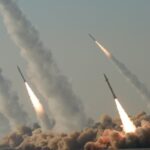
A Reuters report claiming that several major Iraqi armed factions are willing to disarm to avoid a potential confrontation with the U.S. was widely circulated and debated. Rusly Al-Maliki (Post Impact: 4%) and Hayder (Post Impact: 4%) shared details from the report, which named groups like Kata’ib Hezbollah, Al-Nujaba, and Kata’ib Sayyid al-Shuhada. The report quotes a Kata’ib Hezbollah leader as saying, “Trump is ready to take the war with us to worse levels, and we know that, and we want to avoid such a bad scenario.” Other accounts like Omar Abdul Sattar Mahmoud (Post Impact: 6%) also covered the story, noting the factions’ fear of American strikes as the primary motivation.
5. Critique of Iranian Influence and “Unity of Fronts” Slogan
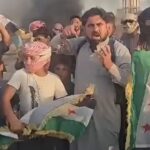
Commentators took aim at Iranian regional strategy and its associated slogans. Faiq Al-Sheikh Ali/My Word to History (Post Impact: 17%) mocked Iranian Supreme Leader Ali Khamenei’s concept of “Unity of Fronts,” suggesting it crumbled “with the first slap to the resistance.” In a similar vein, Mashaan al-Jubouri (Post Impact: 8%) argued that what has been broken in Syria was not a “Shia crescent” but an “Iranian Safavid crescent.” He described it as a “Persian expansionist political project” that exploited Shi’ism for geopolitical gain, asserting that both Sunni and nationalist Shia Arabs are pleased with its defeat.
6. Bahaa al-Araji Criticized for Pressuring Electricity Minister
A video circulated showing politician Bahaa al-Araji in a phone call with the Minister of Electricity, in which he appears to be pressuring the minister to increase the electricity supply for the Kadhimiya area, hinting at protests if his demand is not met. The call sparked criticism from users who viewed it as an abuse of power. Rusly Al-Maliki (Post Impact: 10%) questioned al-Araji’s authority to speak to a minister in this manner, describing his style as that of “thuggery, not statecraft.” Hiba Al-Nnayib (Post Impact: 2%) called al-Araji a “corrupt sectarian” and accused him of staging a “political play” to portray himself as a hero ahead of elections.
7. Mashaan al-Jubouri Responds to Accusations by Bahaa al-Araji
Politician Mashaan al-Jubouri issued a lengthy rebuttal to accusations made by Bahaa al-Araji, who had allegedly described al-Jubouri and other Sunni figures as “Jolani’s men.” In his post, Mashaan al-Jubouri (Post Impact: 7%) denied any contact with the new leadership in Syria and condemned al-Araji’s rhetoric as “saturated with sectarian complexes.” He also criticized al-Araji’s accusation that Sunnis and Kurds were paying U.S. congressmen as “a form of sectarian mobilization” that threatens civil peace. Al-Jubouri concluded by questioning Prime Minister Mohammed Shia’ Al Sudani about the “inflammatory rhetoric” coming from individuals presented as his advisors.
8. Calls for Security Sector Reform Amid Official Statements
The death of Bashir Khalid prompted broader calls for reform and accountability within the Ministry of Interior, with many users criticizing the official responses to the incident. Ayad Al-Anbar (Post Impact: 5%) described official statements from the ministry as “provocative,” arguing that the issue is not about whether security personnel are angels, but about “holding accountable anyone who violates human rights.” Hussein Arab (Post Impact: 6%) directly addressed the Prime Minister, demanding that the Undersecretary of the Ministry of Interior for Police Affairs be excluded from the high-level investigation committee to “reveal the honest truth.”
9. Discussion on Geopolitical Shifts in Syria
The changing political landscape in Syria was a topic of analysis, particularly concerning the perceived decline of Iranian influence. Mashaan al-Jubouri (Post Impact: 8%) celebrated the “collapse of the ‘Shia crescent’ project” and the end of “submission to the Wilayat al-Faqih.” Analyst Sufian Al-Samarrai (Post Impact: 5%) offered a forward-looking analysis, predicting a new geopolitical arrangement in Syria that would “cut the road for the Popular Mobilization Forces and the Revolutionary Guard” and besiege Hezbollah in Lebanon. This discussion framed the events in Syria as a major strategic setback for Iran and its allies in the region.
10. Qais Khazali Condemns Killing of Bashir Khalid
Qais Khazali, the leader of Asa’ib Ahl al-Haq, issued a formal statement on the death of engineer Bashir Khalid, which he shared as an image in a post from his official account, Qais Al-Khazali (Post Impact: 28%). In the statement, Khazali condemned the “heinous crime” and called for a serious, transparent, and swift investigation to hold the perpetrators accountable, regardless of their position. He explicitly stated that the Minister of Interior bears direct responsibility for ensuring the safety of detainees and warned against the grave danger of turning security institutions into tools for settling personal scores, which he argued threatens the entire state and civil peace.