2025-03-01: Political and Religious Leaders’ Ramadan Messages

Based on an analysis of 510 X / Twitter posts on March 1, 2025, Miqrab AI identified several key narratives dominating online conversations in Iraq. The beginning of Ramadan prompted messages from prominent political and religious figures, urging unity and devotion while also touching on regional conflicts. Domestically, significant controversy arose from former Prime Minister Nouri al-Maliki’s statements regarding a potential division of Iraq and control of oil resources, drawing sharp criticism. Another major topic was the official ban of the historical TV series “Muawiya” to prevent sectarian tensions. Internationally, Iraqi commentators extensively analyzed the tense meeting between U.S. President Trump and Ukrainian President Zelenskyy, while regional security issues, including developments in Syria involving Abu Muhammad al-Jolani and a ceasefire announcement by the PKK, also garnered significant attention.
Table Of Content
- 1. Political and Religious Leaders’ Ramadan Messages
- 2. Controversy Over Nouri al-Maliki’s Remarks
- 3. Iraq Bans “Muawiya” TV Series to Avert Sectarianism
- 4. Iraqi Commentary on Tense Trump-Zelenskyy Meeting
- 5. Historical Reflection on Faw Liberation from Iran
- 6. Developments in Syria: Jolani, Druze, and Israeli Threats
- 7. Yazidi Peshmerga Fighters Defect to Iraqi Federal Forces
- 8. PKK Announces Ceasefire, Stirring Regional Analysis
- 9. Faiq al-Sheikh Ali’s Commentary Sparks Praise and Condemnation
- 10. Hoshyar Zebari’s Interview Statements Cause a Stir
Today’s Top 10 X (Twitter) Trends in Iraq:
1. Political and Religious Leaders’ Ramadan Messages
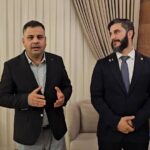
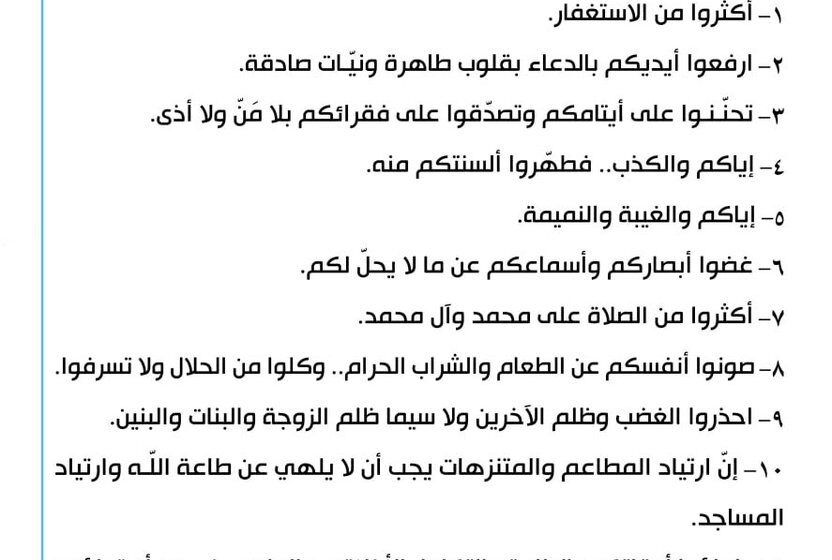
The start of Ramadan was the most dominant theme, marked by messages from major political and religious figures. Muqtada al-Sadr (Post Impact: 100%) issued a handwritten statement urging his followers to focus on worship and piety, warning them to refrain from involving his name in worldly or political affairs and to be wary of the “people of the cause.” Similarly, Qais al-Khazali (Post Impact: 54%) extended greetings for the holy month, highlighting the ongoing struggles of people in Palestine, Lebanon, and Yemen. Other prominent figures like Salih Muhammad al-Iraqi (Post Impact: 35%) and former Prime Minister Mustafa Al-Kadhimi (Post Impact: 4%) also shared greetings, calling for unity and reform. Faiq al-Sheikh Ali (Post Impact: 17%) used the occasion to call on Iraqis to follow the astronomical calculations of the late astronomer Al-Ojairi to avoid sectarian disagreements over the timing of holy months.
2. Controversy Over Nouri al-Maliki’s Remarks
Statements made by former Prime Minister Nouri al-Maliki in a television interview with Dijla TV sparked significant controversy and criticism. Mashaan al-Jabouri (Post Impact: 16%) expressed surprise at al-Maliki’s comment that “the Shiites will have the oil if Iraq is divided,” suggesting this rhetoric reduces Iraqi unity to economic interests and opens the door for serious discussion about the future of the country. The reaction from Rusly Al-Maliki (Post Impact: 10%) was much harsher, describing al-Maliki as a “cancer on the country” and a “mentally ill” individual whose talk of division is dangerous and ignorant of Iraq’s indivisible nature. Meanwhile, Raad Hashim (Post Impact: 11%) highlighted another moment from the interview where al-Maliki called an event at Najaf airport a “breach of sovereignty” before admitting he wasn’t sure if an arrest had actually occurred.
3. Iraq Bans “Muawiya” TV Series to Avert Sectarianism
The Iraqi Communications and Media Commission (CMC) officially announced a ban on the broadcast of the historical television series “Muawiya” on MBC Iraq. The CMC (Post Impact: 8%) stated the decision was made to prevent the stirring of sectarian debates that could threaten “social peace,” especially during Ramadan. The news was widely shared by accounts like Haydar (Post Impact: 18%) and Hassan Al-kaabi (Post Impact: 3%). The move prompted commentary from various users. Rusly Al-Maliki (Post Impact: 9%) questioned the CMC’s jurisdiction, pointing out the show airs on non-Iraqi Arab platforms. Omar Abdul Sattar Mahmoud (Post Impact: 6%) sarcastically commented that Iraq banned the “Muawiya” series because it “needs a series about Al-Hajjaj.”
4. Iraqi Commentary on Tense Trump-Zelenskyy Meeting
The highly publicized and tense meeting between U.S. President Donald Trump and Ukrainian President Volodymyr Zelenskyy was a major topic of discussion among Iraqi commentators. Muna Sami (Post Impact: 21%) observed that Zelenskyy was more composed, while Trump was loud, interrupted impolitely, and “touched the Ukrainian president’s arm 3 times without taste or diplomacy.” Mashaan al-Jabouri (Post Impact: 3%) viewed the “humiliating” treatment of Zelenskyy as a lesson for Iraq, warning, “Do not build your calculations on the ‘guarantees’ of allies… when the balance of interests changes, you will find yourselves alone.” Other analysts like Ziad al-Hashimi (Post Impact: 5%) blamed Trump’s Vice President for escalating tensions and ruining a potential deal on Ukrainian minerals due to his “ignorance and weak negotiating ability.”
5. Historical Reflection on Faw Liberation from Iran
The anniversary of the Iran-Iraq War and historical commentary were prominent, largely driven by one user. Rusly Al-Maliki (Post Impact: 39%) reacted to a statement by former Iranian President Rouhani admitting that IRGC leaders exaggerated Iran’s military strength. Al-Maliki connected this to the 1988 liberation of the Faw Peninsula, recounting how Iraqi forces recaptured the heavily fortified area in just 36 hours after Iranian leaders claimed it would take a “nuclear bomb” for Iraq to succeed. In a separate post, Rusly Al-Maliki (Post Impact: 8%) marked the first day of Ramadan as the anniversary of the “Ramadan Mubarak” battle, celebrating the day the Iraqi army “liberated the land of Faw from the filth of Khomeini and his minions.”
6. Developments in Syria: Jolani, Druze, and Israeli Threats
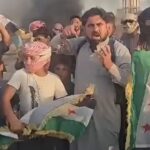
The complex situation in Syria received considerable attention, focusing on Abu Muhammad al-Jolani and Israeli involvement. Sheikh Mohammed al-Basri (Post Impact: 15%) labeled Jolani a “#Zionist_terrorist” and accused him of dividing Syria through a regional agreement. This sentiment was echoed by others, as Haydar (Post Impact: 10%) shared a video of Jolani vowing to liberate Jerusalem, noting that social media users were sarcastically asking him to first liberate southern Syria from Israeli occupation. A new dimension emerged as Haydar (Post Impact: 7%) and Zaid Benjamin (Post Impact: 3%) reported on Israeli Prime Minister Benjamin Netanyahu’s threat to strike Jolani’s forces if they harmed the Druze community in Jaramana, near Damascus, a development reportedly met with celebrations by Druze citizens.
7. Yazidi Peshmerga Fighters Defect to Iraqi Federal Forces
A significant internal development was the reported defection of approximately 1,200 Yazidi Peshmerga fighters from the Kurdistan Region’s forces to join the Iraqi federal military. Accounts like Haydar (Post Impact: 7%) and Abu Darndash al-Askari (Post Impact: 5%) shared videos of the defectors in Baghdad’s Tahrir Square. A detailed statement from the group, posted by Haydar (Post Impact: 5%), outlined their grievances. They accused Kurdish parties of using them as an “electoral card” while marginalizing them, hindering reconstruction in their areas, and imposing non-Yazidi candidates. The defectors demanded that the Iraqi government absorb them into the Ministry of Defense, rebuild their areas, and end the Kurdistan Democratic Party’s dominance in Sinjar.
8. PKK Announces Ceasefire, Stirring Regional Analysis
The Kurdistan Workers’ Party (PKK) announced a ceasefire, reportedly in response to a call from its imprisoned leader, Abdullah Öcalan. This news was covered by multiple accounts, including Zaid Benjamin (Post Impact: 2%) and Omar Abdul Sattar Mahmoud (Post Impact: 2%). The announcement prompted immediate political analysis. Faiq al-Sheikh Ali (Post Impact: 11%) interpreted the development as a strategic loss for Iran, arguing that Tehran uses the PKK against Turkey and its influence is now diminished. Haydar (Post Impact: 3%) suggested that the Iraqi government should now push for the withdrawal of Turkish troops from its territory, as their stated reason for being there—the PKK threat—is now diminished.
9. Faiq al-Sheikh Ali’s Commentary Sparks Praise and Condemnation
Politician and commentator Faiq al-Sheikh Ali was a central figure in online discussions, generating both strong support and harsh criticism. Mahdi Majeed (Post Impact: 5%) praised his recent podcast appearance, encouraging people to listen to his analysis of Arab-Israeli relations and the October 7th attacks. However, his commentary provoked furious responses from other accounts. Manasat Al-Iraq (Post Impact: 6%) launched a scathing attack, accusing him of being an Iranian agent and insulting the late Saddam Hussein. Similarly, Hanan Abdullatif (Post Impact: 6%) accused him of “trying to make a history for himself by attacking the leaders of Iraq,” comparing him to historical figures who betrayed the Abbasid Caliphate.
10. Hoshyar Zebari’s Interview Statements Cause a Stir
An interview with Kurdish politician Hoshyar Zebari drew attention and criticism for his assertive remarks. Two separate accounts highlighted excerpts from the interview. Both Raad Hashim (Post Impact: 5%) and Omar Abdul Sattar Mahmoud (Post Impact: 3%) posted clips of the “heated dialogue” where Zebari made several bold claims. Among them were statements such as “We will not give up Baghdad,” asserting that the Kurdish lobby “is stronger than the Shiite lobby,” and warning that a “difficult situation is coming after Ramadan.” These comments were presented as controversial and indicative of future political tensions.