2025-02-04: Federal Court Suspends Amnesty Law, Sparking Political Crisis

Based on an analysis of 630 X / Twitter posts by Miqrab AI on February 4, 2025, the primary narratives circulating in Iraq revolve around a major domestic political crisis, escalating regional tensions, and ongoing concerns about corruption and governance. The most dominant story is the fierce political backlash following the Federal Supreme Court’s decision to suspend the controversial General Amnesty Law, with former Speaker Mohammed Al-Halbousi calling for mass protests against what his camp describes as a politically motivated judicial overreach, while his opponents celebrate the move and credit the influence of former Prime Minister Nouri al-Maliki. Simultaneously, there is significant discussion about an impending shift in US regional policy, with multiple accounts reporting on alleged US-Israeli plans to target Iran’s nuclear program and expectations that Donald Trump will reimpose a “maximum pressure” campaign against Tehran. These international developments are discussed alongside regional diplomatic shifts, particularly Syrian leader Ahmed Al-Sharaa’s visit to Turkey, and domestic issues including specific allegations of corruption against high-level officials.
Table Of Content
- 1. Federal Court Suspends Amnesty Law, Sparking Political Crisis
- 2. US & Israel Reportedly Planning Action Against Iran’s Nuclear Program
- 3. Corruption Allegations Target Nouri al-Maliki and Anbar Governor
- 4. Syrian Leader Ahmed Al-Sharaa’s Diplomatic Visit to Turkey
- 5. Anticipation of Trump’s “Maximum Pressure” Policy on Iran
- 6. Nouri al-Maliki Hailed by Supporters for His Political Strength
- 7. Heated and Divisive Rhetoric Intensifies Online
- 8. Internal Shia Rifts Emerge Over Court’s Amnesty Law Decision
- 9. Debate Over Shia Governance in Iraq
- 10. Security Forces Release Coordinated Messages of Strength
Today’s Top 10 X (Twitter) Trends in Iraq:
1. Federal Court Suspends Amnesty Law, Sparking Political Crisis
The most prominent story involves the Federal Supreme Court’s issuance of an injunction to suspend the implementation of the recently passed General Amnesty Law, along with laws on personal status and property. The decision has triggered a sharp political divide. Former Speaker Mohammed Al-Halbousi (Post Impact: 100%) fiercely condemned the ruling, labeling the court “unconstitutional” and its order “unjust.” He stated the law was intended to “do justice to the innocent and oppressed” and called for “massive demonstrations that shake the pillars of injustice.” This sentiment was echoed by MP Haybat Al-Halbousi (Post Impact: 11%), who called the decision a political overreach. Conversely, supporters of the court’s decision celebrated it as a victory. Hussam Alhaj (Post Impact: 33%) described the ruling as “wise and constitutional,” attributing the outcome to Nouri al-Maliki, who had publicly predicted it. Similarly, Wasan Al-Shaikhli (Post Impact: 26%) credited Maliki, stating, “Abu Israa is the difficult number. He said it and he did it, the general amnesty law will not pass.” Many accounts, including that of Mashaan Al-Jabouri (Post Impact: 18%), framed the issue in sectarian terms, arguing the suspension confirms that “the deep state is still above all authorities” and that the law is being used to “target one component over another.”
2. US & Israel Reportedly Planning Action Against Iran’s Nuclear Program
A significant international narrative centers on discussions between the United States and Israel regarding potential military action against Iran. Faiq Al-Sheikh Ali/Kalimati Lil Tarikh (Post Impact: 54%) claims that Israeli Prime Minister Netanyahu’s visit to the US was extended at America’s request for “detailed and precise discussion about destroying the Iranian nuclear program.” He states the debate is over whether the US will participate directly in the strikes or merely supply Israel with heavy munitions to carry out the mission. David Yassin (Post Impact: 17%) adds to this by reporting that US President Donald Trump approved the transfer of 4,700 MK-84 “bunker buster” bombs to Israel, a delivery previously withheld by the Biden administration, and that the priority of the Trump-Netanyahu meeting is Iran’s nuclear reactors. Ghaith Al-Tamimi GHAITH ALTAMIMI (Post Impact: 12%) notes that a bipartisan US resolution has been introduced calling for the dismantling of Iran’s IRGC and nuclear program, which he had predicted weeks ago.
3. Corruption Allegations Target Nouri al-Maliki and Anbar Governor
Allegations of high-level corruption are circulating widely, targeting prominent political figures from different factions. Othman Al-Mokhtar (Post Impact: 50%) claims that an inventory has revealed over 200 properties in Damascus and its countryside—including apartments, villas, and hotels—purchased under the names of Iraqi politicians. He specifically names former Prime Minister Nouri al-Maliki, stating his name appeared as “Nouri Kamel Abu Al-Muhasin Al-Maliki” on deeds for properties registered to him and his family, suggesting this explains his “hysteria” in a recent speech about Syria. In a separate instance of alleged corruption, Hussam Alhaj (Post Impact: 22%) reported that the Governor of Anbar purchased Tahoe and Toyota vehicles for 7.5 billion Iraqi dinars, a sum he argues could have funded a 200-bed hospital or at least four primary schools. Issam Hussein (Post Impact: 7%) echoed this, using the Anbar governor’s case as an example to argue that corruption is not confined to one sect and that activists should focus on corruption within all communities.
4. Syrian Leader Ahmed Al-Sharaa’s Diplomatic Visit to Turkey
Significant attention was given to the visit of Syrian leader Ahmed Al-Sharaa (formerly Abu Mohammad al-Jolani) to Ankara for a meeting with Turkish President Recep Tayyip Erdoğan. Omar Abdul Sattar Mahmoud (Post Impact: 28%) shared a video of the meeting. Rusly Al-Maliki 🇮🇶 رسلي المالكي (Post Impact: 10%) summarized the key points of the discussion, stating that Turkey and Syria will cooperate against “terrorist organizations” like ISIS and the SDF, work to lift Western sanctions on Syria, and that Turkey will aid in reconstruction and security stabilization. He also mentioned that Turkey would pressure Israel to withdraw from Syrian territory. Adding another layer, Hussam Alhaj (Post Impact: 27%) claimed that an envoy from Iraq’s Coordination Framework traveled to Damascus and met with Al-Jolani on the same day as Nouri al-Maliki’s recent speech, hinting at parallel diplomatic engagements.
5. Anticipation of Trump’s “Maximum Pressure” Policy on Iran
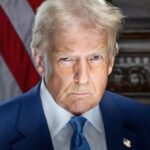
There is widespread discussion about the expected return of a “maximum pressure” campaign against Iran under US President Donald Trump. Citing Reuters, Omar Abdul Sattar Mahmoud (Post Impact: 6%) reported that Trump is expected to sign an executive order to re-apply maximum economic pressure, aiming to deny Iran access to a nuclear weapon and counter its regional influence. Dr. Zaid Abdulwahab Al-Adhami (Post Impact: 8%) quoted Trump directly: “We want to bring Iran’s oil exports to zero.” Salim Al-Jomaili (Post Impact: 13%) provided historical context, comparing the US spending trillions in Iraq only to see it fall under Iranian and Chinese influence to its experience with the Panama Canal, questioning whether Trump would allow such a “strategic error” to stand without correction.
6. Nouri al-Maliki Hailed by Supporters for His Political Strength
In the wake of the Federal Court’s decision to suspend the amnesty law, a move widely attributed to his influence, supporters of former Prime Minister Nouri al-Maliki took to social media to praise his political acumen and strength. Wasan Al-Shaikhli (Post Impact: 26%) described him as “the difficult number” who delivered on his promise that the law would not pass. Najm Al Qassab (Post Impact: 14%) lauded him as being “strong” within the political process and “strongest” outside of it, suggesting that while others gain strength from foreign powers, Maliki draws strength from domestic politics to face external challenges. Similarly, Abbas Al-Ardawi (Post Impact: 9%) praised Maliki’s directness, stating he “announces what he thinks and warns of what he fears for the country without embellishment or diplomacy,” and that the results of his actions are always for the public good.
7. Heated and Divisive Rhetoric Intensifies Online
The political tensions surrounding the amnesty law and regional shifts have fueled intensely sectarian and divisive rhetoric online. Shaho Al-Qaradaghi (Post Impact: 23%) highlighted a post from pro-militia blogger Ahmed Al-Thawaq which stated, “The most despicable people I have seen on social media are the Ba’athist Sunni Iraqi, the Syrian Sunni Umayyad, and the Saudi Wahhabi.” Al-Qaradaghi questioned the source of this “hatred,” linking it to the fall of the Assad regime. In a similar vein, Sufian Al-Samarrai (Post Impact: 17%) posted derogatory comments about figures he perceives as proxies for foreign powers, referring to them as “donkeys of the foreigners” who lack dignity and honor. This hostile discourse reflects the deep polarization of the current political environment.
8. Internal Shia Rifts Emerge Over Court’s Amnesty Law Decision
The Federal Court’s decision on the amnesty law appears to have created fractures not just between political blocs but also within the Shia camp. Shaho Al-Qaradaghi (Post Impact: 8%) reported that militia-affiliated social media platforms have launched attacks against Shibl Al-Zaidi, a prominent Shia figure, after he criticized the court’s ruling. According to the post, these platforms are now accusing Al-Zaidi of running extortion gangs, seizing Christian homes, and illicitly trading on the name of the “resistance.” This sudden shift in narrative was also noted by Hassan Basket Ball -HASSAN AL HAMMADI (Post Impact: 7%), who commented, “It’s on between the Kataeb and Shibl al-Zaidi🔥 😂”. This suggests that dissent on the court’s decision is not being tolerated within certain hardline circles, leading to public infighting.
9. Debate Over Shia Governance in Iraq
A debate has emerged online regarding the performance of Shia political parties in governing Iraq since 2003. Omar Al-Janabi (Post Impact: 16%) shared a video clip of politician Iyad al-Samarrai stating, “The Shiites have failed in ruling Iraq, and they should thank God for the existence of oil.” This critical perspective prompted a response from Mashaan Al-Jabouri (Post Impact: 12%), who argued against the notion that Shiites are unfit for governance. Al-Jabouri countered by citing historical examples of powerful Shia states, such as the Buyid, Fatimid, and Safavid dynasties, to demonstrate their historical capability to rule. He framed the discussion as a matter of power and administration rather than sectarian identity.
10. Security Forces Release Coordinated Messages of Strength
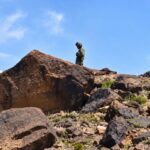
Official social media accounts for Iraq’s elite security forces published coordinated messages, seemingly intended to project an image of strength and unity amidst the political turmoil. Both the official account of the Counter-Terrorism Service (Post Impact: 11%) and the account for its Special Operations (Post Impact: 8%) unit shared identical posts. The posts featured a striking image of a soldier with the simple caption “Hero 🇮🇶” and the hashtag #WeWillRemainVictorious. The simultaneous and identical nature of these posts from two key security bodies indicates a deliberate and unified public relations campaign aimed at reassuring the public of their readiness and continued presence.