2025-01-31: Allegations of US Funding for Al-Qaeda

Based on an analysis of 386 X / Twitter posts by Miqrab AI on January 31, 2025, the primary narratives in Iraq centered on historical grievances and contemporary regional shifts. The most significant story, generating the highest engagement, involved an allegation that the Obama administration armed and funded Al-Qaeda to destabilize Middle Eastern governments, including Iraq. Another major topic was the Iraqi government’s announcement of the arrest of the man accused of killing Ayatollah Mohammad Baqir al-Sdr in 1980, which prompted both praise and skepticism regarding the timing and details of the capture. The recent change in leadership in Syria fueled intense sectarian debates, with many Iraqi commentators expressing deep suspicion of the new government and its potential impact on Iraq. Domestic conversations also touched on calls to criminalize sectarianism, social commentary on cultural values, and reports of local tribal violence.
Table Of Content
- 1. Allegations of US Funding for Al-Qaeda
- 2. Arrest of Ayatollah al-Sadr’s Alleged Killer
- 3. Sectarian Debates Over Syria’s New Government
- 4. Commentary on Cultural Identity and Conservatism
- 5. Call for Ba’athists to Abandon Their Party
- 6. Religious Ruling Permits Visiting Shrines
- 7. Political Call to Criminalize Sectarianism
- 8. Fierce Tribal Clashes Reported in Maysan
- 9. Rumors of an Iraq-Israel Prisoner Exchange
- 10. KRG President Discusses Regional Stability with Macron
Today’s Top 10 X (Twitter) Trends in Iraq:
1. Allegations of US Funding for Al-Qaeda
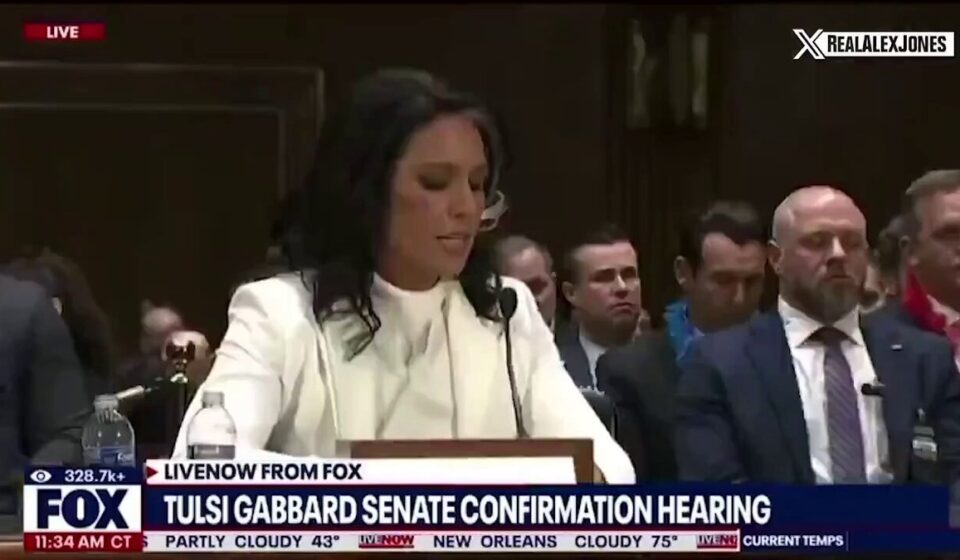
The highest-impact story revolved around claims shared by Mazin Al-Eshaiker (Post Impact: 100%) that Tulsi Gabbard, Donald Trump’s reported nominee for Director of National Intelligence, exposed former President Obama for supporting and financing Al-Qaeda. The post alleges that through a project named “Timber Sycamore,” the Obama administration spent $500 million to arm and train the extremist group with the goal of changing regimes in the Middle East, specifically naming Iraq, Egypt, Libya, and Syria, and replacing them with extremist Islamic parties. This narrative was echoed by Raad Hashim (Post Impact: 6%), who shared a statement from Trump’s CIA nominee asserting that “The American invasion of Iraq was based on lies and led to the strengthening of Iran.”
2. Arrest of Ayatollah al-Sadr’s Alleged Killer
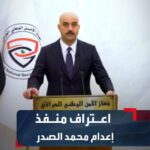
A major event dominating discussions was the arrest of the alleged killer of Grand Ayatollah Mohammad Baqir al-Sadr and his sister, Bint al-Huda, who were executed in 1980. Prime Minister Mohamed Shia’ Al Sudani (Post Impact: 28%) announced the capture, framing it as a victory for justice and a confirmation that criminals will not escape punishment. Accounts like Haydar (Post Impact: 18%) identified the arrested individual as Sa’dun Sabri, a former security official, who was captured in Erbil. While many, including Dr. Hussein Al-Safi (Post Impact: 19%), celebrated the news, others like Rusly Al-Maliki (Post Impact: 21%) expressed skepticism, questioning the narrative of a treacherous killing by noting that al-Sadr was officially executed by the state. Dr. Hamid Abdullah (Post Impact: 39%) promoted an upcoming interview with the accused, titled “I killed him treacherously!!”
3. Sectarian Debates Over Syria’s New Government
The new leadership in Syria under Ahmed al-Sharaa (formerly known as al-Jolani) has become a major point of contention, fueling sectarian narratives. Dr. Hussein Al-Safi (Post Impact: 41%) heavily criticized the new Syrian government as a “dictatorship” that excludes minorities, contrasting it with what he described as inclusive Shia-led governments in Iraq. This sentiment was amplified by Haydar (Post Impact: 23%), who posted a list of perceived double standards in Iraqi discourse, arguing that actions like de-Ba’athification are seen as a “crime” in Iraq but a “necessity” in Syria due to sectarian bias. Meanwhile, Dr. Ihssan Al-Shmary (Post Impact: 22%) noted that top Iraqi leaders have not congratulated al-Sharaa, suggesting official distrust from Baghdad.
4. Commentary on Cultural Identity and Conservatism
A viral post by Wasan Al-Shaykhli (Post Impact: 33%) sparked a conversation about cultural and religious identity. The post praised a woman named “Umm Abbas” for not removing her “Zaynabi abaya” while in London, contrasting her actions with those of others who, the post claims, “took off their honor as soon as they traveled to Erbil.” This statement was interpreted as a commentary on maintaining conservative Islamic values and modesty regardless of location, while also carrying an implicit criticism of perceived laxity in cultural norms within parts of Iraq, such as the Kurdistan Region.
5. Call for Ba’athists to Abandon Their Party
Prominent political figure Faig Al-Sheikh Ali (Post Impact: 26%) issued a direct message to what he termed the “honorable” members of the Ba’ath party in Iraq, Syria, and other nations. He declared that “the Ba’ath Party is over forever” and urged them to forget it. He advised them to work on establishing new national parties in which they do not take leadership roles, and to focus solely on their own countries’ affairs rather than pan-Arab ambitions. This post represents a significant call for former Ba’athists to accept the new political reality and reintegrate under a different framework.
6. Religious Ruling Permits Visiting Shrines
A post by Abu Drandash Al-Askari (Post Impact: 26%) highlighted a religious ruling from Egypt’s Dar al-Ifta, a prominent Sunni Islamic institution. According to the post, the institution declared that visiting mosques containing shrines is permissible and that visiting the shrines of “Ahl al-Bayt” (the family of Prophet Muhammad) is one of the greatest acts of worship. The account framed this fatwa as a “new blow to Wahhabi beliefs,” emphasizing the ongoing theological differences between various Islamic schools of thought on this practice, which is central to Shia Islam.
7. Political Call to Criminalize Sectarianism
Politician Ezzat Alshabandar (Post Impact: 18%) issued a call to all political forces and the Iraqi Council of Representatives to establish a clear definition of “sectarianism” and its manifestations. He urged them to move towards legislating a law that would criminalize it, whether directed for or against any sect. Alshabandar asserted that sectarianism is no less dangerous to Iraq and its society than the projects of “normalization [with Israel] and homosexuality,” positioning it as a fundamental threat to the nation’s stability and social fabric.
8. Fierce Tribal Clashes Reported in Maysan
A security incident was reported by Imad Bajalan (Post Impact: 17%), who described “fierce battles” in the Maysan province between the tribe of the governor and the tribe of the head of the provincial council, Mustafa Du’ayr. According to the post, the conflict erupted because someone jokingly called a person named Hassan by the name “Hans.” The report highlights the fragility of local security and the prevalence of tribal disputes that can quickly escalate into armed violence over seemingly minor provocations, reflecting a persistent challenge to state authority in some regions of Iraq.
9. Rumors of an Iraq-Israel Prisoner Exchange
Unconfirmed news of a potential prisoner swap between Iraq and Israel circulated on the platform, shared by accounts such as Haydar (Post Impact: 15%). The rumored deal would involve the release of Israeli researcher Elizabeth Tsurkov, who is being held in Iraq, in exchange for eight Hezbollah prisoners held by Israel. Among the Hezbollah members mentioned is Imad Amhaz, a commander in the group’s naval force who was reportedly abducted by Israel in Lebanon several months ago. This potential development, while unverified, points to complex back-channel negotiations involving multiple regional actors.
10. KRG President Discusses Regional Stability with Macron
Kurdistan Region President Nechirvan Barzani (Post Impact: 13%) reported having a “productive phone call” with French President Emmanuel Macron. The discussion focused on the importance of Iraq’s stability, strengthening the dialogue between Erbil and Baghdad, and regional developments, including the situation in Syria. President Barzani expressed his gratitude for France’s ongoing support and the strong partnership between the Kurdistan Region and France, highlighting the KRG’s active role in international diplomacy concerning regional security.