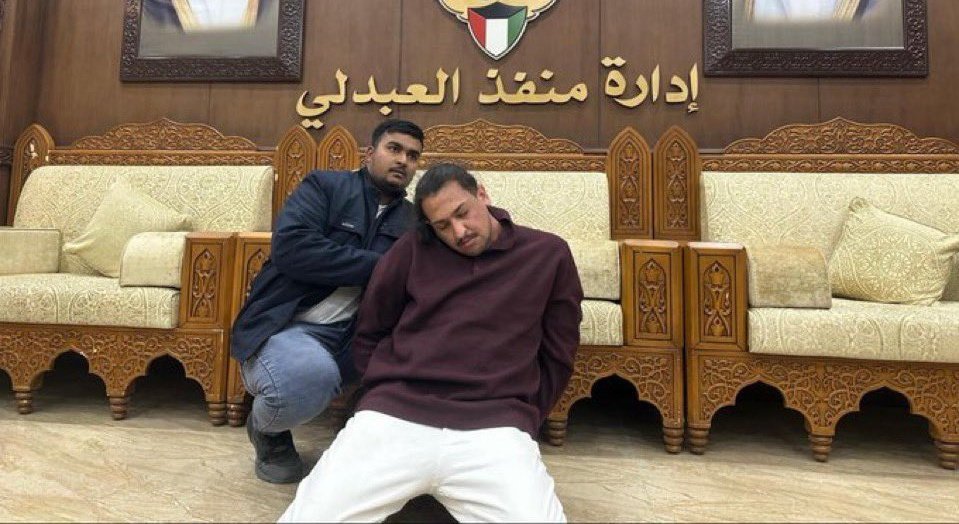
2025-01-01: Outrage Over Handover of Kuwaiti Dissident Salman Al-Khaldi

Based on an analysis of 539 X / Twitter posts on January 1, 2025, Miqrab AI identified several key narratives driving conversation in Iraq. The most prominent story involved widespread outrage over the Iraqi government’s decision to hand over Kuwaiti dissident Salman Al-Khaldi to Kuwait, with many users criticizing what they perceive as a double standard in foreign policy. This coincided with significant backlash against a Saudi actor for comments deemed offensive to Iraq. Other major themes included a polarized debate on Iranian influence, with some accounts commemorating pro-Iranian figures while others sharply criticized them, and reports on Saudi Arabia’s execution of six Iranian nationals. Domestically, the arrest of a journalist on the prime minister’s complaint sparked a debate on freedom of expression, while regional events, particularly the evolving situation in Syria under HTS rule and a terror attack in the United States, were also widely discussed and linked to Iraq’s security.
Table Of Content
- 1. Outrage Over Handover of Kuwaiti Dissident Salman Al-Khaldi
- 2. Backlash Against Saudi Actor Nasser Al-Qasbi
- 3. Polarized Debate on Iranian Influence and Figures
- 4. Saudi Arabia Executes Six Iranian Nationals
- 5. Concerns Over HTS Rule and Al-Jolani in Syria
- 6. Arrest of Journalist Ali Al-Khayal Sparks Debate
- 7. Ghaith Al-Tamimi Appeals for Release of His Son
- 8. Iraqi and Kurdish Accounts Cover U.S. Terror Attack
- 9. Khamenei’s Syria Warning Seen as Threat to Iraq
- 10. Criticism of Nouri al-Maliki’s Former Government
Today’s Top 10 X (Twitter) Trends in Iraq:
1. Outrage Over Handover of Kuwaiti Dissident Salman Al-Khaldi
A significant number of high-engagement posts expressed anger and condemnation towards Prime Minister Mohammed Shia’ Al Sudani’s government for arresting and extraditing Kuwaiti dissident Salman Al-Khaldi. Haidar (Post Impact: 100%) strongly criticized the government as “submissive,” contrasting the swift handover of Al-Khaldi with Iraq’s perceived inaction against Kuwaiti media personality Fajer Al-Saeed and a Saudi artist who made negative comments about Iraq. Multiple posts from Haidar (Post Impact: 32%) implicated Basra’s governor, Asaad Al-Eidani, in the handover, quoting a Kuwaiti Interior Ministry statement thanking him for his cooperation. Dr. Ahmed Al-Abbasi (Post Impact: 12%) questioned the legal basis for the extradition, noting Al-Khaldi’s citizenship had been revoked by Kuwait. Hassan Al-Kaabi | H𝕒𝕤𝕤𝕒n A𝕝𝕜𝕒𝕒𝕓i (Post Impact: 10%) condemned the act as “a serious violation of international laws and a betrayal of human rights.”
2. Backlash Against Saudi Actor Nasser Al-Qasbi
A wave of criticism was directed at Saudi actor Nasser Al-Qasbi following remarks he allegedly made that were hostile towards Iraq. A highly viral post by Wasan Al-Shaikhli (Post Impact: 97%) shared a video critical of the actor. Abu Azrael – Abu Azrael (Post Impact: 72%) lamented the silence of Iraqi artists, questioning when they would defend their nation against such insults. Similarly, Al-Shabandar (Post Impact: 25%) described the actor as “vulgar” and accused him of trying to curry favor with the Saudi leadership. Najeh Abbas Al-Mizan (Post Impact: 25%) sarcastically defended Al-Qasbi’s Arab authenticity as being free of “any Persian impurities,” reflecting the sectarian and nationalistic undertones of the online debate.
3. Polarized Debate on Iranian Influence and Figures
Discussions surrounding Iran’s influence in Iraq were highly polarized. Mujtahid Iraq (Post Impact: 92%) shared a video criticizing what it described as degrading rituals of prostration to images of Khamenei, Soleimani, and Al-Muhandis, claiming these events are “funded from Iraq’s treasury.” In contrast, Dr. Hussein Al-Safi (Post Impact: 91%) called on followers to share photos of Abu Mahdi Al-Muhandis to see who loves the “#Leaders_of_Victory.” Adding to the anti-Iran sentiment, Bahaa khaleel Bahaa khaleel (Post Impact: 18%) posted a video allegedly showing young Iranians in Kerman burning pictures of Qasem Soleimani. Meanwhile, pro-Iran accounts like Hassan Al-Kaabi | H𝕒𝕤𝕤𝕒n A𝕝𝕜𝕒𝕒𝕓i (Post Impact: 43%) praised the Islamic Republic of Iran as a “state by which God has honored Islam and humiliated disbelief and its people.”
4. Saudi Arabia Executes Six Iranian Nationals
News of Saudi Arabia executing six Iranian nationals for drug smuggling was a prominent topic. Shaho Al-Qaradaghi (Post Impact: 88%) was one of the first to report the news, citing the official Saudi Press Agency. The development was followed by reports of Iran’s diplomatic response. Both Omar Abdul Sattar Mahmoud (Post Impact: 38%) and Shaho Al-Qaradaghi (Post Impact: 8%) relayed information from the Iranian Foreign Ministry, stating that it had summoned the Saudi ambassador in Tehran to convey its “strong protest” against the executions, claiming they were contrary to judicial cooperation procedures between the two countries.
5. Concerns Over HTS Rule and Al-Jolani in Syria
The new reality in Syria under the control of Hay’at Tahrir al-Sham (HTS) and its leader, Ahmed al-Sharaa (Abu Mohammad al-Jolani), generated significant discussion. Sufian Al-Samarrai (Post Impact: 60%) claimed that Al-Jolani, through a “Turkish-Qatari-Iranian trinity,” is threatening to destabilize China using Uyghur and Uzbek groups based in Syria. Hameed Al-Shaker (Post Impact: 15%) shared a clip where the Turkish Foreign Minister allegedly confirmed Al-Jolani works for American and Turkish intelligence. Meanwhile, Haidar (Post Impact: 26%) detailed curriculum changes in Syrian schools under HTS, including the removal of national history subjects and the replacement of moderate religious interpretations with extremist ones, such as defining “those who have evoked [God’s] anger” as “Jews and Christians.”
6. Arrest of Journalist Ali Al-Khayal Sparks Debate
The arrest of journalist Ali Al-Khayal prompted a debate on freedom of speech and the government’s tolerance for criticism. Haidar (Post Impact: 17%) and Yasser Eljuboori – ياسر الجبوري (Post Impact: 21%) reported that the arrest followed a lawsuit filed by Prime Minister Al-Sudani after Al-Khayal called in his program to “drag the prime minister by his tie.” The incident drew divided reactions. Dr. Qusay Shafiq (Post Impact: 19%) and Ghaith Al-Tamimi GHAITH ALTAMIMI (Post Impact: 13%) condemned the arrest, with the latter calling for his freedom. However, Bahaa khaleel Bahaa khaleel (Post Impact: 7%) argued that while he supports constructive criticism, Al-Khayal’s statement was an unacceptable transgression.
7. Ghaith Al-Tamimi Appeals for Release of His Son
Political analyst Ghaith Al-Tamimi used his platform to issue urgent appeals regarding the detention of his son, Muqtada Ghaith Al-Tamimi. In a direct address, Ghaith Al-Tamimi GHAITH ALTAMIMI (Post Impact: 50%) held Prime Minister Mohammed Shia’ Al Sudani, in his capacity as Commander-in-Chief of the Armed Forces, responsible for what he termed the “abduction of our children outside legal frameworks.” He also appealed to the head of the Supreme Judicial Council to look into their grievance. In another post, Ghaith Al-Tamimi GHAITH ALTAMIMI (Post Impact: 32%) described his son as a strong, talented writer and a loyal friend, stating that he “deserves the freedom and dignified life he works so hard for.”
8. Iraqi and Kurdish Accounts Cover U.S. Terror Attack
A terrorist attack in New Orleans, USA, was widely covered by Iraqi and Kurdish social media accounts, which linked the event to broader regional dynamics. Steven Nabil (Post Impact: 18%) reported that the attacker’s name was Shams al-Din Jabbar and that he carried an ISIS flag on his vehicle. Essam Hussein (Post Impact: 13%) commented that after the takeover by armed groups in Syria, the “fever of terrorism” would spread globally, predicting an increase in such attacks. Kurdish leaders, including KRG Prime Minister Masrour Barzani (Post Impact: 12%) and President Nechirvan Barzani (Post Impact: 10%), issued statements condemning the attack and expressing solidarity with the American people.
9. Khamenei’s Syria Warning Seen as Threat to Iraq
A speech by Iran’s Supreme Leader, Ali Khamenei, was interpreted by several analysts as a veiled threat to Iraq concerning the status of pro-Iranian armed factions. Dr. Haidar Al-Barzanji (Post Impact: 16%) shared a quote from the leader stating, “If some countries make a big mistake and remove the factors of stability and strength, which are the faithful youth, from the scene; they will become like Syria.” Shaho Al-Qaradaghi (Post Impact: 9%) directly questioned if this was a threat to Iraq regarding the necessity of not touching the factions’ weapons. Analyst Ahmad Abdulsada (Post Impact: 8%) contextualized the speech as part of a “narcissistic rage” within the “Axis of Resistance” following the loss of Syria, predicting a strong response.
10. Criticism of Nouri al-Maliki’s Former Government
Former Prime Minister Nouri al-Maliki’s tenure came under renewed scrutiny. Othman Al-Mukhtar (Post Impact: 40%) shared a past video of politician Ezzat Al-Shabandar admitting that during Maliki’s government, he could “swear that among every 200 people who were arrested… there were no less than 190 of them innocent.” Al-Mukhtar added that prisons are now filled with tens of thousands of innocent people. Separately, Hiba Al-Naib HIBA Alnnayib (Post Impact: 14%) blamed the security leadership under Maliki’s government for the fall of western provinces to ISIS, questioning whether this “scandal” would be included in school curricula or covered up with “fake heroics.”