2026-02-06: Intense Focus on US-Iran Nuclear Talks in Muscat

Based on an analysis of 494 X / Twitter posts conducted by Miqrab AI, the key themes and narratives trending in Iraq on February 6, 2026, centered on tense regional geopolitics and domestic security concerns. The most dominant topic was the indirect negotiations between the United States and Iran in Muscat, with commentary split between cautious optimism for de-escalation and deep skepticism about the talks’ viability, alongside reports of concurrent US military buildups. Another major story was the widespread condemnation of a terrorist attack on a Shia mosque in Pakistan, which resonated strongly with Iraqi users and prompted discussions on sectarian violence. Domestically, conversations focused on internal political rivalries, the failures of government economic planning, upcoming merchant strikes, and renewed concerns over terrorist activities in Anbar province, with some commentators linking the latter to recent political shifts in Syria.
Table Of Content
- 1. Intense Focus on US-Iran Nuclear Talks in Muscat
- 2. Condemnation of Terrorist Attack on Shia Mosque in Pakistan
- 3. US Military Buildup in the Arabian Sea
- 4. Renewed Terrorist Activity in Anbar Province
- 5. Iraqi Journalists’ Syndicate Elections Attract Political Attention
- 6. Government Criticized for Graduate Surplus and Poor Planning
- 7. Al-Halbousi Praised for Outmaneuvering Political Rivals
- 8. Merchants Plan General Strike Over Customs Policies
- 9. Warning Against Upcoming “Anti-Shia” Ramadan TV Series
- 10. Debate on Terrorist Ideology in Syria and Iraq
Today’s Top 10 X (Twitter) Trends in Iraq:
1. Intense Focus on US-Iran Nuclear Talks in Muscat
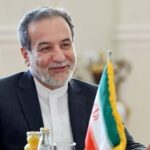
The indirect negotiations between the United States and Iran in Muscat, Oman, were the most discussed topic, drawing a wide range of reactions. Pro-Iranian accounts like Najah Mohammed Ali (Post Impact: 15%) outlined Iran’s “red lines,” which include the right to enrich uranium and the complete lifting of sanctions, presenting the talks as Iran negotiating from a position of strength. Conversely, accounts critical of Iran, such as Sufian Al-Samarrai (Post Impact: 9%), claimed the talks failed and the Iranian negotiator left abruptly. News-aggregator accounts provided a more cautious perspective; Rusly Al-Maliki (Post Impact: 13%) cited a US State Department official telling Al-Hurra that the talks were merely a “test of intentions” and not designed to reach a final agreement. Political figures like Hoshyar Zebari (Post Impact: 7%) viewed the meeting positively as a step to reduce military escalation but noted that the true challenges lie in the technical details. The general sentiment remained divided between hope for diplomacy and the expectation of continued conflict.
2. Condemnation of Terrorist Attack on Shia Mosque in Pakistan
Iraqi social media users widely shared news and expressed condemnation over a deadly suicide bombing at the “Khadija Al-Kubra” Husseiniya, a Shia mosque, in Islamabad, Pakistan. Posts detailed the heavy casualties and shared images from the aftermath. Haydar (Post Impact: 20%) reported that “sadness hangs over the Shias of Pakistan” following the attack, which killed over 40 worshippers and injured nearly 200. Similarly, Wasan Al-Sheikhli (Post Impact: 8%) shared a video of the victims’ families, noting their cries of “Labbayka Ya Hussein.” Political and religious figures also weighed in, with Ammar Al-Hakim (Post Impact: 6%) extending his condolences, denouncing the attack, and calling for international efforts to “dry up the sources of terrorism.” Ahmad Abdulsada (Post Impact: 6%) contextualized the event as part of a long history of “Shia oppression in Pakistan” originating from what he described as Saudi-backed Wahhabism.
3. US Military Buildup in the Arabian Sea
Concurrent with the diplomatic talks in Muscat, several accounts highlighted the significant US military buildup in the region, particularly the movement of the USS Abraham Lincoln aircraft carrier strike group into the Arabian Sea. Steven Nabil (Post Impact: 8%) posted photos released by the US Central Command showing the carrier group at sea under air cover. This military posturing was interpreted as a show of force intended to pressure Iran during the negotiations. Dr. Zaid Abdulwahab Al-Adhami (Post Impact: 5%) and Ali Farhan (Post Impact: 5%) also shared news of the “unprecedented” US military mobilization near Iran’s coast, suggesting that while diplomacy was underway, the potential for military conflict remained high.
4. Renewed Terrorist Activity in Anbar Province
Concerns over a resurgence of terrorism in Iraq were voiced, focusing on recent incidents in Anbar province. Ahmad Abdulsada (Post Impact: 10%) reported that two Iraqi Sunni terrorists blew themselves up in Al-Qaim when security forces tried to arrest them, shortly after another was caught with an explosive belt in Ramadi. He questioned if it was a coincidence that these “sleeper cells” were awakening after terrorist organizations took control in Syria, suggesting that “Jolani’s Syria” has become an “operations room” for terrorism in Iraq. Haydar (Post Impact: 5%) also reported on the incident in Al-Qaim, noting that a terrorist detonated himself after being surrounded, resulting in two injuries among security forces.
5. Iraqi Journalists’ Syndicate Elections Attract Political Attention
The elections for the Iraqi Journalists’ Syndicate gained attention, particularly due to the presence of former Prime Minister Mustafa Al-Kadhimi. Mustafa Al-Kadhimi (Post Impact: 7%) posted about his participation, emphasizing that democracy is protected by elections and freedom of opinion is defended by a syndicate that represents the people. In a contrasting post, Dr. Qusay Shafiq (Post Impact: 10%) noted that while he was a “fierce opponent” of Kadhimi’s government, Kadhimi still came to vote for him, whereas the current Prime Minister Al-Sudani has allegedly filed 41 complaints against him for his opinions. After the results, Ammar Al-Hakim (Post Impact: 4%) congratulated the winners, expressing hope that their term would lead to a qualitative leap in journalistic performance.
6. Government Criticized for Graduate Surplus and Poor Planning
The Iraqi government and its ministries faced sharp criticism over a lack of economic planning, highlighted by the massive surplus of graduates in specific fields. Rusly Al-Maliki (Post Impact: 14%) posted a video of a dentistry college graduation, using it as an example of systemic failure. He argued that with over 150 universities, Iraq is producing tens of thousands of dentists with no job prospects, as the market is already oversaturated. He blamed successive governments and the Ministries of Planning, Higher Education, and Health for this “failure of administration and poor planning,” questioning how they were allowed to run a country the size of Iraq.
7. Al-Halbousi Praised for Outmaneuvering Political Rivals
Internal Iraqi political dynamics were a key topic, with some users praising former Parliament Speaker Mohammed Al-Halbousi for his political maneuvering against the Shiite Coordination Framework. Mustafa Al-Dulaimi (Post Impact: 9%) claimed that Al-Halbousi has “disciplined the Framework” by showing them their “true size.” He argued that Al-Halbousi secured the support he needed, got his preferred candidate for the parliament speakership, and then effectively challenged his opponents to act. The post suggests that those Al-Halbousi “bought” are now silent, while armed factions are unable to challenge him due to American oversight.
8. Merchants Plan General Strike Over Customs Policies
Discussions emerged about a planned general strike by Iraqi merchants set to begin on February 8. Rusly Al-Maliki (Post Impact: 8%) reported that the strike is a protest against the pile-up of import containers at Basra’s ports, which traders blame on high customs tariffs and slow clearance procedures. He warned that this action could lead to a rise in prices if the shutdown continues for an extended period. Echoing this, Amer Ibrahim (Post Impact: 4%) questioned whether the traders’ strike could be similar to the bazaar strike in Tehran, which helped ignite widespread protests in Iran.
9. Warning Against Upcoming “Anti-Shia” Ramadan TV Series
A warning was circulated about an upcoming Ramadan television series titled “Hamdiya,” scheduled to air on the Saudi-owned channel MBC Iraq. Sabereen News (Post Impact: 8%) issued a “notice to the public and Shia families,” claiming the series is based on a story by a “Ba’athist Saddam supporter” and contains a “clear inflammatory narrative.” The account alleges the show’s plot connects moral corruption to the Shia community, insults religious symbols, glorifies the Ba’athist era, and dangerously implies that ISIS emerged from a Shia environment. The post frames the production as an attempt to “sow sedition and distort collective memory under the guise of drama.”
10. Debate on Terrorist Ideology in Syria and Iraq
The influence of political changes in Syria on Iraqi security prompted debate and concern among users. Essam Hussein (Post Impact: 10%) argued that since the “terrorist Al-Julani” allowed the Ba’ath party of Saddam to open offices in Syria after a visit from Raghad Saddam Hussein, the Iraqi government should reciprocate by opening offices for the Syrian Ba’ath Party in Baghdad and inviting Bashar al-Assad for a visit. In a separate post, Ahmad Abdulsada (Post Impact: 10%) directly linked the resurgence of terrorist cells in Anbar to the new “Jolani-led” government in Syria, framing it as a direct threat to Iraq’s stability.