2026-02-14: Nechirvan Barzani’s High-Profile Diplomatic Meetings

Based on an analysis of 399 X / Twitter posts, Miqrab AI has determined that the key narratives trending in Iraq on February 14, 2026, center on high-level diplomatic engagements by the Kurdistan Region’s leadership, escalating US-Iran tensions, and intense domestic political maneuvering regarding the formation of the next Iraqi government. The most prominent theme involves Kurdistan Region President Nechirvan Barzani’s meetings with US and European officials, highlighting a focus on strategic partnerships and regional stability. Simultaneously, discussions are dominated by the prospect of a US-Iran conflict, with accounts sharing updates on military deployments and political rhetoric from both sides. Internally, the potential candidacy of Nouri al-Maliki for Prime Minister is a major point of contention, with significant debate over his attempts to gain US approval and the deep divisions this has caused within the Shiite Coordination Framework.
Table Of Content
- 1. Nechirvan Barzani’s High-Profile Diplomatic Meetings
- 2. Rising US-Iran Tensions and Military Posturing
- 3. Nouri al-Maliki’s Contentious Bid for Prime Minister
- 4. US Influence Over Iraq’s New Government Formation
- 5. Praise for Khamenei’s Refusal to Meet President Trump
- 6. Iraqi Military Showcases Modernization and New Drones
- 7. Controversy Surrounding Iraq’s Ambassador in Saudi Arabia
- 8. Reports of Renewed US-Iran Nuclear Negotiations
- 9. Concerns Over ‘Electronic Armies’ and Misinformation
- 10. Debate on Sunni Political Leadership and Alliances
Today’s Top 10 X (Twitter) Trends in Iraq:
1. Nechirvan Barzani’s High-Profile Diplomatic Meetings
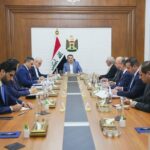
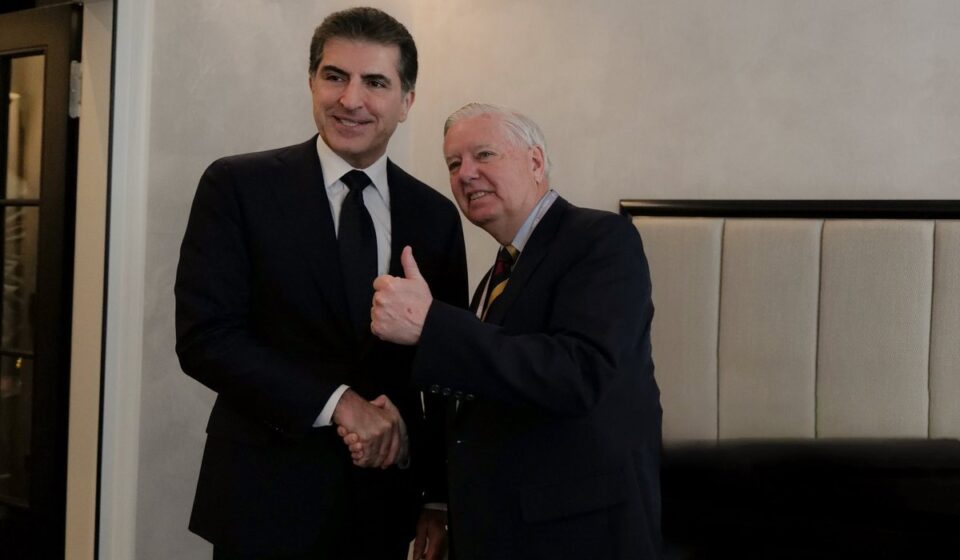
The official account of Kurdistan Region President Nechirvan Barzani (Post Impact: 100%) was the most engaged page, documenting a series of high-level diplomatic meetings. The President shared details of his meeting with a US congressional delegation led by Senator Lindsay Graham, expressing gratitude for the US Congress’s role in supporting regional peace. In other posts, Nechirvan Barzani (Post Impact: 50%) highlighted a discussion with Senator Marco Rubio, thanking him for continued US support and underscoring the strategic partnership between the US, Iraq, and the Kurdistan Region. The account also covered meetings with European Commission President Ursula von der Leyen (Post Impact: 27%) and Dutch Prime Minister Dick Schoof (Post Impact: 24%), focusing on strengthening bilateral cooperation and exchanging views on regional developments.
2. Rising US-Iran Tensions and Military Posturing
Multiple accounts focused on the escalating tensions between the United States and Iran, fueling speculation of an imminent conflict. Aayad Al Twfan (Post Impact: 22%) reported on the arrival of the USS Gerald R. Ford aircraft carrier, noting it would bring the total number of US-led F-35 and F-18 fighter jets in the Middle East to 72 and 97, respectively. Mohamed Almaroof (Post Impact: 15%) interpreted the coordinated deployment of British and American carrier groups as a serious indicator that a military strike is being actively prepared. Meanwhile, Aayad Al Twfan (Post Impact: 9%) quoted President Trump as saying that regime change in Iran could be the “best thing” to happen. The sentiment was echoed by Dr. Zaid Abdulwahab Al-Adhami (Post Impact: 12%) and Raad Hashim (Post Impact: 6%), who both shared Senator Lindsay Graham’s statement that “the Iranian Supreme Leader must go.” Unconfirmed reports of explosions in Tehran were also shared by Dr. Zaid Abdulwahab Al-Adhami (Post Impact: 7%) and Raad Hashim (Post Impact: 8%).
3. Nouri al-Maliki’s Contentious Bid for Prime Minister
The political maneuvering of former Prime Minister Nouri al-Maliki was a central topic of discussion, with accounts offering starkly different perspectives on his potential return to power. Mashan al-Jabouri (Post Impact: 7%) and Salem Al-Jumaili (Post Impact: 7%) suggested that al-Maliki’s recent statements about disarming militias and creating a single army are a strategic move to convince the Trump administration that he is the only one capable of restoring state authority. Conversely, Nazar Haidar (Post Impact: 22%) claimed that the US has outright rejected al-Maliki and that he has “become a thing of the past.” Other accounts pointed to deep divisions within the Shiite Coordination Framework over his candidacy. Ali Farhan (Post Impact: 11%) reported that key figures like al-Abadi, al-Hakim, and al-Khazali would withdraw from the framework if al-Maliki insists on his candidacy. Meanwhile, Hayder (Post Impact: 12%) cited a State of Law Coalition member who claimed that the UAE, among other countries, has mediated with the US on al-Maliki’s behalf.
4. US Influence Over Iraq’s New Government Formation
The role of the United States in shaping Iraq’s next government was heavily debated. The most detailed account came from Nazar Haidar (Post Impact: 22%), who reported that the US Chargé d’Affaires in Baghdad informed Iraqi political leaders that any new prime minister must dismantle militias and end Iran’s influence. The report also claimed the US has rejected a list of nine potential candidates. This narrative of US conditions was reinforced by Ali Farhan (Post Impact: 11%), who noted that some Shiite leaders are willing to back an independent candidate who has American acceptance. In what appears to be a reaction to this perceived American interference, both Shaho Al-Qaradaghi (Post Impact: 8%) and Dr. Zaid Abdulwahab Al-Adhami (Post Impact: 5%) reported on a statement by the Iranian ambassador in Baghdad, who called for the formation of an Iraqi government free from foreign interventions, “especially American” ones.
5. Praise for Khamenei’s Refusal to Meet President Trump
A statement reportedly from the US Secretary of State suggesting President Trump’s willingness to meet with Iranian Supreme Leader Ali Khamenei prompted a wave of supportive posts for the Iranian leader. Hayder (Post Impact: 18%) shared the initial report, quoting the Secretary as saying, “I am fully confident that if Khamenei said he agreed to the meeting, President Trump would meet him tomorrow.” Following this, pro-Iranian accounts praised Khamenei’s refusal to engage. Amir Al-Mousawi (Post Impact: 15%) lauded Khamenei’s stance, celebrating that the “tyrant Trump” is begging for a meeting while Khamenei refuses. Similarly, Wasan Al-Shaikhli (Post Impact: 8%) portrayed Khamenei’s refusal as a lesson in Islamic pride, comparing his position to that of his ancestor Imam Hussein by stating, “One like me does not meet one like him.”
6. Iraqi Military Showcases Modernization and New Drones
There was a notable focus on the development and modernization of the Iraqi armed forces. Hayder (Post Impact: 24%) reported that the Iraqi Army announced a successful test launch of a missile from a Chinese-made CH-5 drone at the Ain al-Asad airbase, following the American withdrawal. In a separate post, Hayder (Post Impact: 8%) shared a statement from the spokesperson of the Iraqi Armed Forces, who affirmed that Iraq is building a professional military with a unified national doctrine and is moving toward self-sufficiency in military manufacturing and technology. Adding to this theme, Mujahed Al-Taie (Post Impact: 5%) shared a 2026 ranking from Global Firepower that placed the Iraqi army as the 6th strongest in the Middle East, behind Turkey, Israel, Iran, Egypt, and Saudi Arabia.
7. Controversy Surrounding Iraq’s Ambassador in Saudi Arabia
Iraq’s Ambassador to Saudi Arabia, Safia Al-Suhail, became the subject of a contentious online debate following the circulation of a video showing her seated while Iraqi military officers stood. Sheikh Falah Al-Quraishi (Post Impact: 3%) strongly criticized the ambassador, stating that a country that does not respect itself has Safia Al-Suhail as its ambassador and used a hashtag calling for her dismissal. Abu Drandish Al-Askari (Post Impact: 5%) described the scene as an insult to the military leadership. In contrast, Ghaith Al-Tamimi (Post Impact: 8%) defended Ambassador Al-Suhail, describing her as “a sheikha and a woman of principle” and labeling the criticism as “attempts by savages” to harm her reputation. He asserted that she represents Iraq in the best and most honorable way.
8. Reports of Renewed US-Iran Nuclear Negotiations
Amidst the heightened military tensions, several accounts pointed to ongoing diplomatic efforts, specifically indirect negotiations between the US and Iran. Mazen Al-Eshaiker (Post Impact: 6%) announced that the next round of indirect nuclear talks is scheduled for February 17 in Geneva, Switzerland, with Oman mediating. The post identified the heads of the US and Iranian delegations as Steve Witkoff and Abbas Araghchi, respectively. Najeh Abbas Al-Mizan (Post Impact: 17%) commented on these talks with a short, critical statement suggesting Iran’s subservience: “America to Iran: Obey and be silent in Muscat. Implement and do not discuss in Geneva.” Adding context, Hayder (Post Impact: 7%) quoted the Iranian President acknowledging that several leaders, including those from Egypt, Oman, Turkey, and Iraq, are working to find peaceful solutions to the disagreements.
9. Concerns Over ‘Electronic Armies’ and Misinformation
The damaging role of “electronic armies” and coordinated online campaigns in Iraqi politics was highlighted by several commentators. Ahmed Abdul Sada (Post Impact: 10%) criticized the bloggers of these electronic armies, describing them as mere “tools” who lack independent opinions and who “speak when directed, and fall silent when directed.” He argued that they are fighting battles that are not their own. Similarly, Othman Al-Mukhtar (Post Impact: 7%) identified Qais al-Khazali and Muthanna al-Samarrai as leaders of the most powerful electronic armies in Iraq. He accused them of using hundreds of social media pages and paid analysts to spread false information and attack opponents, while criticizing the judiciary for failing to act.
10. Debate on Sunni Political Leadership and Alliances
The nature of political alliances and representation within the Sunni community was a topic of critical discussion. Ghaith Al-Tamimi (Post Impact: 8%) questioned the alliances of Sunni politicians, specifically targeting MP Mustafa Ayash al-Kubaisi for his alleged shift from Khamis al-Khanjar to an alliance with Qais al-Khazali. Al-Tamimi rhetorically asked Speaker Mohammed al-Halbousi about the existence of “Sunnis of Khazali” in the same way he speaks of “Sunnis of Nouri al-Maliki.” In a broader commentary, Sheikh Thaer Al-Bayati (Post Impact: 6%) argued that the Sunni political class that emerged after 2003 was not the result of a national project but was shaped by Iranian will and regional interests. He predicted a coming phase that will not be a mere reshuffling but a “real correction of the path” and a “phase of accountability.”