2025-07-19: Outrage Over Deadly Fire in Kut and Governor’s Response

Based on an analysis of 462 Facebook posts by Miqrab AI on July 19, 2025, the dominant narrative in Iraq revolves around widespread public anger and calls for accountability following a deadly hypermarket fire in Kut, Wasit province. This tragic event has fueled intense criticism of local officials, particularly the governor, and sparked street protests. Other significant conversations include the widely reported death of Saudi Arabia’s “Sleeping Prince” after a two-decade coma, and close monitoring of political leader Muqtada al-Sadr’s recent activities and symbolic messages. Iraqis are also engaging with regional news, such as the conflict in Syria, while domestic concerns over failing public infrastructure, civilian safety, and crime remain prominent themes.
Table Of Content
- 1. Outrage Over Deadly Fire in Kut and Governor’s Response
- 2. Death of Saudi “Sleeping Prince” After 20-Year Coma
- 3. Muqtada al-Sadr’s Political and Religious Engagements
- 4. Remembering the Sacrifices of Iraq’s Liberation
- 5. Criticism of Poor Infrastructure and Public Safety
- 6. Clashes in Syria’s Suwayda Province Raise Concern in Iraq
- 7. Civilians Praised for Heroic Fire Rescues
- 8. Leaders Discuss Political Stability and Elections
- 9. Environmental Concerns: New Snake and Lingering Heat
- 10. Soldier’s Death in Anbar Prompts Investigation
Today’s Top 10 Facebook Trends in Iraq:
1. Outrage Over Deadly Fire in Kut and Governor’s Response
The tragic fire at a hypermarket in Kut, Wasit province, has ignited a firestorm of criticism and protests targeting local officials. A video shared by Haider al-Hamdani (Post Impact: 29%) went viral, showing Wasit Governor Muhammad Jamil al-Mayahi sitting and watching the blaze, which the page described as him being a “spectator ‘cross-legged’!” while women and children were screaming. In response to the tragedy, protesters took to the streets and headed towards the provincial council building, as shown by Baghdad (Post Impact: 6%). Governor al-Mayahi defended himself, stating the fire was arson and that he is being targeted in a political smear campaign, as reported by Hussam al-Haj (Post Impact: 4%). Meanwhile, pages like Yalla (Post Impact: 1%) and Al-Mirsad Press (Post Impact: 1%) covered the protests, with citizens demanding the immediate dismissal of the governor and police chief, calling for an open and public trial for those responsible.
2. Death of Saudi “Sleeping Prince” After 20-Year Coma
Iraqi Facebook pages widely covered the death of Saudi Prince Al-Waleed bin Khalid bin Talal, famously known as the “Sleeping Prince.” Set Ashwaq Um al-Qanouniya (Post Impact: 24%) announced his passing after being in a coma for over 20 years, noting that while people had hoped he would wake up, “God’s will is above all else.” Similarly, The Clean Brotherhood (Post Impact: 15%) reported the news, explaining that the prince had been in a coma since a tragic accident in 2005 and remained under special medical care throughout this period. The page Baghdad (Post Impact: 2%) also shared the story, highlighting the “painful traffic accident” during his military training that led to a severe brain injury and the two-decade-long coma that was followed by people around the world.
3. Muqtada al-Sadr’s Political and Religious Engagements
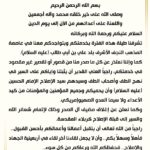
The activities of Sadrist leader Muqtada al-Sadr have been a focus of attention, with his office releasing several updates. The Private Office of His Eminence Sayyid Muqtada al-Sadr (Post Impact: 9%) announced that the Al-Sadr guest house in Hanana would begin receiving visitors from outside Iraq. In another post, the same page (Post Impact: 6%) stated that al-Sadr was reviewing the locations and numbers of Husseini mourning councils being held across Iraq. This activity was accompanied by a handwritten message from al-Sadr, which was shared by his office and supporters like Hakem al-Zamili (Post Impact: 3%), stating, “We elect the lamp of guidance and ride the ark of salvation.” This phrase is being interpreted by many as a signal regarding upcoming political participation.
4. Remembering the Sacrifices of Iraq’s Liberation
A highly impactful video post by creator Aziz Nasser (Post Impact: 100%) resonated deeply with Iraqi audiences, focusing on the immense sacrifices made during the country’s liberation struggles. The post, captioned simply “This is how the land was liberated 💔🇮🇶,” features emotional scenes that appear to depict the human cost of war, likely referencing the battles against ISIS. The video serves as a powerful reminder of the efforts and losses endured by Iraqi forces and civilians to reclaim their territory, evoking strong feelings of patriotism and remembrance across the platform.
5. Criticism of Poor Infrastructure and Public Safety
Iraqi social media users expressed frustration over failing public infrastructure and lax safety enforcement. The page Traffic Awareness (Post Impact: 16%) shared a video showing the “random parking of trucks” on the Dora Expressway, highlighting a common traffic hazard. In another example of infrastructure critique, journalist Haider al-Hamdani (Post Impact: 10%) posted a video of what he called “the strangest emergency ladder in the world,” questioning if it was an emergency exit or a “death game” and suggesting it offers “death packages” to users. These posts reflect a broader sentiment of public concern regarding everyday safety and the state of public works.
6. Clashes in Syria’s Suwayda Province Raise Concern in Iraq
Developments in the neighboring Syrian province of Suwayda are being closely watched by Iraqi pages, with reports of escalating conflict between local tribes and other factions. The Tactical Cell (Post Impact: 4%) reported that clashes were “at their most intense” and that tribes had begun to advance into Suwayda after agreements were not respected. The same page later added that tribal forces had taken control of the governorate building, leading to a “near-complete collapse” of opposing Druze forces. From a geopolitical perspective, politician Baqir Jabr al-Zubaidi (Post Impact: 3%) analyzed the events, suggesting they are part of an old Israeli project to create a “David Corridor” that would extend from the Golan Heights to the Iraqi border, warning that Iraq is the final obstacle to this plan.
7. Civilians Praised for Heroic Fire Rescues
Amid tragedies like the Kut fire, stories of civilian heroism have emerged, drawing widespread praise on social media. The page Abu al-Arif (Post Impact: 6%) shared the story of a father, “Abu Aqil,” and his son who used heavy machinery to rescue families trapped on the roof of a burning building. The page hailed their bravery, stating, “There are people without official status, but they do what entire agencies are incapable of.” In a similar vein, World Jokes through Iraqi Eyes (Post Impact: 2%) reported that the family of engineer Abbas Ali Hassouni al-Jilibawi, who also performed a heroic rescue, has refused to give any media interviews, stating their actions were “purely for the sake of God.”
8. Leaders Discuss Political Stability and Elections
High-level political meetings and statements regarding Iraq’s stability and future were shared across Facebook. Dr. Mahmoud al-Mashhadani (Post Impact: 4%), the Speaker of Parliament, announced his meeting with former President Dr. Barham Salih. Their discussions focused on the political and security landscape, as well as the upcoming elections, with both sides emphasizing the need to “ensure the integrity of the electoral process” and “unify the national front.” In separate statements, Prime Minister Mohammed Shia’ Al Sudani (Post Impact: 4%) affirmed Iraq’s commitment to avoiding regional conflicts, stating, “We work with wisdom and responsibility to avoid sliding into war and conflicts.”
9. Environmental Concerns: New Snake and Lingering Heat
Environmental and scientific topics captured public interest, focusing on unusual natural phenomena in Iraq. Abu al-Arif (Post Impact: 4%) reported that a group of Iraqi snake experts documented the entry of a new, highly venomous species, the “yellow-bellied sea snake” (Hydrophis platurus), into Iraq’s territorial waters in Basra. Experts believe its arrival is linked to climate change and unusual ocean currents. In a related climate discussion, Iraq Telescope (Post Impact: 9%) explained why temperatures remain high despite the sun’s changing position, stating that “the earth is still storing great heat” from earlier in the season. The page compared it to a runner’s body, which stays hot for a while even after stopping.
10. Soldier’s Death in Anbar Prompts Investigation
The death of a soldier and the injury of two others in an accident in Anbar province led to an official response from the Ministry of Defense. According to Latest Iraqi Events (Post Impact: 2%), the incident was caused by the collapse of a roof at an army barracks in Haditha. Following the news, both Maher Mohi:: Voice of the Homeland Protectors (Post Impact: 1%) and Support Iraqi Security Forces (Post Impact: 1%) reported that the Minister of Defense has ordered the formation of an investigative council to determine the circumstances of the deadly roof collapse.