2025-07-19: Sadrist Movement Hints at Participating in Elections

Based on Miqrab AI’s analysis of 639 X / Twitter posts trending in Iraq on July 19, 2025, the social media landscape was dominated by political and regional developments. The most significant narrative revolved around the Sadrist movement, with a highly influential post hinting at a return to electoral politics. Another major theme was the escalating conflict in As-Suwayda, Syria, with Iraqi commentators deeply divided, expressing support for either the Druze community or the opposing Arab tribes, and widely debating allegations of Israeli involvement. Internally, a strong online campaign emerged in support of religious cleric Sheikh Mustafa Al-Ansari, who was defended as a courageous pro-resistance voice. These discussions were interspersed with sharp criticism of prominent Iraqi political figures, analysis of regional geopolitical maneuvers, and reactions to the tragic mall fire in Kut.
Table Of Content
- 1. Sadrist Movement Hints at Participating in Elections
- 2. Divided Opinions on the Conflict in As-Suwayda, Syria
- 3. Online Campaign in Support of Sheikh Mustafa Al-Ansari
- 4. Sharp Criticism Directed at Prominent Political Figures
- 5. Analysis of Israel’s Role and Miscalculations in Syria
- 6. Accusations of Iranian and Israeli Disinformation Campaigns
- 7. Hospitality for Kurdish Football Fans Highlights Iraqi Unity
- 8. Defense of the Popular Mobilization Forces (PMF)
- 9. Anger and Calls for Accountability After Kut Mall Fire
- 10. Allegations Against Khamis Al-Khanjar Regarding Syrian Conflict
Today’s Top 10 X (Twitter) Trends in Iraq:
1. Sadrist Movement Hints at Participating in Elections
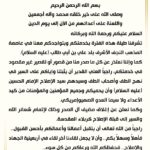
The most impactful story of the day originated from a post by the highly influential Sadrist-affiliated account, Wazir Al-Qaid – Salih Muhammad Al-Iraqi (Post Impact: 100%). While the post itself only contained a link, it was widely interpreted as a signal of the Sadrist movement’s potential return to the political arena. Other accounts amplified this interpretation, such as Hayder (Post Impact: 5%), who noted that Muqtada al-Sadr continues to hint at election participation by writing, “we will elect the guiding light and ride the ark of salvation.” Similarly, Safa Al-Asadi (Post Impact: 8%) shared an image with the same quote, framing it as a clear electoral slogan for the movement, indicating a significant potential shift in Iraq’s political landscape.
2. Divided Opinions on the Conflict in As-Suwayda, Syria
The violent clashes in As-Suwayda, Syria, between Druze communities and Bedouin tribes generated intense and polarized debate among Iraqi social media users. Some accounts, like Issam Hussein (Post Impact: 35%), sided with the Druze, using phrases like “Bani Ma’ruf shredded Bani Umayya” to describe the fighting. In contrast, Othman Al-Mukhtar (Post Impact: 41%) questioned why there was no condemnation for the “beheading of the Bedouins of Suwayda and the mutilation of their bodies.” The conflict was also framed through a geopolitical lens by accounts like Omar Abdul Sattar Mahmoud (Post Impact: 30%), who analyzed how Netanyahu’s policies have tensed the situation. Ahmad Abdul Sada (Post Impact: 13%) called on the Syrian Druze to replicate the security measures taken in Iraq’s Jurf al-Sakhar by expelling Bedouin tribes, whom he described as “ISIS incubators.”
3. Online Campaign in Support of Sheikh Mustafa Al-Ansari
A coordinated social media campaign emerged to defend Sheikh Mustafa Al-Ansari against what his supporters describe as a smear campaign. Ahmad Abdul Sada (Post Impact: 42%) led the defense, praising Al-Ansari as “brave, frank, honest, and ascetic” and a supporter of the Popular Mobilization Forces (PMF) and resistance factions. He claimed the attacks target all pro-PMF voices. This sentiment was echoed by Dr. Hayder Al-Barzanji (Post Impact: 26%), who hailed Al-Ansari for exposing corruption and frightening “merchants of religion.” Other accounts, including Wasan Al-Shaikhli (Post Impact: 28%) and Abu Mustafa Al-Khafaji (Post Impact: 15%), also posted messages of solidarity, sharing his photo and praising his character and courageous stances.
4. Sharp Criticism Directed at Prominent Political Figures
Prominent Iraqi politicians faced harsh criticism on social media. In a highly engaged post, Faig Al-Sheikh Ali (Post Impact: 81%) launched a scathing attack on two unnamed political figures, sharing their photo and describing them as “two filthy, despicable killers” who have brought murder and sedition, one in the name of the “Wali al-Faqih” and the other as the “mind of the sect.” In a separate context, Issam Hussein (Post Impact: 19%) accused politician Khamis al-Khanjar of attempting to drag Iraq into a sectarian war by alleging he has been in contact with Iraqi tribes to encourage them to join the fighting in Syria, calling for his arrest to prevent the country from sliding into civil war.
5. Analysis of Israel’s Role and Miscalculations in Syria
The role of Israel in the As-Suwayda conflict was a key topic of analysis, with commentators suggesting a strategic miscalculation. Liqaa Maki (Post Impact: 28%) argued that Israel made two major errors: first by bombing Damascus, which alienated the Syrian public, and second by underestimating the “tribal mobilization” that thwarted its alleged plans for separation in southern Syria. He suggests this has given the Syrian government a stronger negotiating position. Meanwhile, Mahdi Majeed (Post Impact: 14%), citing information from the Israeli Defense Forces, warned of an impending Israeli strike on Syrian forces and urged a diplomatic solution to prevent further bloodshed. David Yassin (Post Impact: 7%) provided a clandestine view, stating the “Mossad failed to penetrate Suwayda” due to a misreading of local cultural dynamics.
6. Accusations of Iranian and Israeli Disinformation Campaigns
Several users warned of disinformation campaigns aimed at stoking tensions related to the conflict in Syria. Hayder (Post Impact: 28%) posted a video of a Syrian man reassuring Druze civilians, presenting it as a counter-narrative to “smear campaigns run by Iranian and Israeli electronic flies.” His post aimed to show that Islam is a religion of peace, contrary to the divisive messaging. In a detailed thread, Dr. Hussein Al-Moayed (Post Impact: 9%) cautioned against what he termed “Safavid” social media pages that he claims deceptively promote sectarian Shiite views under the guise of being Sunni or non-sectarian in order to undermine Arab societies and praise the Iranian regime.
7. Hospitality for Kurdish Football Fans Highlights Iraqi Unity
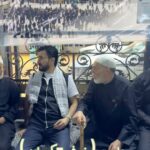
Amidst widespread political and regional tensions, a story of unity and hospitality gained traction. A post by Hayder (Post Impact: 23%) showed that Husseiniyas (congregation halls) and mourning processions in Baghdad opened their doors to host football fans from the Kurdish cities of Zakho and Duhok. The fans, who had traveled to Baghdad for a match, were provided with food and accommodation due to the difficult economic conditions in the Kurdistan Region. This act of cross-communal solidarity was highlighted as a positive example of national unity. It was complemented by posts like one from Dr. Ahmad Al-Abbasi (Post Impact: 20%), which shared a video with the message, “The love of Hussein unites us. Yes to unity. The enemy is lying in wait for us all.”
8. Defense of the Popular Mobilization Forces (PMF)
The Popular Mobilization Forces (PMF), or Hashd al-Shaabi, was a subject of supportive posts defending its existence and mission. Wasan Al-Shaikhli (Post Impact: 21%) posted an image of an extremist fighter with a warning about what could happen if the PMF were to be dissolved. She asked followers to imagine opening their doors to find such a person shouting “Takbir.” Similarly, Sheikh Falah Al-Quraishi (Post Impact: 16%) shared a picture of a political figure, implying that the hatred directed at him is because he “refused to merge the Hashd.” This narrative aligns with the broader support for figures like Sheikh Mustafa Al-Ansari, who is praised for his strong pro-PMF stance.
9. Anger and Calls for Accountability After Kut Mall Fire
The deadly fire at a shopping mall in Kut continued to fuel public anger and calls for accountability, with heavy criticism directed at local officials. Salam Al-Hussaini (Post Impact: 5%) shared a video allegedly showing the Governor of Wasit, Mohammed Al-Miyahi, being expelled from a victim’s funeral service. Hiba Al-Na’ib (Post Impact: 9%) criticized the governor for watching the blaze from a distance, comparing his detached posture to that of fashion influencers. MP Mustafa Jabbar Sanad (Post Impact: 9%) drew a parallel between the fire caused by a single safety violation and the thousands of violations he alleges Prime Minister Al-Sudani’s government has committed in managing state assets, warning of broader dangers to public funds and safety.
10. Allegations Against Khamis Al-Khanjar Regarding Syrian Conflict
Politician Khamis al-Khanjar was accused by some commentators of supporting extremist groups involved in the Syrian conflict. Ahmad Abdul Sada (Post Impact: 9%) claimed that Khanjar is supporting “ISIS of the tribes” in Syria just as he did in Iraq in 2014, describing his political project as dangerous due to its ties with Turkey and Qatar. Issam Hussein (Post Impact: 19%) reinforced these accusations by claiming that a “dog of al-Khanjar” based in Turkey confirmed that Khanjar is in contact with Iraqi tribes to send them to fight in Syria. He called for Khanjar’s arrest to prevent the spread of sectarian strife from Syria to Iraq.