2025-12-14: Federal Court Ratifies Elections Amid Controversy

Based on a Miqrab AI analysis of 435 X / Twitter posts trending in Iraq on December 14, 2025, online discourse was dominated by political criticism, regional security concerns, and sectarian debates. The Federal Court’s ratification of parliamentary election results sparked widespread controversy, with users questioning the judiciary’s integrity and highlighting alleged inconsistencies in its rulings. The anniversary of the shoe-throwing incident targeting former US President George W. Bush was widely commemorated, often to criticize former Prime Minister Nouri al-Maliki. Regional events, particularly a deadly attack on US forces in Syria and a terrorist attack in Sydney, Australia, fueled discussions about extremist ideologies and geopolitical alliances. Domestically, allegations of corruption surrounding a government data project, maneuvering by Sunni political blocs for the parliament speakership, and praise for religious figures and the Popular Mobilization Forces were also prominent themes.
Table Of Content
- 1. Federal Court Ratifies Elections Amid Controversy
- 2. Anniversary of Bush Shoe-Throwing Incident Trends
- 3. Sectarian Rhetoric and Calls for Coexistence Flare
- 4. Concerns Over ID Card Project and Data Security
- 5. Sydney Attack Sparks Debate on Extremism
- 6. Attack on US Forces in Syria Under Scrutiny
- 7. Religious Ceremonies for Women and Girls Held
- 8. Praise for Shi’a Religious and Political Figures
- 9. Sunni Blocs Maneuver for Parliament Speaker
- 10. US Calls on Iraq to Dismantle Armed Groups
Today’s Top 10 X (Twitter) Trends in Iraq:
1. Federal Court Ratifies Elections Amid Controversy
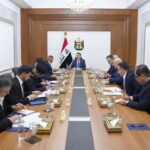
The Federal Supreme Court’s ratification of the recent parliamentary election results has become a major topic of debate and criticism online. Ezzat Alshabandar (Post Impact: 99%) expressed confusion over what he called a “paradox,” questioning how the court could approve the results while ignoring alleged crimes of “perjury” and “fraud” concerning the parliament speaker’s position. He called on the court to provide a legal or political justification to maintain its reputation and avoid accusations of politicization. Similarly, Dr. Yahya Al-Kubaisi (Post Impact: 12%) criticized the same judges who had previously validated Mohammed al-Halbousi’s parliamentary membership only to later terminate it, claiming this proved they were “mere false witnesses!!”. Meanwhile, Al-Alusi Mithal (Post Impact: 15%) specifically questioned the decision to annul the victory of Najm al-Jubouri, the candidate with the highest votes in Nineveh. The news of the ratification was also shared by accounts like Haydar (Post Impact: 8%) and Ali Farhan (Post Impact: 11%).
2. Anniversary of Bush Shoe-Throwing Incident Trends
Iraqi social media users widely commemorated the anniversary of the incident where journalist Muntadhar al-Zaidi threw his shoes at former US President George W. Bush during a 2008 press conference. Shaho Al-Qaradaghi (Post Impact: 71%) shared a video of the event, contrasting a smiling Bush with a “tense and anxious” former Prime Minister Nouri al-Maliki, who he claims “wants revenge.” Multiple accounts used the memory to criticize al-Maliki’s actions at the time. Ahmad Alwishah (Post Impact: 14%) recalled that al-Maliki, “the sponsor of resistors and founder of militias,” deflected the shoes to protect Bush. Likewise, Hiba Alnnayib (Post Impact: 8%) posted an archival video of al-Maliki blocking the shoe, suggesting it proved that claims of being part of the “resistance” were false, as they defended the “American occupier.”
3. Sectarian Rhetoric and Calls for Coexistence Flare
Sectarian tensions and religious debates featured prominently in online discussions. Mustafa Al-Dulaimi (Post Impact: 39%) posted a video allegedly showing individuals insulting the companions of the Prophet Muhammad, decrying it as a threat to “peaceful coexistence in the Iraq of partnership.” He called on Sunni lawyers to file lawsuits to deter “these dregs and those who stand behind them.” In a similar vein, Aayad Al Twfan (Post Impact: 34%) shared a screenshot of a cleric’s post, condemning it as sectarian and describing the author as a “Persian Magian” filled with “hatred, grudges, betrayal, and treachery.” In contrast, Issam Hussein (Post Impact: 20%) addressed Iraqi Sunnis, cautioning them against idealizing the Syrian government’s model, pointing to the severe economic crisis there and urging them to support the Syrian people financially rather than simply celebrating from behind screens.
4. Concerns Over ID Card Project and Data Security
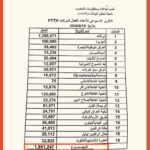
An alleged government plan to award a sensitive data project to a Syrian company sparked alarm among some users. Member of Parliament Mustafa Jabbar Sanad (Post Impact: 32%) claimed that the caretaker government intends to approve a project to merge the national ID card with the residency card and give it to a Syrian company owned by “one of al-Jolani’s friends.” He warned that the national database would be held by this company and that citizens would bear the cost, appealing to “public opinion makers” for help. This claim was echoed by Haydar (Post Impact: 17%) and Katab Fulan (Post Impact: 6%), who described it as a “very serious issue and a major disaster threatening Iraqi national security,” alleging that Prime Minister Al-Sudani would be giving Iraq’s database to the “terrorist Jolani.”
5. Sydney Attack Sparks Debate on Extremism
A deadly attack targeting Jewish civilians in Sydney, Australia, was a major topic of discussion, with many commentators linking it to extremist jihadist ideology. Sufian Al-Samarrai (Post Impact: 25%) heavily criticized the attacker, described as a refugee who “spat in the plate he ate from” after receiving support from Australia, framing the attack as the result of ideology promoted by “platforms in Qatar, Turkey, and Iran.” In another post, Al-Samarrai (Post Impact: 18%) highlighted Israeli Prime Minister Netanyahu’s praise for an Arab man who helped stop the attack and his criticism of Australia’s government for allegedly ignoring antisemitism. Haydar (Post Impact: 11%) noted that the attack could shift public opinion in Australia, where large pro-Palestinian demonstrations had been common, as it reinforced an Israeli narrative that “the problem of Muslims is with Jews as Jews!”
6. Attack on US Forces in Syria Under Scrutiny
An attack on US soldiers in Palmyra, Syria, allegedly carried out by an ISIS member who was also part of Ahmed al-Sharaa’s (al-Jolani) security forces, generated significant analysis. Ahmed Abdul Sada (Post Impact: 14%) called the incident “sarcastic and absurd,” as the attacker, a personal guard for a Jolani official, opened fire during a meeting between his boss and the Americans precisely to discuss fighting ISIS. He argued this shows that the US “bet on Daeshis to fight Daeshis is a form of absurdity, madness, and comedy.” Haydar (Post Impact: 20%) reported that al-Jolani’s Syrian Interior Ministry officially announced the attacker was a member of its security forces, suggesting that foreign fighters came to Syria for religious “jihad” and will not accept a Western-aligned system. Sufian Al-Samarrai (Post Impact: 13%) shared a caricature depicting al-Jolani as complicit, suggesting he ordered the attack as a form of blackmail after a delay in financial support.
7. Religious Ceremonies for Women and Girls Held
The birth of Fatima al-Zahra, daughter of the Prophet Muhammad, was marked by several religious events, particularly ceremonies for young girls reaching the age of religious obligation (taklif). Wasan Al-Shaykhli (Post Impact: 18%) reported that the Imam Hussein Holy Shrine held a ceremony for over 2,000 girls. She also shared photos from Baghdad showing girls as young as nine participating in such events, referred to as being “commissioned” into their religious duties. Separately, Amir Al-Mousawi (Post Impact: 26%) shared a video showing leaders and members of Iran’s Islamic Revolutionary Guard Corps (IRGC) celebrating the birth of Fatima al-Zahra and marking it as Mother’s Day in a remote area.
8. Praise for Shi’a Religious and Political Figures
Several highly engaged posts were dedicated to praising prominent Shi’a figures. In the highest-impact post analyzed, Wasan Al-Shaykhli (Post Impact: 100%) shared a video of Sunni cleric Sheikh Khalid al-Mulla becoming emotional and crying while remembering Hezbollah leader Hassan Nasrallah. Al-Shaykhli commented approvingly on the Sheikh’s reaction. In another post, Dr. Hussein Al-Safi (Post Impact: 18%) expressed deep devotion to Grand Ayatollah Ali al-Sistani, referring to him as the “vanquisher of enemies and humiliator of Daesh” and the “father of all Muslims.” He pledged his life and family to him and prayed for his protection.
9. Sunni Blocs Maneuver for Parliament Speaker
The process of selecting a new Speaker of Parliament was a key focus for accounts covering Sunni politics. Mustafa Al-Dulaimi (Post Impact: 14%) announced that the Sunni National Political Council had nominated two candidates: Muthanna al-Samarrai and Mohammed al-Halbousi. He outlined a power-sharing deal where the candidate who gains the acceptance of Shi’a and Kurdish blocs will become Speaker and receive one ministry, while the other will receive three ministries. Husham Ali (Post Impact: 9%) reported that the council was holding its third meeting at the home of Muthanna al-Samarrai. The overarching message from these accounts was one of unity, with Al-Dulaimi stating that they had “gathered to unite the ranks and deny the opportunity to those who wish them ill.”
10. US Calls on Iraq to Dismantle Armed Groups
Recent statements from the US government calling for the dismantling of armed groups in Iraq were highlighted as a significant development. Raad Hashim (Post Impact: 13%) shared remarks from US Chargé d’Affaires Joshua Harris, who stated, “It is time for Iraqi action, and urgently, to begin dismantling these foreign-backed militia groups.” Harris reportedly warned that including these groups in the next government would be “incompatible with a strong partnership between the United States and Iraq.” Analyzing the political climate, Sheikh Thaer Al-Bayati (Post Impact: 10%) interpreted recent escalatory rhetoric from the Shi’a Coordination Framework and its affiliated militias not as a sign of strength, but as a “veiled plea” for engagement, arguing they are in an “existential predicament” and competing to implement US conditions in exchange for survival.