2025-12-15: PM Al-Sudani’s Health and Political Future

Based on an analysis of 468 Facebook posts trending on December 15, 2025, Miqrab AI has identified several key narratives dominating online conversations in Iraq. The most prominent topics revolve around national politics, particularly the health and future political plans of Prime Minister Mohammed Shia Al-Sudani, alongside a major government-led austerity plan aimed at cutting public spending. Parallel to these political discussions, there is a significant social media reaction to instances of sectarian rhetoric, which has sparked widespread condemnation and calls for legal action, countered by numerous posts promoting national and religious unity. Other trending stories include a high-impact controversy over the company implementing the national ID card, human-interest stories highlighting the struggles of individuals, and ongoing political maneuvering related to the election of a new parliament speaker.
Table Of Content
- 1. PM Al-Sudani’s Health and Political Future
- 2. Government Announces Major Austerity Measures
- 3. Outrage Over Insults to Religious Figures
- 4. Controversy Surrounding National Card Company
- 5. Calls for National and Religious Unity
- 6. The Plight of a 53-Year-Old Laborer
- 7. Artist Razzaq Ahmed’s Personal Struggles
- 8. Political Process to Elect Parliament Speaker
- 9. Muqtada al-Sadr’s Activities and Directives
- 10. Meetings Between Current and Former Political Leaders
Today’s Top 10 Facebook Trends in Iraq:
1. PM Al-Sudani’s Health and Political Future
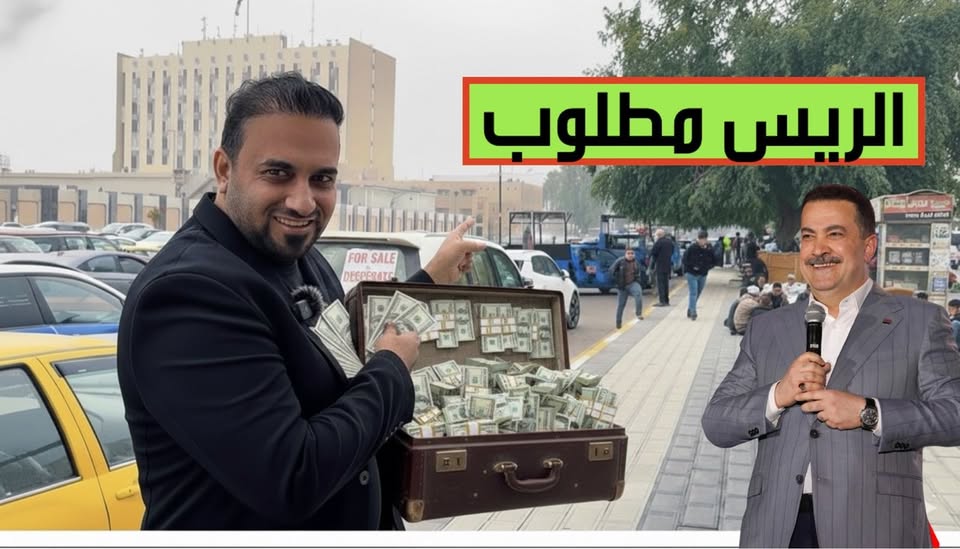
The health and political future of Prime Minister Mohammed Shia Al-Sudani were a top focus of conversation. With high engagement, Hayder Al-Hamdani (Post Impact: 86%) shared a video announcing “Good news for all Iraqis” and confirming that the Prime Minister is in good health and well, prompting expressions of gratitude and relief. In a related political development, Haider Khalaf Ghazi (Post Impact: 33%) circulated a clip where Al-Sudani purportedly made a clear statement that he “will not stay for a second term as prime minister,” signaling a significant shift in the country’s future political landscape. These posts together created a powerful narrative about the current leader’s well-being and his intentions beyond his current term.
2. Government Announces Major Austerity Measures
A significant trend revolved around the government’s new austerity plan, approved during an exceptional session of the Ministerial Council for Economy chaired by Prime Minister Al-Sudani. The official page of Engineer Mohammed Shia Al-Sudani (Post Impact: 10%) detailed the plan, which includes reducing government spending and maximizing revenues. This was echoed by pages like Mustafa Sanad (Post Impact: 13%) and Al-Qasr Al-Hukomi (Post Impact: 12%), who highlighted key decisions such as equalizing the salaries of employees in the three presidencies (Republic, Parliament, and Council of Ministers), reducing travel allowances by 90%, and reforming the ration card system to target only those in need. The measures also aim to increase non-oil revenues in coordination with the Kurdistan Region and enhance electronic payment for services.
3. Outrage Over Insults to Religious Figures
There was a strong wave of condemnation against sectarian rhetoric, primarily targeting a poet named Ali Naeem for publicly insulting companions of the Prophet Muhammad. Min Baghdad (Post Impact: 7%) reported that the Ministry of Interior is taking legal action against him. Commentator Rusly Al-Maliki (Post Impact: 11%) invoked Article 372/5 of the Iraqi Penal Code, which criminalizes insulting religious symbols, and expressed confidence in the judiciary to impose a penalty. Similarly, Mona Sami (Post Impact: 19%) criticized another poet for promoting sectarianism, stating that “holding this discourse accountable is a national Iraqi duty for everyone, socially and judicially.” These posts reflect a broad rejection of sectarianism and a demand for legal consequences.
4. Controversy Surrounding National Card Company
A highly engaging topic was initiated by a single post from Mustafa Sanad (Post Impact: 100%), which questioned the nationality of the company responsible for implementing the national unified card. The video post, titled “Learn the nationality of the company implementing the card,” generated immense interest, indicating significant public concern and curiosity about the entities involved in critical national infrastructure projects. While the post itself does not provide the answer, its framing and exceptionally high impact rate show that the transparency and origins of companies handling sensitive citizen data are a major issue for the Iraqi public on social media.
5. Calls for National and Religious Unity
As a counter-narrative to the sectarian tensions, numerous pages shared messages of national and religious unity. Erbil Events (Post Impact: 17%) posted a widely shared sentiment: “We fill them with love of all colors, Abu Bakr, Omar, Ali, and a lot of Othman,” adding the hashtag #We_Are_All_One. This message was mirrored by Khalil Hassan Khalil (Post Impact: 7%) with the hashtag #No_To_Sectarianism. Similarly, Mohammed Nasser Khalif (Post Impact: 17%) shared a video emphasizing that “Iraq brings us all together under one tent, with its diverse spectrums and ancient history.” These posts collectively aimed to reinforce a unified Iraqi identity above religious and sectarian divides.
6. The Plight of a 53-Year-Old Laborer
A video showing a 53-year-old man performing the strenuous work of carrying bricks captured significant attention and sympathy. Maher Mouhi::Voice of the Homeland’s Protectors (Post Impact: 18%) shared the clip with the caption, “53 years old and carrying bricks… He should immediately leave this work and be moved to another place.” The same video and call to action were shared by Support for Iraqi Security Forces (Post Impact: 10%). The story resonated with many users, highlighting social concerns about the welfare of older laborers and the lack of a social safety net, sparking a conversation about dignity in work and the need for intervention.
7. Artist Razzaq Ahmed’s Personal Struggles
The personal life of artist Razzaq Ahmed became a topic of sympathetic discussion following a post by Erbil Events (Post Impact: 25%). The post detailed an emotional media appearance where the artist reportedly cried while speaking about the struggles he faces as a single father raising his only son for the past three years. According to the page, Ahmed described his son’s pain and longing for his mother, recounting a moment when his son told him, “Dad, I am jealous. I am jealous of the child who has a mother and a father. Why am I not like them?” This touching story elicited a strong emotional response from the audience, focusing on the challenges of single parenthood and personal sacrifice.
8. Political Process to Elect Parliament Speaker
The ongoing effort to elect a new Speaker for the Council of Representatives was a notable political topic. Al-Adhamiya News (Post Impact: 16%) reported that a “decisive meeting” of the National Political Council would be held early next week in Baghdad to resolve the issue, with sources indicating an agreement to present two candidates for the position. Furthering this narrative, Al-Khawa Al-Nadhifa (Post Impact: 4%) noted that the Coordination Framework is also calling for a parliamentary session to be held as soon as possible to proceed with electing the council’s presidency.
9. Muqtada al-Sadr’s Activities and Directives
The political and social activities of Muqtada al-Sadr were highlighted in posts from his official media office. The Private Office of His Eminence Sayyid Muqtada al-Sadr (Post Impact: 7%) shared that al-Sadr was briefed on the activities of his representative in Diyala province. In another post with (Post Impact: 6%), the same page reported on his representative’s activities in Babil, where al-Sadr commented on the formation of committees for reconciliation among his followers, stating, “This is important… disputes harm the unity of the ranks, and this is what the enemy seeks… so please pay attention.” These posts underscore his continued focus on internal cohesion and grassroots engagement within his movement.
10. Meetings Between Current and Former Political Leaders
A series of high-level meetings between current and former political leaders was reported across several official pages, indicating active political consultations. The official page of Engineer Mohammed Shia Al-Sudani (Post Impact: 7%) announced his meeting with former Prime Minister Adel Abdul Mahdi, where they discussed constitutional timelines and the importance of continuing the country’s development. Separately, the page of Nouri Al-Maliki (Post Impact: 2%) reported his meetings with both former Prime Minister Mustafa Al-Kadhimi and Adel Abdul Mahdi (Post Impact: 2%) to discuss the political situation and the need to expedite the formation of a new government. These posts suggest a period of intense dialogue among Iraq’s political elite.