2026-04-11: U.S.-Iran Negotiations Spark Widespread Debate

Based on an analysis of 676 X / Twitter posts on April 11, 2026, Miqrab AI found that the primary narratives in Iraq revolved around the high-stakes negotiations between the United States and Iran in Islamabad and the domestic political shift marked by the election of a new Iraqi president. Discussions on the U.S.-Iran talks were highly polarized, with some accounts portraying Iran as a formidable power dictating terms and others describing the negotiations as a capitulation and a sign of weakness. Domestically, the election of Nizar Amidi as President of Iraq was a major topic, seen as a significant political maneuver that sidelined established figures like Masoud Barzani and Nouri al-Maliki, sparking debate about a new political era. Other prominent themes included criticism of Iran’s overarching influence on Iraqi sovereignty, calls to action against sectarian rhetoric, and commentary on regional conflicts involving Iran’s allies in Lebanon and its alleged animosity toward Gulf nations.
Table Of Content
- 1. U.S.-Iran Negotiations Spark Widespread Debate
- 2. Nizar Amidi Elected New President of Iraq
- 3. Criticism of Iraq’s Subservience to Iran
- 4. A Unique University Graduation Celebration
- 5. Calls to Act Against Sectarian Incitement
- 6. Sarcastic Farewell to President Abdul Latif Rashid
- 7. Debate on Iran’s Regional Influence and Reputation
- 8. The Political Isolation of Masoud Barzani
- 9. Regional Tensions Involving Iran’s Allies
- 10. Iran’s Alleged Hostility Towards the UAE
Today’s Top 10 X (Twitter) Trends in Iraq:
1. U.S.-Iran Negotiations Spark Widespread Debate
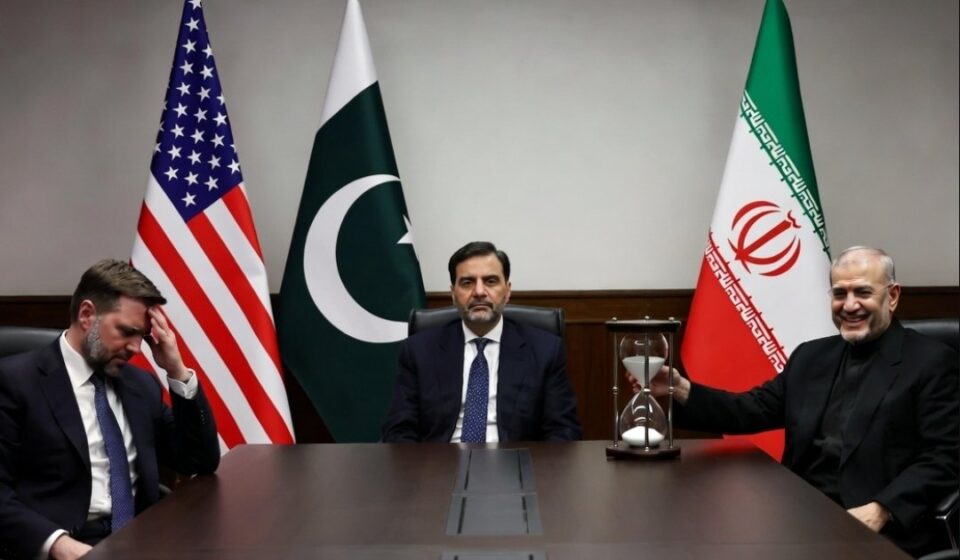
Iraqi social media was dominated by discussions about the U.S.-Iran negotiations in Islamabad, with opinions sharply divided. Some accounts, like Dr. Hussein Al-Safi (Post Impact: 15%), portrayed Iran as negotiating from a position of strength, asserting that “the strongest card in the negotiations is in Iran’s hand, which is the Strait of Hormuz card.” In stark contrast, other commentators viewed the talks as a sign of Iranian capitulation. Faiq Al-Sheikh Ali/My Word for History (Post Impact: 15%) sarcastically referred to the meeting as a prelude to a “temporary pleasure marriage,” mocking Iran’s previous rhetoric against the U.S. as the “Great Satan.” Similarly, Aayad Al Twfan (Post Impact: 13%) argued that the passage of U.S. ships through the Strait of Hormuz marked the death of Iran’s deterrence capability. David Yassin (Post Impact: 10%) was even more blunt, describing the negotiations as Iran signing its “suicide note.”
2. Nizar Amidi Elected New President of Iraq
The Iraqi Parliament’s election of Nizar Amidi as the new President of the Republic was a major topic, viewed as a significant political development. Numerous political figures, including Prime Minister Mohammed Shia’ Al Sudani (Post Impact: 4%) and Parliament Speaker Mohammed Al-Halbousi (Post Impact: 6%), offered their congratulations. The election was framed as a move that sidelined long-standing political heavyweights, with Haydar (Post Impact: 4%) noting it occurred despite the rejection of Masoud Barzani and the non-participation of allies like Nouri al-Maliki. Analyst Muna Sami (Post Impact: 3%) described the event as “the beginning of a new political phase represented by the generational displacement of leaders.” The political fallout was immediate, as the Kurdistan Democratic Party (KDP) announced it would withdraw its MPs and ministers from the federal government in protest, as reported by Shaho Al-Qaradaghi (Post Impact: 3%).
3. Criticism of Iraq’s Subservience to Iran
Alongside discussions of the U.S.-Iran talks, several accounts criticized what they perceive as Iraq’s lack of sovereignty and its subordination to Iranian interests. Faiq Al-Sheikh Ali/My Word for History (Post Impact: 13%) claimed that the Iraqi parliament was deliberately stalled for months and only proceeded with electing a president after seeing an “apparent breakthrough” in the U.S.-Iran negotiations, concluding, “A state entirely mortgaged to Iran!” In a similar vein, Dr. Zaid Abdulwahab Al-A’dhami (Post Impact: 4%) shared a video of an expert explaining why Iran worked to ensure Iraq had a weak and fragile system of government after 2003. Naji Assal (Post Impact: 4%) advised Iraqis to focus on their own country, stating, “Iran today sat with the killer of the Supreme Leader… you Iraqis, don’t keep jumping around, be more serious and pay attention to your homeland!!”
4. A Unique University Graduation Celebration
A video of a distinctive graduation ceremony at an Iraqi university garnered exceptionally high engagement. The post by Wasan Al-Sheikhli (Post Impact: 100%) described the event as an Iraqi university celebrating its students’ graduation in a “very special way.” The video, which shows students celebrating, resonated widely on the platform, becoming the single most impactful post in this analysis despite being covered by only one prominent account.
5. Calls to Act Against Sectarian Incitement
Multiple users called on Iraqi authorities to take action against what they described as public sectarian incitement. The focus of their concern was a video of eulogist Khidr Abbas. Omar Al-Janabi (Post Impact: 16%) shared the video, noting it was recorded in Najaf, and challenged authorities to take action against its content. In a direct appeal, Mustafa Al-Dulaimi (Post Impact: 12%) addressed the Supreme Judicial Council, Qasim al-Araji, the Interior Minister, and the Commander-in-Chief, urging them to take necessary measures against the “insulting of religious beliefs and symbols, threatening societal peace, and provoking sectarian strife in public.”
6. Sarcastic Farewell to President Abdul Latif Rashid
A satirical post about the outgoing president, Abdul Latif Rashid, received significant attention. In a post dripping with irony, Rusly Al-Maliki (Post Impact: 16%) reported the “painful news” of Rashid’s withdrawal from seeking a new term. The account facetiously lauded Rashid’s fictional achievements, claiming he elevated Iraq to the ranks of developed countries, made it a regional and international power, and fiercely secured its rights. The post concludes sarcastically, “Step down, O knight… you have made an effort that generations will remember.”
7. Debate on Iran’s Regional Influence and Reputation
The perception of Iran’s role in the wider Arab world was another key topic. Hussein Abu Alima – iraq (Post Impact: 14%) posed the provocative question, “Why do Arab peoples respect Iran and not Saudi Arabia ..?!” Another account, Abu Mustafa Al-Khafaji (Post Impact: 14%), shared a meme contrasting an Iranian defending Palestinians with a person of Palestinian origin defending Zionists. Offering a critical perspective, Mahdi Majeed (Post Impact: 11%) lamented the destruction of Lebanon for Iran’s benefit, questioning Lebanese Shia complicity and urging them to abandon their support for the “Persian Magus” and return to their homeland.
8. The Political Isolation of Masoud Barzani
The election of Nizar Amidi was widely interpreted as a political blow to Kurdistan Democratic Party (KDP) leader Masoud Barzani, sparking discussions about his waning influence. Haydar (Post Impact: 3%) described the day as historic, highlighting Barzani’s “clear isolation” and noting that he no longer has allies within the region and faces significant opposition in Baghdad. This sentiment was confirmed by the KDP’s official reaction. As reported by Shaho Al-Qaradaghi (Post Impact: 3%), the KDP announced its decision to “withdraw our MPs and ministers in the federal government to Erbil and we will not deal with the ‘person’ who was chosen as president.”
9. Regional Tensions Involving Iran’s Allies
Events in Kuwait and Lebanon linked to Iran’s allies were also prominent. Rusly Al-Maliki (Post Impact: 4%) reported that Kuwait had arrested 24 individuals for collaborating with Iran. Commenting on the same issue, Haydar (Post Impact: 10%) criticized the Kuwaiti authorities for arresting Shia civilians, alleging that their evidence was flawed. Meanwhile, the conflict in Lebanon was also in focus, with Rusly Al-Maliki (Post Impact: 4%) sharing an Israeli Air Force statement claiming it had attacked over 200 Hezbollah targets in Lebanon within the past 24 hours.
10. Iran’s Alleged Hostility Towards the UAE
Analyst Mahdi Majeed (Post Impact: 8%) dedicated two widely-circulated posts to discussing Iran’s alleged “deep-seated hatred” for the United Arab Emirates. He questioned why Iran objected to the UAE’s presence at negotiations, given that the UAE respects its Iranian workforce and did not participate in the war. In a follow-up post, Mahdi Majeed (Post Impact: 8%) mentioned an upcoming journalistic report for *The Sun*, in which he claims to have found an Iranian intelligence document from 2018. He argues that Iran’s attacks on UAE economic sites stem from its long-term failure to infiltrate the country and its view of the UAE as an economic competitor that must be “either subdued or destroyed.”