2026-05-14: New Government of Ali al-Zaydi Gains Parliament’s Confidence

Based on an analysis of 441 Facebook posts trending on May 14, 2026, Miqrab AI found that the dominant narrative on Iraqi social media was the tumultuous formation of a new government. The key themes included the parliament granting confidence to Prime Minister Ali Falah al-Zaydi and his cabinet, which was marred by a physical altercation during the session. This led to widespread commentary, ranging from official congratulations and statements from the new government to harsh criticism from commentators who questioned the legitimacy of the process and the qualifications of the new ministers. Other significant topics included reports of a shocking crime in Tikrit, military operations against terrorist elements in Kirkuk, and analyses of regional conflicts involving Hezbollah.
Table Of Content
- 1. New Government of Ali al-Zaydi Gains Parliament’s Confidence
- 2. Brawl Erupts in Parliament During Government Vote
- 3. Key Ministerial Appointments and Congratulations
- 4. Widespread Criticism of New Government and Political Process
- 5. Shocking Report of Incest in Tikrit
- 6. Mustafa Sanad Appointed as New Minister of Communications
- 7. Iraqi Army Deploys Chinese CH-5 Drone in Kirkuk
- 8. Departure of Former Prime Minister Mohammed Shaya al-Sudani
- 9. Hezbollah’s Evolving Drone Tactics Against Israeli Forces
- 10. Parliament Rejects Several Ministerial Nominees
Today’s Top 10 Facebook Trends in Iraq:
1. New Government of Ali al-Zaydi Gains Parliament’s Confidence
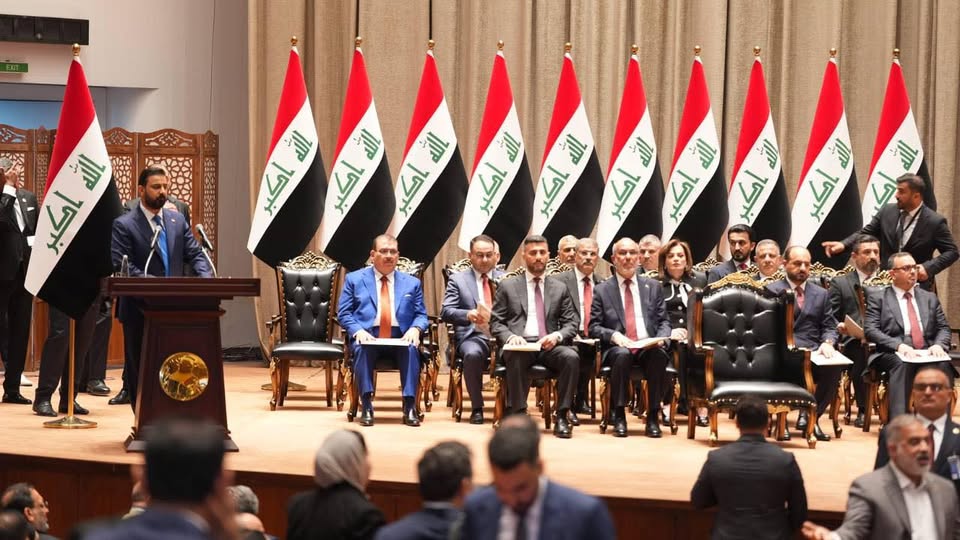
The formation of a new government was the most significant topic of discussion, with numerous pages reporting that the Iraqi Council of Representatives voted to grant confidence to Prime Minister Ali Falah al-Zaydi and his ministerial program. The official page for the Iraqi Prime Minister’s Media Office (Post Impact: 5%) announced the vote and later shared a post from the new Prime Minister on platform X, where he thanked the parliament and political forces for their trust. The page Al-Khwa Al-Nadheefa (Post Impact: 13%) reported that the Prime Minister and the approved ministers took the constitutional oath, while noting that several key ministries, including Interior and Defense, were not yet filled. Journalist Ahmad Mulla Talal (Post Impact: 3%) also congratulated the new government and announced his return to broadcasting to cover the new political developments.
2. Brawl Erupts in Parliament During Government Vote
The parliamentary session to vote on the new government was marked by chaos and physical altercations, a story that generated significant engagement. The page Mohammed Nasser Khalif (Post Impact: 52%) shared a video with the caption, “A fight in parliament during the government voting session.” Multiple other pages, including Da’am al-Quwwat al-Amniyyah al-Iraqiyyah (Post Impact: 4%) and ‘Iraqeen W Bas (Post Impact: 4%), also circulated videos of the brawl, with the former commenting sarcastically, “The brothers are fighting while the ministers recite the oath, a blessed start.” The page Shabakat al-Iraq Plus Iraq Plus Network (Post Impact: 2%) also shared footage of the مشاجرة (quarrel), highlighting the disorder that accompanied the transfer of power.
3. Key Ministerial Appointments and Congratulations
Alongside the confirmation of the Prime Minister, the appointment of individual ministers was a prominent topic. Diyala Diyala TV (Post Impact: 4%) reported that the Council of Representatives voted by an absolute majority for Muthanna al-Tamimi as the new Minister of Water Resources, later sharing a photo of him and noting his brother, MP Hammam al-Tamimi, congratulated him. The appointment of the new Minister of Education, Abdul-Karim Abtan, was highlighted by Fad Dqeeqa (Post Impact: 2%), which showed former Speaker of Parliament Mohammed al-Halbousi congratulating him. The new Minister of Electricity, Ali Saadi Waheeb, also received attention, with page Dr. Ali Al-Qaisi (Post Impact: 2%) sarcastically critiquing his CV, which listed “perfect command of the Arabic language” as a skill.
4. Widespread Criticism of New Government and Political Process
The formation of the new government was met with significant criticism and skepticism from several commentators. Author Rusly Al-Maliki – Rusly Al-Maliki (Post Impact: 6%) penned a lengthy post decrying the process as undemocratic, stating, “A prime minister has been installed in Iraq without anyone electing him, a man we do not know and have never seen before.” He warned of a coming “political and international scandal” and a potential “resounding political collapse in Iraq.” Similarly, journalist Salem Mashkour (Post Impact: 2%) compared the political maneuvering to a television drama, suggesting politicians were seeking to become ministers to control state contracts directly. The page Mohammed Nasser Khalif (Post Impact: 8%) lamented, “By God, it is a crime that these people control the great Iraq.”
5. Shocking Report of Incest in Tikrit
A highly disturbing story from Tikrit garnered massive engagement from a single post. The page Haider Al-Hamdani (Post Impact: 100%) shared a video with a warning that the content was for adults only (+18), reporting on an incident where a father allegedly fathered a child with his own daughter. The post’s brief but shocking text, “A father has a child with his daughter in Tikrit!”, drove it to the top of the engagement list, reflecting a strong public reaction to the reported crime.
6. Mustafa Sanad Appointed as New Minister of Communications
The appointment of Mustafa Sanad as the new Minister of Communications received particular attention. The official page of the Iraqi Ministry of Communications (Post Impact: 31%) issued a formal congratulatory message to the new minister. The page Al-Taqniyyah wal-Ittisalat (Post Impact: 6%) also congratulated him, noting he is the youngest minister to hold the post, born in 1985, and holds degrees in petrochemical engineering and economics. In a similar vein, MP Mohammed Nuri Aziz (Post Impact: 2%) posted a message wishing Sanad success in his new national responsibility.
7. Iraqi Army Deploys Chinese CH-5 Drone in Kirkuk
Several pages focused on Iraqi military operations, specifically the use of a new drone. Al-Khaliyya al-Taktikiyyah (Post Impact: 6%) provided a detailed technical analysis of the Iraqi Army’s use of the Chinese CH-5 long-range drone against a terrorist element in Wadi al-Shay, Kirkuk. The page described the drone’s capabilities as similar to the American MQ-9 Reaper, equipped with high-resolution cameras and various guided munitions. The page Maher Muhyi::Sawt Humat al-Watan (Post Impact: 5%) also reported on the “urgent” news of the Military Intelligence directorate carrying out the airstrike via the CH-5 aircraft, marking a significant operational development.
8. Departure of Former Prime Minister Mohammed Shaya al-Sudani
As the new government was formed, several pages marked the end of former Prime Minister Mohammed Shaya al-Sudani’s term. Haider Khalaf Ghazi (Post Impact: 13%) posted a picture simply captioned, “Former Prime Minister Mohammed Shaya al-Sudani.” The page I’tilaf al-I’mar wal-Tanmiya (Post Impact: 1%) reported that al-Sudani congratulated his successor, Ali al-Zaydi, and affirmed his support for the new government. The page Tara’if al-Alam bi-‘Uyun ‘Iraqiyyah (Post Impact: 1%) also acknowledged his departure, asking followers for their parting words to the former Prime Minister.
9. Hezbollah’s Evolving Drone Tactics Against Israeli Forces
Regional security developments were analyzed by specialized pages, with a focus on drone warfare on the Lebanese border. Al-Khaliyya al-Taktikiyyah (Post Impact: 6%) detailed a new tactic used by Hezbollah involving sequential FPV drone attacks on an Israeli military barracks, describing it as a shift toward a “swarm attack” style. In a follow-up post, the same page Al-Khaliyya al-Taktikiyyah (Post Impact: 5%) cited the Hebrew newspaper “Yedioth Ahronoth” on the rising number of Israeli soldiers injured by these FPV drones, noting that soldiers were reportedly instructed to remain inside vehicles to avoid being filmed, which would impact morale and propaganda efforts.
10. Parliament Rejects Several Ministerial Nominees
While the government gained a vote of confidence, not all ministerial candidates were successful. The page Baghdad (Post Impact: 1%) listed the candidates who failed to gain the parliament’s trust: Ibrahim al-Namis, Qasim Atta, Amer al-Khuzai, Ahmed Nazim, and Rebaz Hamlan. The page Mohammed Al-Khazai (Post Impact: 1%) also noted that the ministers from the State of Law and Azm alliances were not approved by the Council of Representatives, highlighting the political negotiations and divisions that shaped the final cabinet.