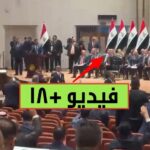
2026-05-14: Formation of New Iraqi Government Under Ali Al-Zaydi

Based on its analysis of 616 X / Twitter posts, Miqrab AI found that on May 14, 2026, the primary narrative in Iraq focused on the formation of a new government led by Prime Minister Ali Al-Zaydi. This central event generated a wide spectrum of reactions, from official congratulations by political elites to widespread public criticism and skepticism regarding the cabinet appointments, particularly the controversial selection of Mustafa Sanad as Minister of Communications. Discussions also revolved around the perceived democratic failings of the political process and a lack of connection between the new leadership and the Iraqi people. Other significant topics included intense speculation about a major geopolitical shift in the relationships between China, Iran, and the United States, as well as domestic news about the judiciary sentencing a former Ba’athist regime official to death.
Table Of Content
- 1. Formation of New Iraqi Government Under Ali Al-Zaydi
- 2. Controversy Surrounds Mustafa Sanad’s Ministerial Appointment
- 3. Geopolitical Speculation on China, Iran, and the United States
- 4. Political Elites Congratulate New Prime Minister Ali Al-Zaydi
- 5. Widespread Critique of Iraq’s Political Process and Legitimacy
- 6. Death Sentence Issued for Former Ba’athist Official
- 7. Srwa Abdul Wahid Appointed Minister Amid Scrutiny of Past Views
- 8. Concerns Over Media Freedom After Alleged Ban on Journalist
- 9. Sectarian Tensions Highlighted by Online Accounts
- 10. Reports of Fracturing Political Coalitions After Cabinet Vote
Today’s Top 10 X (Twitter) Trends in Iraq:
1. Formation of New Iraqi Government Under Ali Al-Zaydi
The Iraqi Parliament has voted to grant confidence to a new government led by Prime Minister Ali Al-Zaydi, officially ending the tenure of Mohamed Shia Al-Sudani. Social media accounts widely reported on the session, sharing lists of the newly appointed ministers. Haydar (Post Impact: 16%) provided a list of the new ministers, noting that several key positions, including Defense and Interior, were postponed. The account also highlighted that the new Prime Minister, Ali Al-Zaydi, has not yet addressed the Iraqi people, stating his communications have been limited to thanking political parties. Ali Farhan ali farhan (Post Impact: 11%) reported that the new government would exclude representation from armed factions, with six such groups that won parliamentary seats being left out of the cabinet. The general sentiment among many users, like Rusly Al-Maliki 🇮🇶 رسلي المالكي (Post Impact: 18%), was sarcastic and critical of the new ministerial lineup.
2. Controversy Surrounds Mustafa Sanad’s Ministerial Appointment
The appointment of Mustafa Sanad as the new Minister of Communications has sparked significant controversy and backlash. Critics point to his history of aggressive online behavior and lack of relevant experience. Ahmad Alwishah (Post Impact: 10%) described Sanad as someone who “insults Iraqis, attacks the honor of Iraqi women, and speaks with sectarian and hateful rhetoric,” further claiming his only qualification is being a man of the Iranian Revolutionary Guard. Similarly, Najeh Abbas Al-Mizan (Post Impact: 13%) sarcastically congratulated the “minister of the Iranian Quds Force in Al-Zaydi’s government.” Following his appointment, Sanad stated, “I will transform from an attacker to a goalkeeper,” a comment reported by Ali Farhan ali farhan (Post Impact: 23%), which was met with further derision online.
3. Geopolitical Speculation on China, Iran, and the United States
A major topic of discussion involves a potential realignment of international powers, with conflicting narratives about China’s relationship with Iran and the United States. One perspective, shared by Sufian Al-Samarrai (Post Impact: 11%), suggests that “China sold out the regime in Iran just as Russia sold out this arrogant regime.” Dr. Hussein Al-Safi (Post Impact: 29%), citing Iranian sources, reported that Iran is now alone after being abandoned by both Russia and China in favor of major economic deals with the US. Conversely, other accounts present an opposing view. Aayad Al Twfan – أعياد الطوفان (Post Impact: 25%) listed a series of agreements allegedly made between Chinese President Xi Jinping and former US President Trump, including preventing a nuclear Iran. However, Mohamed Almaroof/محمد المعروف (Post Impact: 15%), citing Iran’s Fars Agency, reported that Chinese ships have begun crossing the Strait of Hormuz under special arrangements with Tehran, questioning if it was a “desperate” attempt to bribe China away from a deal with Trump.
4. Political Elites Congratulate New Prime Minister Ali Al-Zaydi
Following the parliamentary vote of confidence, numerous Iraqi political leaders issued formal statements congratulating the new Prime Minister, Ali Al-Zaydi, and his government. Former Prime Minister Mustafa Al-Kadhimi مصطفى الكاظمي (Post Impact: 18%) congratulated Al-Zaydi, emphasizing the “historical responsibility” the new government faces and calling for unity. His predecessor, Mohamed Shia Al-Sudani (Post Impact: 17%), also offered his “sincere congratulations” and affirmed his support for the new administration. Other prominent figures, including Ammar Al-Hakim (Post Impact: 14%), Naeem Al-Aboudi (Post Impact: 18%), and Kurdistan Region President Nechirvan Barzani (Post Impact: 8%), echoed these sentiments, wishing the government success in serving the Iraqi people and tackling the country’s challenges.
5. Widespread Critique of Iraq’s Political Process and Legitimacy
Alongside news of the government’s formation, a strong narrative of despair and condemnation of the Iraqi political system emerged. Rusly Al-Maliki 🇮🇶 رسلي المالكي (Post Impact: 26%) penned a lengthy post declaring that Iraq is on the verge of a “political and international scandal,” arguing that a prime minister was installed “without anyone electing him” and that the country lacks democracy “even by 1%.” He warns of an impending “resounding political collapse” due to the actions of political gangs and Iranian-linked armed factions. This sentiment was echoed by Ali Fadhil _ علي فاضل (Post Impact: 12%), who sarcastically referenced a film about a man who becomes a minister by chance, using the hashtag #Ministers_by_chance. Haydar (Post Impact: 15%) also noted the public’s disconnect, stating that the “majority of Iraqis have not heard his [Al-Zaydi’s] voice until now.”
6. Death Sentence Issued for Former Ba’athist Official
The Iraqi judiciary has issued a death sentence for Ajjaj Ahmad Hardan Al-Tikriti, a former Ba’athist regime figure also known as “Hajjaj Nakrat al-Salman.” The ruling was reported by the Iraqi National Security Service (Post Impact: 10%). User Haydar (Post Impact: 16%) detailed the court’s reasoning, stating the conviction was for implementing “brutal policies that included torturing and starving civilians… to death and burying them in mass graves.” Kurdistan Region President Nechirvan Barzani (Post Impact: 8%) welcomed the court’s decision, calling it a “victory for justice” and a message that “crimes of genocide… will never become old.”
7. Srwa Abdul Wahid Appointed Minister Amid Scrutiny of Past Views
The appointment of Srwa Abdul Wahid as the new Minister of the Environment has drawn attention, with users sharing both news of her appointment and her past controversial statements. Haydar (Post Impact: 16%) and Dr. Qusay Shafiq (Post Impact: 13%) listed her among the new cabinet members. Her appointment was also highlighted for being the only woman in the initial lineup by Dr. Hanan Al-Fatlawi (Post Impact: 10%). Separately, Haydar shared a past clip of Abdul Wahid where she stated that the “Erbil government is a thousand times worse than Saddam Hussein’s government” and accused it of corruption while neglecting its citizens. In her first statement as minister, Srwa Abdulwahid. سروه عبدالواحد (Post Impact: 8%) thanked the parliament and pledged to make environmental protection a “real national priority.”
8. Concerns Over Media Freedom After Alleged Ban on Journalist
Discussions surrounding media freedom were sparked by posts from journalist Adnan Al-Taie, who repeatedly threatened an individual named “Balegh” and referred to a “tyrannical and unjust decision” against him. In one post, Adnan Al-Taie (Post Impact: 20%) stated he would challenge the decision in court. In response, fellow journalist Ahmad Mulla Talal (Post Impact: 8%) announced he was cutting his vacation short and returning to air his program, extending its runtime to two hours. He explicitly stated this was “after the arbitrary ban decision that affected the colleague Adnan Al-Taie and his program,” positioning his return as an act of solidarity and a move to fill the void.
9. Sectarian Tensions Highlighted by Online Accounts
Several posts highlighted ongoing sectarian tensions and incidents in Iraq. Haydar (Post Impact: 16%) shared a video allegedly showing a “Shiite militiaman” storming the Umm al-Mu’minin Mosque and raising a sectarian flag inside. In a separate incident focusing on perceived sectarian profiling by authorities, Zina Al Saab 🇮🇶 زينة الصعب (Post Impact: 14%) recounted a story where a mother was allegedly told by an investigating officer that her son’s name, “Abu Bakr,” was a crime in itself. She commented, “Damn those who put us with you in one country!!” highlighting a deep sense of division and injustice.
10. Reports of Fracturing Political Coalitions After Cabinet Vote
Immediately following the formation of the new government, reports began to surface about cracks appearing in the political coalitions that supported it. Haydar (Post Impact: 7%) reported on the “disintegration of the Emar wa Al-Tanmiya (Reconstruction and Development) coalition” following the failure of Mohamed Shia Al-Sudani to secure a second term, noting the withdrawal of several blocs. Dr. Qusay Shafiq (Post Impact: 8%) also noted that Faleh Al-Fayyad and Ahmad Al-Asadi’s bloc were leaving the coalition, describing it as “schisms from the first day.” Furthermore, Abu Maryam (Post Impact: 7%) claimed that Hadi Al-Amiri was “very upset” and considering withdrawing his ministers from the government, predicting the imminent “death of the Coordination Framework.”