2025-07-18: Collapse of al-Jolani’s Regime and His Reported Escape

Based on an analysis of 625 X / Twitter posts conducted by Miqrab AI, the key themes and narratives trending in Iraq on July 18, 2025, overwhelmingly center on the escalating crisis in Syria. The most dominant story is the reported collapse of Ahmed al-Sharaa’s (al-Jolani) new government, with widespread reports of his escape from Damascus. This development is discussed in tandem with a brutal sectarian conflict in Suwayda province, where violent clashes and atrocities against the Druze community are reported. These events have prompted some Iraqi social media users to express nostalgia for the era of Bashar al-Assad, with some even calling for his return and arguing that the world owes him an apology. On the domestic front, the “Kut Tragedy,” a deadly fire at a hypermarket, has sparked public anger over government negligence and inadequate emergency services, while the official investigation into recent drone attacks on Iraqi radar sites is being met with skepticism for failing to name the perpetrators.
Table Of Content
- 1. Collapse of al-Jolani’s Regime and His Reported Escape
- 2. Sectarian Conflict Escalates in Suwayda Province
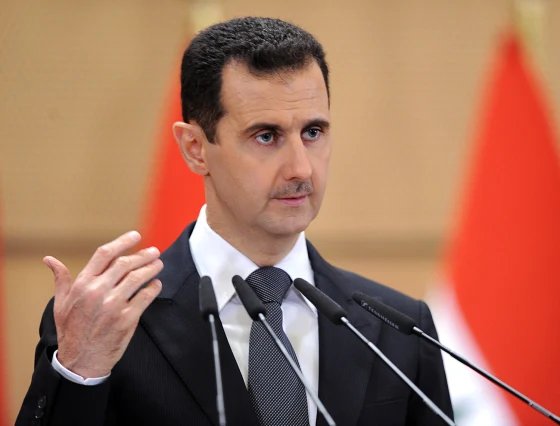
- 3. Calls for Bashar al-Assad’s Return Amid Chaos
- 4. Alleged Saudi Involvement in the Syrian Conflict
- 5. Anger and Questions Surrounding the “Kut Tragedy” Fire
- 6. Israel’s Reported Role in Southern Syria
- 7. Analysis and Predictions for a Post-Jolani Syria
- 8. Attack on Iraqi Civil Defense Teams in Latakia
- 9. Criticism of Vague Government Report on Radar Attacks
- 10. Equating Syrian “Tribal Rebels” with ISIS
Today’s Top 10 X (Twitter) Trends in Iraq:
1. Collapse of al-Jolani’s Regime and His Reported Escape
A major narrative across Iraqi X/Twitter is the reported collapse of the new Syrian government led by Hay’at Tahrir al-Sham leader Ahmed al-Sharaa, widely known as al-Jolani. Multiple high-engagement accounts report that al-Sharaa has fled Damascus with his family to Turkey. Dr. Hussein Al-Safi (Post Impact: 61%) and Wasan Al-Shaikhli (Post Impact: 36%) both shared urgent news of the escape and the fall of the “new system.” This sentiment was echoed by Hassan Al-Kaabi (Post Impact: 29%), who also announced the “fall of the Jolani regime.” Ali Wajeeh (Post Impact: 18%) commented on the situation by stating, “The bastard’s mission is over.” This development is being framed as a significant turning point in the Syrian crisis, marking the swift end of al-Sharaa’s rule.
2. Sectarian Conflict Escalates in Suwayda Province
The violent and sectarian nature of the conflict in Syria, particularly in the Suwayda province, is a prominent topic. Accounts are sharing graphic videos and reports of atrocities against the Druze community. Hayder (Post Impact: 18%) shared a widely circulated video of an elderly Druze man having his mustache, a symbol of dignity for the Druze, forcibly shaved by al-Jolani’s elements. The same account also reported on sectarian attacks by Sunni students against Druze students at the University of Aleppo (Hayder (Post Impact: 40%)). Liqaa Maki (Post Impact: 30%) described the situation as a “sectarian frenzy instigated by Israel in Suwayda,” comparing the potential for civil war to what Iraq experienced in 2006. The narrative portrays a rapidly deteriorating situation fueled by religious extremism and incitement.
3. Calls for Bashar al-Assad’s Return Amid Chaos
In response to the reported atrocities by Hay’at Tahrir al-Sham, a significant narrative has emerged calling for a re-evaluation of former Syrian President Bashar al-Assad. With the highest impact post on the list, Dr. Hussein Al-Safi (Post Impact: 100%) stated, “The world owes Bashar al-Assad an apology… after we saw the crimes of Hay’at Tahrir al-Sham.” This sentiment is supported by Hassan Al-Kaabi (Post Impact: 18%), who shared news of widespread popular Syrian demands for Assad’s return to protect them from al-Jolani’s followers. A nostalgic view of pre-war Syria was shared by Wasan Al-Shaikhli (Post Impact: 58%), who posted an image of a peaceful street with the caption, “When Syria used to sleep at 6 PM.”
4. Alleged Saudi Involvement in the Syrian Conflict
Several posts accuse Saudi Arabia of fueling the sectarian conflict in Syria by supporting extremist factions. Hayder (Post Impact: 45%) posted a video allegedly showing a group of “Saudi suicide mercenaries” heading from Saudi Arabia to Suwayda to participate in the sectarian civil war. In a detailed analysis, Issam Hussein (Post Impact: 12%) argues that Saudi support for al-Jolani’s groups reveals that extremist ideology has not left the Saudi scene, despite modernization efforts. He claims that Syria has become a “backyard for Saudi intelligence” to manufacture terrorism, suggesting that Riyadh’s new public image is merely a facade.
5. Anger and Questions Surrounding the “Kut Tragedy” Fire
The deadly fire at a hypermarket in Kut, referred to as the “Kut Tragedy,” is a major topic of domestic concern. Social media users are questioning the circumstances and criticizing the government’s response. Dr. Ahmed Al-Abbasi (Post Impact: 32%) highlighted an unconfirmed report that “35 Syrian workers left the site before it burned” and asked for confirmation. Criticizing the state of emergency services, Husham Ali (Post Impact: 21%) lamented the lack of funding for the Civil Defense. In response to the tragedy, Wasan Al-Shaikhli (Post Impact: 19%) reported that a specialized Iranian medical delegation would arrive in Wasit province to treat burn victims, an order reportedly from Ali Khamenei.
6. Israel’s Reported Role in Southern Syria
Israel’s involvement in the conflict in southern Syria is another key trend, with accounts reporting both military action and humanitarian aid directed toward the Druze community. The Syrian Observatory for Human Rights, cited by Zaid Benjamin (Post Impact: 7%), reported that an Israeli drone targeted tribal fighters near the village of Wolga in Suwayda. On the other hand, Hayder (Post Impact: 7%) reported that the Israeli Foreign Minister announced instructions to send $700,000 in humanitarian aid to Suwayda. Othman Al-Mukhtar (Post Impact: 11%) condemned the Druze leader Hikmat Al-Hijri for seeking help from “Zionists,” calling it a “crime against honor.”
7. Analysis and Predictions for a Post-Jolani Syria
Amid reports of al-Jolani’s fall, analysts on Iraqi X/Twitter are speculating about Syria’s future political landscape. Ahmad Abdulsada (Post Impact: 19%) offered a detailed forecast, predicting that the Syrian Democratic Forces (SDF) led by Mazloum Abdi will be given a major role, with Abdi potentially becoming Syria’s transitional president. He also predicts that the Druze will manage Suwayda and that Russia will administer the Syrian coast. In a different take, Sufian Al-Samarrai (Post Impact: 14%) views the conflict as a successfully executed trap to lure “global jihad gangs” into an open area in Syria, paving the way for a major international economic and energy project.
8. Attack on Iraqi Civil Defense Teams in Latakia
A direct link between the violence in Syria and Iraq was highlighted in reports of an attack on Iraqi personnel. Hayder (Post Impact: 25%), citing Syrian media, reported on a “terrorist attack” targeting Iraqi Civil Defense crews in the Syrian city of Latakia. The attack reportedly resulted in several injuries that required hospitalization. This story underscores the cross-border impact of the Syrian conflict and the risks faced by Iraqi teams operating there.
9. Criticism of Vague Government Report on Radar Attacks
The Iraqi government’s official statement on the investigation into drone attacks on its radar systems has been met with widespread criticism for its lack of transparency. The statement, shared by the Prime Minister’s Media Office (Post Impact: 5%), claimed that investigators had identified the drones’ origin and the responsible party but failed to name them. Ameer aldaami (Post Impact: 9%) called it the “strangest statement” he had ever read for withholding the perpetrator’s identity. Similarly, Wikileaks Iraq (Post Impact: 6%) interpreted the announcement as “an explicit admission that sovereignty has been violated” and that the perpetrator, likely a militia, is above the law.
10. Equating Syrian “Tribal Rebels” with ISIS
Several accounts are drawing parallels between the armed groups fighting in Syria, often labeled “tribal rebels” by some media, and the tactics of ISIS in Iraq. Abu Darandash Al-Askari (Post Impact: 8%) reminded followers that “Gulf media called ISIS the tribal revolution in 2014! Today the same media calls ISIS in Syria the tribal revolution 2025.” This view is shared by Issam Hussein (Post Impact: 27%), who labeled the “tribal rebels” as having the “visual identity of terrorism in Iraq and Syria.” This narrative aims to discredit the legitimacy of these armed groups by linking them directly to well-known terrorist organizations.